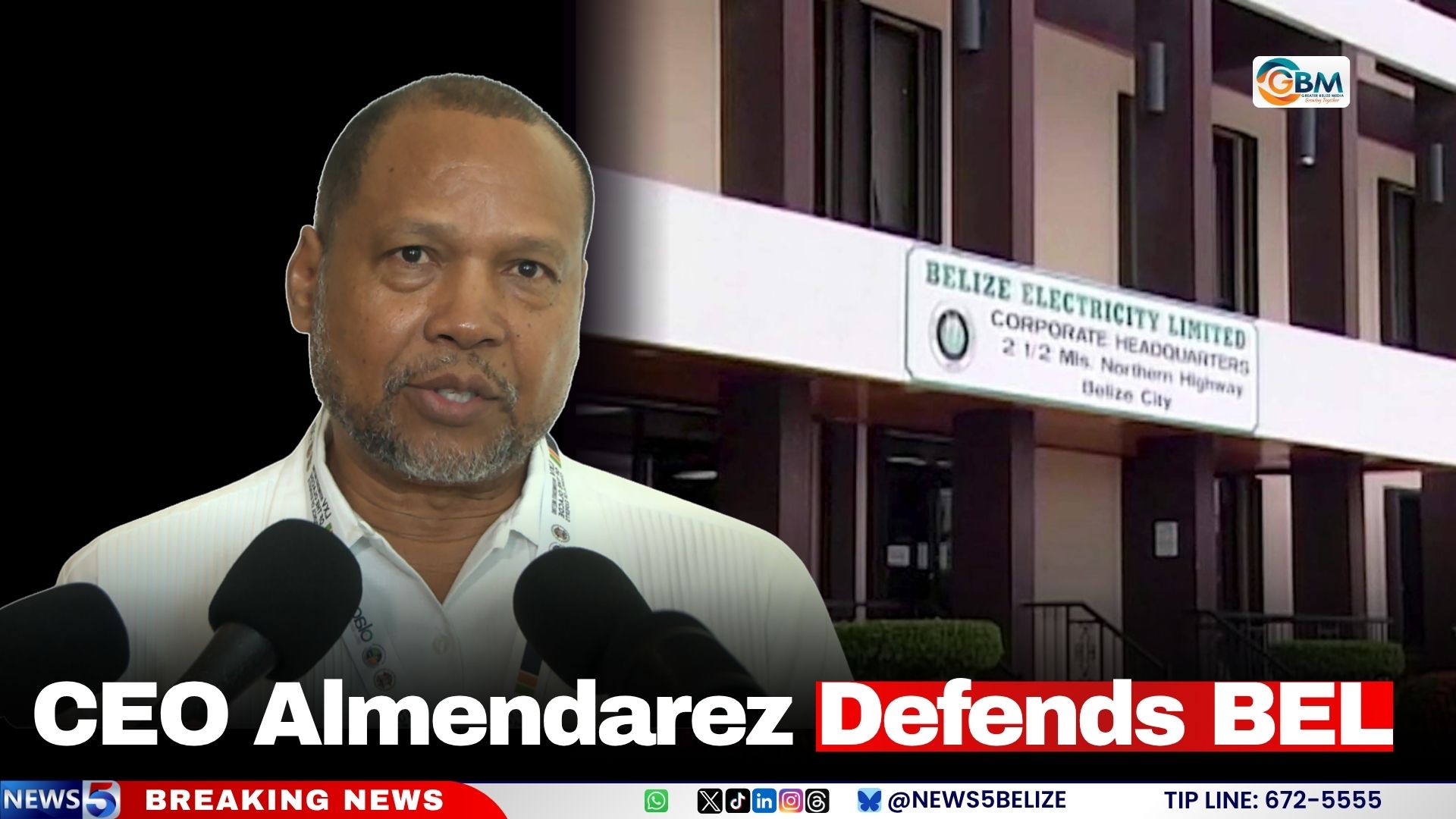
In a press briefing addressing widespread public anger over unprecedented spikes in household electricity costs across Belize, Dr. Leroy Almendarez, Chief Executive Officer of the Ministry of Public Utilities, Energy and Logistics, pushed back against criticism on Wednesday, May 27, 2026, by breaking down the structural factors driving the steep rate increases that have left some families paying two to three times their typical monthly bills.
Almendarez emphasized that Belize’s energy grid is disproportionately dependent on imported power, with more than half of the nation’s electricity supply brought in from neighboring Mexico. Unlike domestically generated energy, imported power prices are set by international and regional market forces beyond the control of Belizean regulators or the national energy provider. Under the country’s existing regulatory framework, these fluctuating import costs are directly passed through to end consumers, meaning any upward shift in global energy prices immediately translates to higher bills for households.
To meet total national energy demand, Belize currently combines three primary sources: cogeneration from domestic sugarcane production, local hydropower, and the Mexican power imports. When lower-cost domestic sources such as hydropower fall short of meeting demand, the system must rely on more expensive imported power to fill the gap – and that extra cost is absorbed directly by consumers, Almendarez explained.
Complicating the debate over rising rates is the unique structure of Belize Electricity Limited (BEL), which operates as a regulated natural monopoly, Almendarez added. He argued that introducing competing grid operators would not drive down costs, noting that duplicate infrastructure would only spread fixed costs across a smaller customer base, ultimately pushing per-unit rates even higher than they are today. He also pushed back against claims that BEL unilaterally set the current higher rates, clarifying that all electricity pricing adjustments must receive formal approval from the independent Public Utilities Commission (PUC). The current rate of $0.4427 per kilowatt-hour, implemented in January 2026, was approved by the PUC to cover a projected $108 million in total annual energy supply costs.
Beyond structural factors, BEL attributes part of the recent sticker shock for consumers to seasonal changes: warmer-than-average temperatures this year have driven higher residential energy use, particularly for air conditioning, which has pushed monthly bills far above their typical seasonal averages. Looking ahead, the outlook could grow even more challenging: the rapidly developing El Niño weather pattern is expected to bring prolonged drought conditions to Belize in the coming months, which would reduce output from the country’s hydropower facilities and force the nation to increase its reliance on more expensive imported Mexican power.
To help households manage their current costs, Almendarez offered practical steps consumers can take to reduce their monthly bills, saying residents do have agency to lower their energy use. His recommendations include unplugging appliances that are not in use to eliminate phantom energy drain, upgrading to ENERGY STAR-certified efficient devices, and applying for a PUC license to install residential solar panels for self-generation. He framed the adjustment to higher energy prices as similar to cutting back on discretionary grocery spending to manage a higher grocery bill: by evaluating personal energy use and cutting unnecessary consumption, households can bring down their monthly costs.
Despite these recommendations, many Belizean households have pushed back against the advice, saying that most families have already cut non-essential energy use to the bone, leaving little to no room for additional reductions. Critics argue that Almendarez’s guidance is disconnected from the realities of working-class household budgets, noting that up-front investments in energy-efficient technology and residential solar are out of reach for most low- and middle-income families already struggling to cover basic expenses.