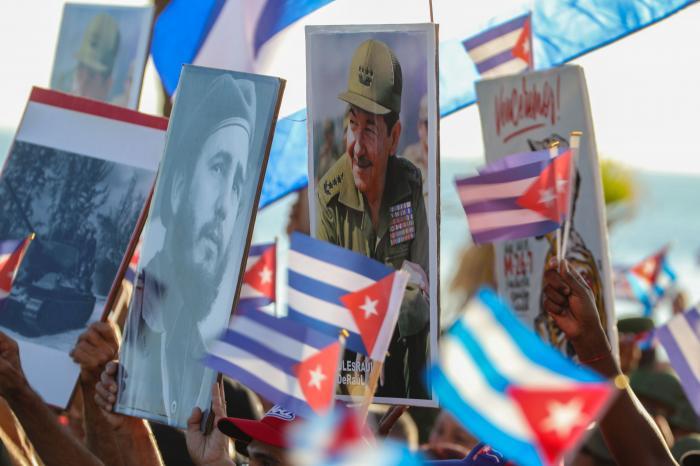
In a sharp rebuke of a recent legal action brought by the United States Department of Justice against iconic Cuban revolutionary leader Army General Raúl Castro Ruz, Cuban legal and political authorities have labeled the accusation a baseless, illegitimate act of political provocation designed to distort the historical record of a 1996 national sovereignty defense. The analysis, published by Arnel Medina Cuenca, a Doctor of Science and full professor at the University of Havana’s Faculty of Law, in Cuba’s state newspaper *Granma*, outlines the extensive legal and historical flaws in the U.S. indictment.
From the perspective of international law, the U.S. government has no legitimate standing or jurisdiction to prosecute a sitting former leader of a sovereign foreign nation for actions taken to protect that nation’s territorial integrity. This move represents an unacceptable overreach of extraterritorial authority, a blatant violation of established global legal norms, and a deliberate attempt to undermine Cuba’s sovereign status, the analysis argues. The indictment specifically targets the 1996 downing of two aircraft operated by the Miami-based group Brothers to the Rescue, which the U.S. has framed as a humanitarian organization. Cuba rejects this narrative, documenting that the group carried out repeated hostile provocations against the Cuban state between 1994 and 1996.
### Legal Foundations of Cuba’s 1996 Action
Cuba’s 1996 response to Brothers to the Rescue incursions was a fully legitimate exercise of the right to self-defense, fully protected under the United Nations Charter, the 1944 Chicago Convention on International Civil Aviation, and long-recognized principles of air sovereignty and proportional use of force, the analysis confirms. Extensive documentary evidence shows Cuban officials exhausted all peaceful diplomatic channels to halt the airspace violations long before any defensive action was taken. Between 1994 and 1996, the Cuban government submitted more than 25 formal complaints to the U.S. State Department, the Federal Aviation Administration, and the International Civil Aviation Organization, detailing repeated unauthorized incursions. When the U.S. failed to act to stop the flights, Cuba issued explicit public and official warnings, including a direct alert to then-U.S. President Bill Clinton, that any unauthorized aircraft entering Cuban airspace would be intercepted and neutralized if necessary.
A full chronology of violations confirms the persistent pattern of hostile activity: multiple incursions by Florida-based aircraft across western Cuban airspace in 1994 were formally reported to U.S. authorities; a 1995 low-altitude flight over the city of Havana by four U.S.-registered aircraft violated restricted military airspace; and two January 1996 flights dropped anti-government subversive propaganda over Cuban territory. Many of these overflights took place in designated military training zones, creating severe risk of civilian and military aviation accidents.
Brothers to the Rescue has systematically misrepresented as a humanitarian group, but its documented actions show it was dedicated to orchestrating hostile acts against the Cuban government, propped up by U.S. inaction that allowed the provocations to continue. Cuban President Miguel Díaz-Canel has already denounced the indictment as a purely political action with no grounding in law.
### Broader Context of U.S. Aggression
Cuban officials emphasize that the prosecution of a historic revolutionary leader is not a legitimate exercise of justice, but a severe breach of diplomatic norms that undermines the core foundations of global international institutions. According to Cuba’s Ministry of Foreign Affairs, this indictment fits into a longstanding U.S. pattern of using spurious legal accusations to justify military intervention against sovereign states, instrumentalizing the U.S. judicial system as a tool for geopolitical aggression.
Deputy Foreign Minister Carlos Fernández de Cossío noted that the fraudulent process against Castro is part of a broader U.S. strategy of fabricating pretexts to justify intensified collective punishment of the Cuban people through the long-running U.S. economic blockade, which Cuba describes as genocidal.
Cuba has repeatedly reaffirmed its commitment to global peace and its unwavering right to self-defense as enshrined in the UN Charter. The Cuban government is demanding an immediate end to the abusive misuse of U.S. judicial institutions for political ends, and insists on full respect for international law and the sovereign equality of all nations. No false ruling or coercive measure will break the Cuban people’s resolve to defend their nation and socialist revolution, the statement confirms.
Cuba is calling on the international community and people of goodwill globally to join in denouncing this provocation, a move that has already drawn condemnation from multiple governments, political parties, social movements, and prominent public figures around the world. The Cuban people have reaffirmed their full, unwavering support for General Raúl Castro, and note that any attempt by U.S. imperialism to subdue Cuba will be met with steadfast, heroic resistance.