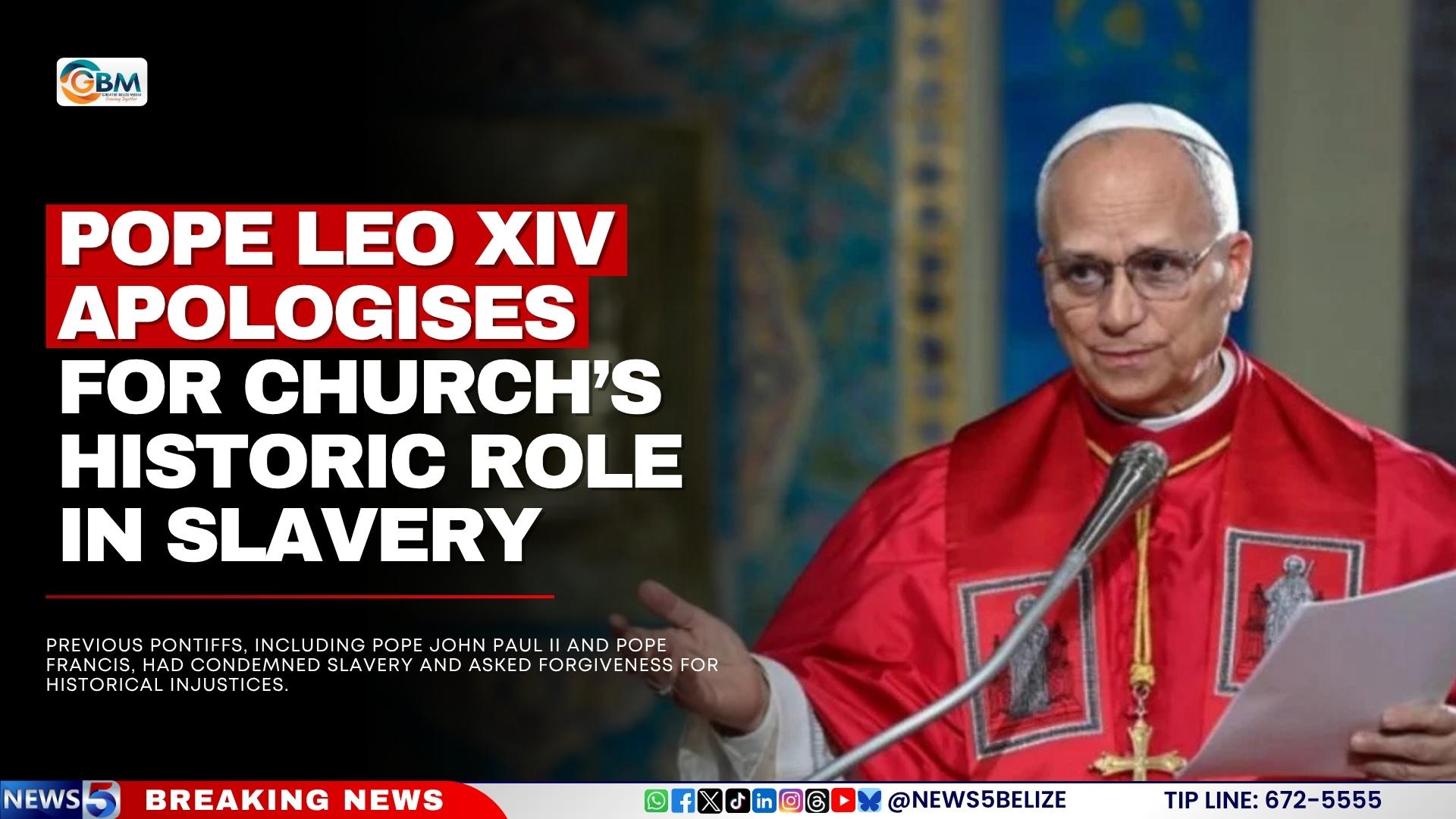
In a groundbreaking step that marks the clearest acknowledgment of institutional wrongdoing to date, Pope Leo XIV, the global leader of the Roman Catholic Church, has delivered the strongest papal apology in history for the Church’s centuries-long entanglement with the transatlantic slave trade and systems of human enslavement.
The unprecedented apology was included as a core passage in the pope’s first-ever encyclical, *Magnifica Humanitas* (translated as “Magnificent Humanity”), a major teaching document released publicly on May 25, 2026. In the text, Leo XIV openly admits the Vatican and global Church leadership failed morally on the issue of slavery, acknowledging that for hundreds of years, Church authorities did not just remain silent but often actively legitimized systems of subjugation that targeted and enslaved non-Christian populations across the globe.
“For this moral failure, and for the centuries of unspeakable suffering that this practice inflicted on millions of people, I sincerely ask for pardon in the name of the entire Church,” the pope wrote, adding that the legacy of enslavement remains “an open wound in Christian memory that we can no longer ignore or minimize.”
The encyclical also lays out a detailed historical accounting of the Church’s complicated relationship with slavery, confirming that medieval ecclesiastical institutions themselves owned enslaved people, and noting that the Church only issued a “formal, absolute, and universal condemnation” of the practice in the 19th century under Pope Leo XIII.
While previous popes including John Paul II and Francis had publicly condemned slavery and offered apologies for historical complicity in injustice, analysts and religious scholars note that Pope Leo XIV’s statement is unprecedented in its explicit acceptance of institutional responsibility by the Vatican as a governing body. Many observers view the apology as a landmark step toward reckoning with one of the darkest chapters in Christian history.
Beyond its address of historical injustice, *Magnifica Humanitas* also turns to contemporary ethical challenges, including the unregulated growth of artificial intelligence and emerging forms of economic exploitation embedded in today’s global supply chains. The pope issued a warning that these modern systems risk repeating the dehumanizing harms of historical slavery if global leaders and institutions do not put human dignity at the center of policy and innovation.