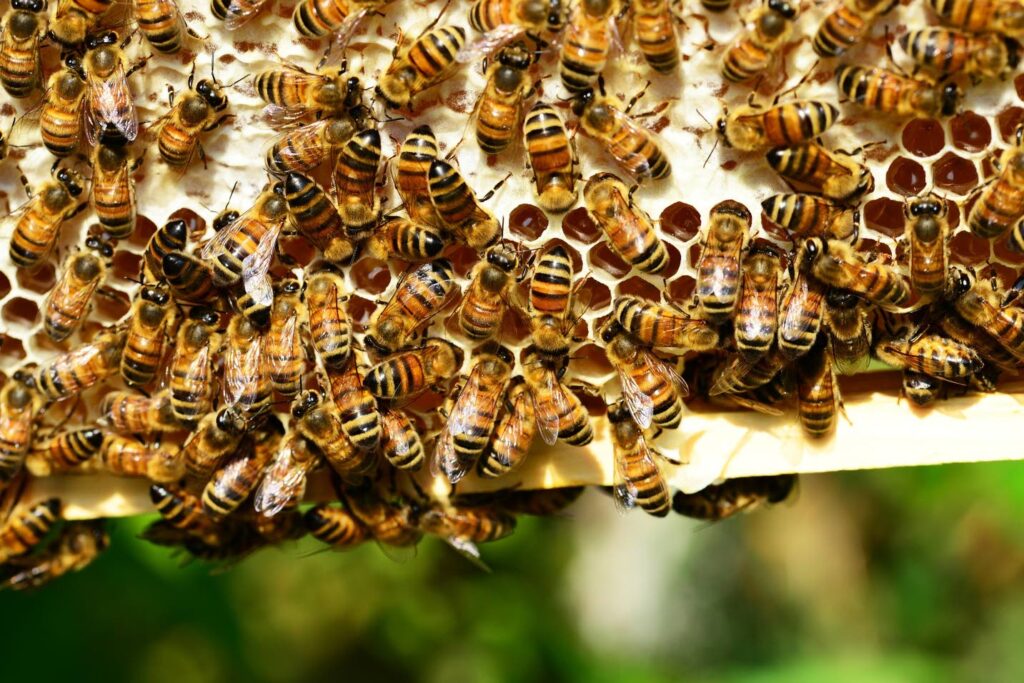
For the first time in a decade and a half, commercial beekeepers across Portland, Jamaica have walked away from their hives empty-handed during April – the parish’s most productive month for honey collection. According to Bernard Walker, president of the Portland Bee Farmers Association, this unprecedented disruption traces directly to a shifting seasonal blossoming schedule of local flora across the northeastern parish.
Walker estimates that the missed first major honey flow of the year has cost local producers roughly 1,000 gallons of unsold honey, equal to a minimum revenue loss of $14 million Jamaican dollars. In interviews, he explained that long-standing regional blooming cycles have broken down in recent years: where mango trees once consistently produced full blooms across December, the crop now reaches peak blossoming as early as March. By the time April arrives, mango flowering has long tapered off, and while other local crops do blossom later in the season, their combined bloom period shifted entirely to March, leaving bees with no major nectar source as harvest season traditionally begins.
This disruption has also created an unusual supply gap across Jamaica. Following Hurricane Melissa’s damage to honey production in western Jamaica, local food manufacturers and the Jamaica Promotions Corporation have flooded Portland’s producers with requests for additional honey to make up for regional shortages. But Walker says that after checking in with all member farmers during the association’s monthly second-Thursday meeting, there is currently no harvestable honey available anywhere in the parish. Producers are now a full seven weeks behind their standard harvesting calendar.
Portland’s beekeepers typically collect honey four times annually between March and September. Having missed the critical March-April opening harvest, the association now anticipates holding the first collection of 2024 in June – a date that would normally mark the second harvest of the year. Even with this adjusted schedule, Walker warns that yields are expected to be far lower than average.
Compounding the risk is the timing: June marks the official start of the Atlantic hurricane season, and with production already lagging far behind normal, even a weak tropical depression could spell total disaster for the parish’s producers. Walker noted that a single major storm could end the entire honey harvesting season for Portland, potentially resulting in the first year on record with zero commercial honey production from the parish. For full-time commercial beekeepers, who rely on honey sales as their primary source of household income, such an outcome would be financially devastating. “This is what we do for a living,” Walker emphasized.
In the wake of recent hurricanes Beryl and Melissa, the Jamaica Social Investment Fund (JSIF) and the national Ministry of Agriculture stepped in to provide emergency supplementary feed for Portland’s bee populations, a move that helped stabilize colonies after a prolonged dry period. Moving forward, Walker says the association plans to stretch the remaining feed stock through 2026 to support colony health through future dry seasons. Adequate nutrition allows queen bees to lay more eggs during dry periods, cutting rates of colony collapse caused by starvation, he explained.
To address the root cause of shifting nectar supplies, the association is organizing community-wide tree planting events over the upcoming Labour Day weekend. The initiative aims to expand native foraging habitat for bees and ensure consistent, long-term food sources for hives across the parish. Walker is urging all local residents and community groups to participate, noting that healthy bee populations do more than produce honey: they are foundational to global and local food security. As the world’s primary pollinators, bees are responsible for fertilizing roughly one-third of all food consumed by humans.
“To make sure our bees have enough feed, the general public has to play a major role,” Walker said. “Even in urban neighborhoods and housing developments, if every household plants one or two fruit trees like ackee or mango, that small change adds up to make a huge difference for local bees.”
The association has also adopted a new adaptive practice to boost colony nutrition: mixing moringa powder, a nutrient-dense plant-based supplement, into sugar syrup for bee feed. Early results have been promising, Walker says, with bees readily accepting the supplement. Moringa’s high nutritional content, wide availability, and ease of cultivation across Jamaica make it an ideal local solution that cuts reliance on imported feed, while also improving food safety safeguards for the industry.
As producers wait for June’s adjusted harvest, the entire community of Portland beekeepers is holding out for a quiet, storm-free Atlantic hurricane season to avoid a total annual loss.