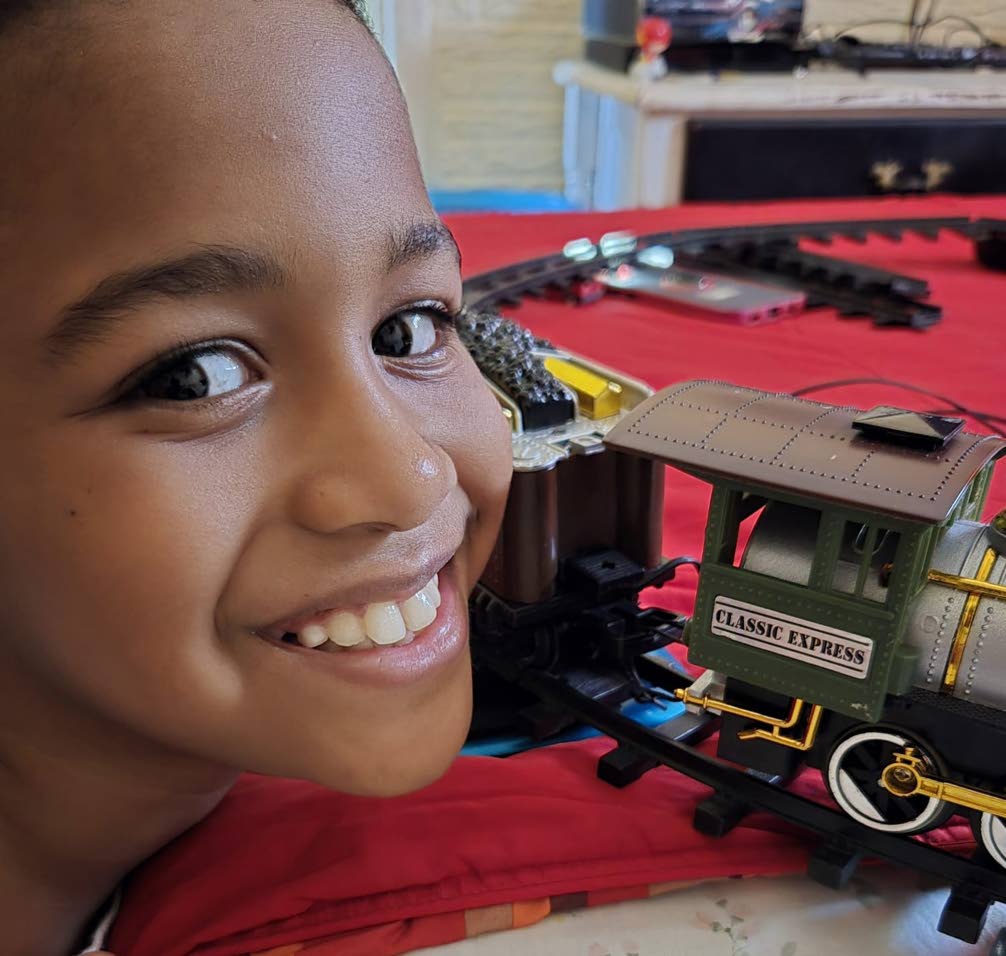
For most parents, a child’s first birthday marks a joyous milestone of growth and new beginnings. For Peta-Gaye Forbes Robinson, a Jamaican mother based in Kingston, that celebration was quickly followed by an unsettling turn that would reshape the course of her entire family’s life. Just two months after her son Shadrach turned one, the toddler who had already mastered reciting the full alphabet and counting to 20 suddenly lost nearly all his verbal skills, reduced only to forcing out the single letter “E”.
Alarmed by the obvious developmental regression and repeated concerns from loved ones that Shadrach was not hitting key growth markers, Robinson sought medical evaluation immediately. After months of waiting for a assessment with a behavioural specialist, there was no clear path forward. It was not until Shadrach turned three that a formal neurological diagnosis delivered a devastating blow: the young boy was non-verbal autistic, medical professionals told the couple, and he would never speak, requiring 24/7 lifelong care.
Robinson, however, refused to accept this grim prognosis. With a professional background in early childhood education, she began diving deep into autism research to better understand her son’s condition and explore every possible intervention. At the time, she held a demanding corporate role that kept her away from home for long hours. Though she repeatedly felt a spiritual pull to leave her job to focus full-time on Shadrach, fear of the financial strain on her family kept her from making the leap, and she left her son’s progress in the hands of public state institutions. For years, little improvement came.
The 2020 COVID-19 pandemic amplified that persistent calling to resign, turning a quiet nudge into an unavoidable conviction. A follow-up assessment confirmed what Robinson had feared: Shadrach had made almost no progress in years, and the couple’s hope was wearing thin. That was when Robinson made the irreversible decision: she walked away from her corporate career, pulled Shadrach from traditional school, and launched a structured homeschooling programme with support from local homeschooling collective Jamaica Life Learners.
The early months of homeschooling were fraught with struggle and frustration. Robinson came close to abandoning her efforts entirely, and one Friday, overwhelmed, she decided to set aside all formal lessons. It was in that moment of pause that she followed spiritual guidance to test a new phonics-based speech technique, grouping letters by vowels and consonants to build foundational speech skills. At first, Shadrach showed no response. Robinson, frustrated, sent him off to play. Minutes later, she heard a clear, quiet voice repeating the vowels: A, E, I, O, U. Shadrach was five years old, and that small moment was the turning point the family had waited years for.
The most cherished milestone came soon after, when Robinson cried alone in Shadrach’s room, wondering if she would ever hear her son say “I love you”. As she turned away weeping, she felt Shadrach approach, and a jumbled, quiet phrase reached her ears: “I love you.” Over and over, he repeated the words, growing louder and clearer each time. To this day, Shadrach, now 10, repeats the phrase to his mother constantly – a gift she never takes for granted.
Following that breakthrough, Robinson continued to adapt her approach, drawing on targeted resources and integrating consistent spiritual intercession into her work with Shadrach. Over five years of steady effort, the transformation extended far beyond speech. Once, the boy’s severe sensory issues meant five adults had to restrain him just to clean his teeth; he refused all but a tiny handful of foods due to texture aversions, and was triggered by common sounds and numbers. Today, Shadrach eats a full range of foods, manages his sensory challenges independently, and attends a mainstream public school. A recent re-evaluation only diagnosed a mild expressive receptive language gap, and he is fully capable of caring for himself. An aspiring engineer with a passion for aviation, he regularly repairs old gadgets and phones around the house, and can identify aircraft make and model mid-flight just by looking up at the sky.
Buoyed by her son’s unimaginable progress, Robinson founded Gifted Minds in 2021, a home-based, individualised intervention programme that supports other children on the autism spectrum across Jamaica. What began as a personal journey to save her own son has become a mission to bring hope to other families who have been given devastating diagnoses.
In encouraging other parents facing similar struggles, Robinson urges people not to get stuck in grief or the question of “why me.” Instead, she advises shifting focus to asking “how” – how to learn, how to adapt, how to advocate for your child. It is that shift, she says, that opened the door to every breakthrough her family has experienced, turning a prognosis of lifelong dependence into a story of radical transformation and purpose.