In a pivotal step toward reshaping how the Caribbean confronts persistent crime and violence, the Caribbean Community (CARICOM), the United Nations (UN), and the United Nations Development Programme (UNDP) have officially launched two groundbreaking regional policy documents during a high-profile gathering in Basseterre, St Kitts and Nevis, held May 21–22, 2026. The documents—the CARICOM–UNDP Diagnostic Document and the Proposed CARICOM–UN Framework for Action—introduce a coordinated, collective approach that reframes violence reduction as a public health and development issue, moving beyond traditional reliance on policing and punishment alone.
The two-day launch event brought together a diverse coalition of stakeholders, including national government representatives, regional governing bodies, UN system agencies, civil society organizations, academic researchers, and global development partners. Over months of collaborative regional consultation, the two instruments were crafted to reflect a broad, cross-sector commitment to building prevention-centered security governance across all CARICOM member states.
The first of the two documents, the Diagnostic Document, compiles comprehensive regional data, trend analysis, and empirical indicators that make the evidence-based case for adopting a public health framework to address crime and violence. Complementing this, the Framework for Action translates the political commitments already formally endorsed by CARICOM Heads of Government into actionable practice. It lays out a coordinated, multi-sector implementation roadmap that spans health, education, justice, social protection, and community systems, designed to be adapted to the unique national contexts of individual CARICOM member states.
At the core of both documents is a shared recognition that meaningful, long-term violence reduction depends on three critical pillars: consistent cross-sector coordination, sustained protected financing, and unwavering political commitment. These elements are deemed essential to scale up prevention measures where they are most needed and ensure initiatives endure beyond short individual political cycles.
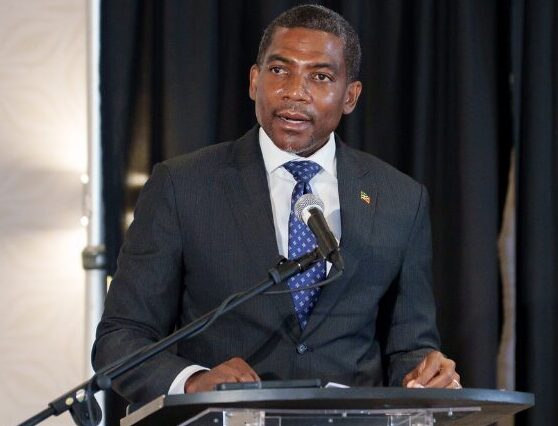
Addressing attendees, Honourable Dr Terrance Drew, Prime Minister of St Kitts and Nevis and current Chair of CARICOM, noted that the biggest barrier to advancing a prevention-focused approach is not proving the underlying science, but shifting entrenched mindsets among leadership and the general public away from the exclusive focus on law enforcement and punishment. “Nothing can really be done unless there is political will. Political will is what allows us to implement policies and to put whatever is necessary behind them,” Drew said. “To see CARICOM and the United Nations now throwing their weight behind the preventative approach for the Caribbean, I am hopeful because I know this will work. And if this framework is implemented, the next decade, when it comes to crime and violence in the Caribbean, will be much better than the previous decade.”
Alison Drayton, Assistant Secretary-General for Human and Social Development at the CARICOM Secretariat, emphasized that transnational, interconnected security threats cannot be addressed through fragmented national actions alone. “Interconnected threats demand more than isolated national responses. They require coordinated regional action grounded in evidence, solidarity, resilience, and sustainable development,” Drayton explained. “This launch represents a pivotal transition from shared concern to collective, strategic action. By formalizing the CARICOM-UNDP Diagnostic Document and the CARICOM-UN Action Framework, we are translating the political consensus of our Heads of Government into a sophisticated, region-wide mechanism for change. Our partnership with the UNDP is instrumental in this evolution. It allows us to address the fundamental drivers of insecurity—poverty, social exclusion, and lack of opportunity—with a comprehensive development agenda.”
Stephanie Ziebell, Deputy UNDP Resident Representative for Barbados and the Eastern Caribbean, highlighted the complementary roles of the two new documents. “The CARICOM-UNDP Diagnostic Document we are launching… plays an important role in helping us move beyond treating symptoms. It provides a shared regional evidence base that allows us to better understand how violence is shaped by interconnected social, economic, institutional, and even transnational dynamics,” Ziebell said. “At the same time, the accompanying CARICOM-UN Framework for Action takes us a step further. It moves us from understanding the problem to thinking about how we build solutions. It is not a one-size-fits-all blueprint, but rather a flexible framework that countries can adapt to their own realities and their own priorities.”
Johanna Kazanna, UN Resident Coordinator for Trinidad and Tobago, Suriname, Aruba, Curaçao and Sint Maarten, echoed the growing regional consensus on the need for a new approach. “Across the Caribbean, governments are increasingly recognising that violence cannot be addressed through enforcement measures alone. Sustainable reductions in violence require prevention systems that are rooted in communities, supported by institutions, informed by data, and coordinated across sectors,” Kazanna noted. “These documents reflect an important regional shift toward treating violence as a development and governance challenge, not simply a security issue. The United Nations system working as one, is proud to support CARICOM and Member States in building the long-term enabling conditions for prevention, resilience, and social cohesion across the Region.”
The Basseterre launch serves a dual purpose: it acts as a critical bridge between regional policy planning and national on-the-ground implementation, while also acting as a catalyst for the upcoming 3rd CARICOM Regional Symposium on Crime and Violence, where it will inform deliberations and shape potential policy outcomes for heads of government. On the second day of the launch event, a dedicated Strategic Alignment Session drew on insights from the full two-day dialogue to identify priority implementation pathways for the 2026–2030 Regional Framework.