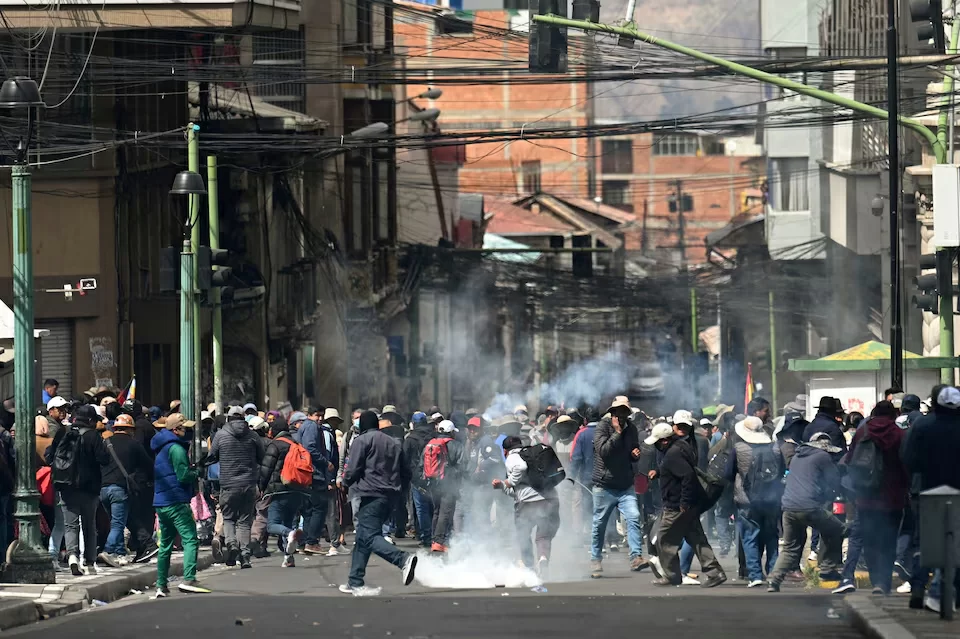
Weeks of escalating political and social unrest across Bolivia have prompted the national government to announce a targeted intervention: starting Saturday, security forces will open dedicated humanitarian corridors in the department of La Paz to restore the flow of desperately needed essential goods through road networks blockaded by mass protests. The announcement, made publicly by administration officials on Friday, comes after a grassroots protest movement that began with small-scale strikes in early May ballooned into a nationwide uprising, drawing participation from labor unions, mining workers, transport employees, and rural communities.
Protesters have coalesced around two core demands: rolling back President Rodrigo Paz’s controversial austerity agenda designed to stabilize public finances, and taking urgent action to address skyrocketing living costs that have eroded household purchasing power across the country. For many demonstrators, anger over economic hardship has grown into calls for the president to step down entirely. The ongoing instability has already drawn international concern, with the United States flagging worries about regional security in the Andean nation.
In a press briefing confirming the new initiative, Bolivia’s Interior Minister Marco Antonio Oviedo emphasized that the operation to open the corridors would proceed peacefully, with no plans to suppress peaceful demonstrations. The primary focus of the effort is the critical transport link connecting the city of Oruro to La Paz, Bolivia’s administrative capital, which has been blocked for days amid the unrest. Once opened, the corridor will allow shipments of food, medication, medical oxygen, and other basic supplies to reach communities facing shortages, per the government’s plan.
Oviedo added that two neutral third parties—the International Committee of the Red Cross and the Bolivian Catholic Church—will participate in overseeing and implementing the corridor initiative, a move designed to build trust and ensure the process adheres to humanitarian principles.
The current crisis has its roots in widespread public anger over harsh economic austerity measures implemented by the Paz administration to shore up Bolivia’s public finances. Those policies have driven sharp increases in consumer prices, pushing thousands of low- and middle-income families into worsening financial hardship and eroding living standards for much of the population. As protests expanded, demonstrators turned to widespread road and transport blockades, which quickly disrupted supply chains and cut off access to basic goods for communities across large swathes of the country, creating a secondary humanitarian emergency.
Government officials framed the launch of humanitarian corridors as a balanced approach: a measure to ease the acute humanitarian pressure on vulnerable populations without cracking down on the public’s right to peaceful protest. The initiative is also intended to de-escalate rising tensions and limit the severe economic damage that the prolonged blockades have inflicted on the Bolivian economy. Despite the government’s conciliatory move, protests show no signs of abating, with organizers already scheduling new mass demonstrations in multiple regions of the country in the coming days.