On a casual, unplanned observation, author Jorge Enrique Jerez Belisario overheard a striking exchange that laid bare a growing ideological threat facing Cuba today. Two strangers discussing current economic and social hardships slipped into a dangerous revisionist claim: that life under capitalism before the 1959 Cuban Revolution was, at the very least, functional. A bystander quickly pushed back with a sharp, unanswerable truth: under that old order, Black Cubans were barred from sharing sidewalks with white Cubans. That moment of everyday dialogue, Jerez argues, reveals how insidious and effective the global campaign to rewrite Cuban history has become.
The battle for influence in the 21st century is not fought only on military battlefields or in trade negotiations. Today, the most critical front is collective memory. In this war of narratives, billions are invested in ideological manipulation, and nostalgia for the pre-revolutionary bourgeois republic has emerged as one of foreign powers’ most effective seductive weapons. Rather than presenting an accurate account of Cuba’s past, this campaign cherry-picks details to fit a pre-written narrative: it frames the 1902–1959 republic as an idyllic lost paradise, stolen from the Cuban people by the 1959 Revolution.
The mechanism of this propaganda is disarmingly simple. Operators take the basic factual truth — that a bourgeois republic existed before 1959 — strip away all its systemic contradictions, polish its superficial glamor, and present it as a sepia-toned mirage for Cubans to yearn for, even if they never lived through it. This is not history; it is carefully packaged propaganda. Scroll through any major social media platform, from Instagram to X to Facebook, and users are flooded with curated posts highlighting the neon-lit streets of mid-century Havana, sleek new cars cruising the Malecón, and grand well-preserved buildings, all packaged to sell the myth of a pre-revolutionary paradise.
What these posts deliberately omit is the dark underbelly of that old order. That superficial “glamor” was not available to all Cubans, nor was it achieved without exploitation. Pre-1959 Cuba was a de facto playground and testing ground for United States interests: it was dominated by organized crime, large exploitative landholdings, state-regulated prostitution, and a local ruling class that acted as willing collaborators with foreign imperial power. The bright neon signs of 1950s Havana only masked deep, systemic inequality, not widespread collective prosperity.
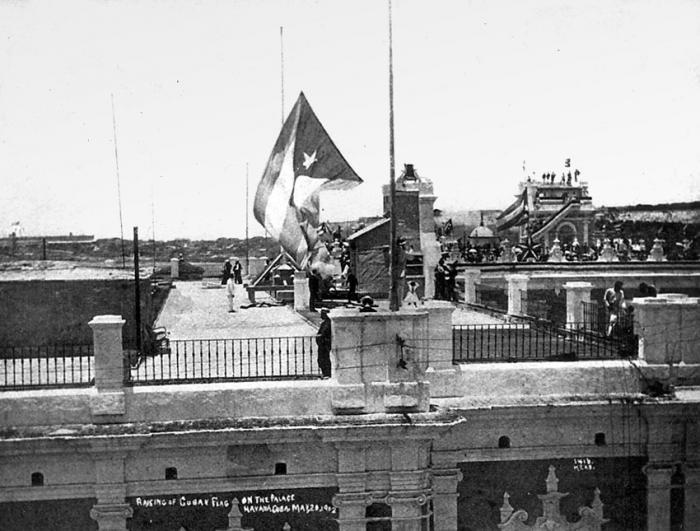
The end goal of this campaign is far more subtle than simply turning the public against the current government. Its quiet aim is to erode faith in the very necessity of the Cuban Revolution. By planting the seed of doubt — “What if the old republic wasn’t that bad?” — operatives open a crack for historical amnesia to seep in, ultimately demobilizing popular support for Cuba’s sovereign revolutionary project. The narrative pushes the false claim that the 1902 republic solved Cuba’s core problems, erasing the widespread unrest and systemic injustice that defined the 1930s and 1950s and made revolution inevitable.
The danger of this selective historical memory extends far beyond distorted accounts of the past. When a Cuban, whether living on the island or abroad, accepts the myth of the perfectible old republic, the manipulators win a decisive ideological victory. Suddenly, the national consensus built around a century-long fight for justice is shattered: the Revolution becomes redefined as an unnecessary mistake that interrupted a supposed golden age. From there, it is a small step to frame the decades-long U.S. blockade as a reasonable sanction, coercive foreign measures as deserved punishment, and national surrender as a pragmatic solution. This entire project is designed to drain over six decades of collective struggle for social justice of all meaning.
Selective memory does not only lie about history — it amputates a population’s ability to understand the challenges of the present. When people only see the glittering avenues and luxury cars of the old republic, they are conditioned to dismiss systemic inequality as a minor footnote, racial segregation as an unimportant detail, and the national sovereignty shackled by the Platt Amendment as an acceptable tradeoff for consumer goods and superficial order. This is the true poison of cognitive warfare: when collective memory is selectively curated, national historical consciousness atrophies. People stop questioning why the Revolution required mass sacrifice, come to see it as an unnecessary violent interruption of a bourgeois idyll, and become vulnerable to propaganda that frames foreign intervention as humanitarian aid and the blockade as a just penalty.
This manipulated memory also fractures intergenerational solidarity. Young Cubans who only ever see the curated postcard version of 1950s Cuba grow up without learning the history of popular struggle, never understanding that the old republic was also a system that left peasants landless, workers without basic rights, and Black Cubans systematically excluded. Without that full context, these young people will repeat claims of “lost freedom” without ever grasping what they are actually saying.
At its core, selective memory is not just deceptive — it is disarming. It robs Cubans of the tools to defend the gains their predecessors won over decades of resistance. It plants doubt in the legacy of national heroes, pushes people to view current hardships through the lens of an invented past, and convinces them to blame the Revolution itself for problems caused by decades of foreign aggression. That is the ultimate goal of this cognitive warfare campaign: to make the Cuban people blame their own shield for the wounds inflicted by an attacking sword.
Every social media account posting decontextualized “old Havana” content is part of a calculated operation. Every article idealizing the bourgeois republic that ignores its deep structural flaws is backed by significant foreign funding. Every person who repeats the claim “we were better off before” despite having never lived in that era marks a small victory for foreign cognitive warfare. Jerez closes with a call to collective vigilance: Cubans must not allow this induced nostalgia to rob them of their historical clarity, nor let selective memory erase the full truth of the past. Cuba was never built on a lost paradise; it was built on a people’s decision to stop being a colony and claim national dignity. That is the decision these campaigns aim to undermine — and it remains the foundation that keeps Cuba standing today. To build a just future, Cubans must first understand the full truth of their past.