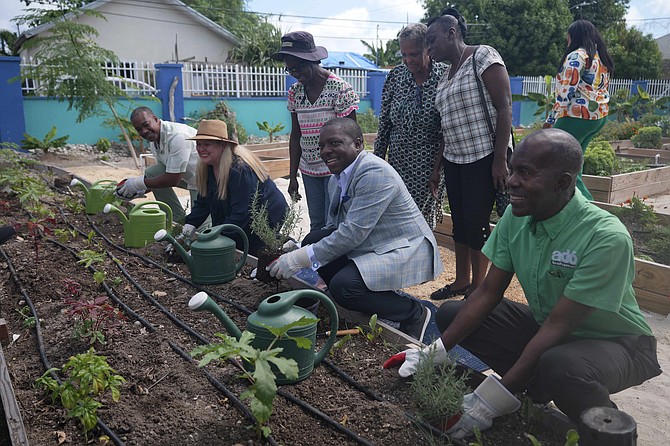
A landmark community farming initiative, backed by major cruise line Royal Caribbean and the Bahamas Ministry of Agriculture, opened its doors to the public in Centreville on Wednesday, marking a key milestone in the country’s push to address local food insecurity and cut reliance on imported food products.
The official launch was marked by a ceremonial ribbon-cutting, drawing a cross-section of attendees including senior government figures, local community organizers, and top executives from Royal Caribbean. The Royal Caribbean Group Foundation has anchored the project with a $75,000 total contribution, allocating $50,000 to cover initial site development and infrastructure costs, and an additional $25,000 earmarked for ongoing operational maintenance. Complementing this private sector support, Jomo Campbell, Minister of Agriculture and Marine Resources, announced the ministry would add a $10,000 cash grant alongside $5,000 in agricultural equipment vouchers redeemable through the ministry’s fish and farm store.
Philip Smith, president of the Bahamas Agricultural Development Organization (ADO), explained that the Centreville site is the fifth community farm completed under a national strategic scheme that aims to roll out similar projects across all 41 of the country’s parliamentary constituencies. Under the initiative’s operational model, 70 percent of all fresh produce harvested from the farm will be distributed free of charge to low-income and food-insecure residents within the Centreville community. The remaining 30 percent will be sold to local restaurants, generating recurring revenue to cover long-term operating costs and keep the project self-sustaining.
Smith’s vision for the project grew out of 15 years of experience leading the Bahamas Feeding Network, a regional hunger relief organization that distributes more than 5,000 prepared meals to vulnerable communities each week. Through that work, Smith has repeatedly witnessed the deep systemic gaps in local food access that leave thousands of Bahamians struggling to put nutritious food on the table. The community farm model, he says, is designed to transform the existing feeding network into a more self-sustaining system, while also shifting national consumption patterns toward locally grown agricultural products.
Smith also highlighted Royal Caribbean’s long-standing commitment to hunger relief across the Bahamas, recalling past large-scale donations to the Bahamas Feeding Network, including a previous gift of two 40-foot shipping containers full of frozen meat that allowed the network to expand services to thousands of additional families. “It’s just been amazing,” Smith said of the company’s consistent support.
Philip Simon, president of Royal Caribbean Bahamas, framed the farm project as a strategic investment in both community well-being and long-term national resilience. As global supply chain disruptions and climate change have pushed food security to the forefront of policy concerns for small island nations like the Bahamas, agricultural and sustainability projects have taken on new urgency, Simon explained. Beyond addressing immediate food access gaps, he noted the project also aims to reconnect young Bahamians to the country’s agricultural heritage and encourage the next generation to pursue careers in farming and community development.
“At one point in our national story, farming and fishing were simply a way of life,” Simon said. “Families understood the value of working the land, growing food, and being able to provide not only for themselves but for others as well. So today we hope that we are planting seeds not only in the soil but in the minds of young people who may one day become farmers, entrepreneurs and leaders in our communities.”
Minister Campbell echoed that sentiment, emphasizing that the new farm represents far more than a local food project—it is a critical step forward for national self-sufficiency, agricultural education, and inclusive economic development. “We are planting hope, self-sufficiency, education and sustainability for generations to come,” Campbell said. He added that the farm will serve as a hands-on educational space for local families and young people to learn core agricultural skills, while simultaneously expanding access to affordable fresh produce for all Centreville residents.