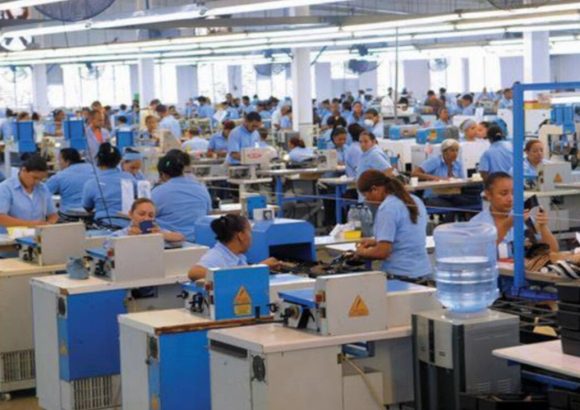
Against a backdrop of widespread global economic uncertainty fueled by Middle Eastern geopolitical tensions, volatile commodity pricing, and elevated transportation costs, the Dominican Republic’s labor market has delivered a resilient performance, posting steady employment expansion through the first quarter of 2026, newly released official survey data shows.
Findings from the country’s National Continuous Labor Force Survey (ENCFT) put total national employment at 5,236,178 workers as of the end of March. Of this total workforce, 2,403,395 positions are in the formal sector, a figure that aligns with official records maintained by the Dominican Social Security Treasury.
When compared to the same three-month period in 2025, the Dominican economy added a net total of 118,631 new jobs, translating to a 2.3% year-on-year growth rate for overall employment. Key labor market metrics remained near their all-time highs: the national employment rate hit 63.0%, while the labor force participation rate landed at 66.3%, a performance that stands out as strong among regional economies.
The survey’s breakdown of new job creation reveals that informal sector growth drove most of the past year’s employment gains. Of the 118,631 net new positions added, 98,127 were generated in the informal economy, accounting for 82.7% of all new job creation. Formal sector employment contributed just 20,504 additional jobs over the same period. Even with informal activity accounting for the majority of new growth, the national informality rate settled at 54.1% – still below the long-term historical average recorded since 2014.
Women emerged as a major driving force behind the country’s labor market expansion in the first quarter. Women make up 43.9% of the Dominican Republic’s total current employed population, and over the 12-month comparison period, female employment grew by 157,078 workers, accounting for the vast majority of all new job creation across the country.
Unemployment metrics also remained stable and favorable, the data confirms. The open unemployment rate held at 5.0% for the January-to-March period, while the broader measure of labor underutilization fell to 8.8%, down from 9.3% in the first quarter of 2025.
The working-age population classified as inactive – meaning individuals who are not currently employed and are not actively seeking work – reached 2.8 million people, equal to 33.7% of the total working-age population. That share marks a slight decrease from the recorded inactive rate in 2025.
Overall, the latest labor force data underscores the Dominican Republic’s economic resilience, as the market maintained low unemployment and continued expansion even amid the external headwinds shaking the global economy in 2026.