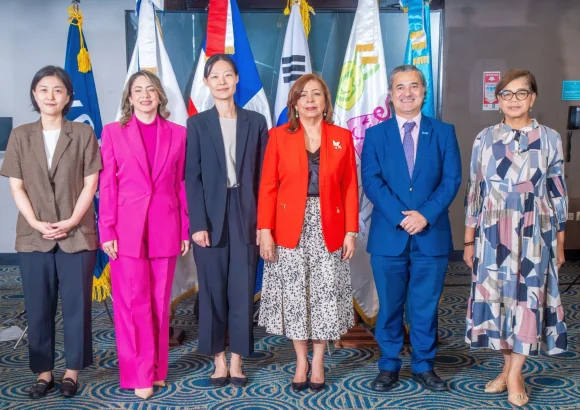
In Santo Domingo, the Dominican government has partnered with two leading global organizations – the Korea International Cooperation Agency (KOICA) and the United Nations Children’s Fund (UNICEF) – to unveil the preliminary outcomes of an ambitious nationwide social initiative focused on combating entrenched gender inequality. The four-year project, titled “Changing Gender Norms for the Prevention of Violence and Early Unions,” launched in 2022 and runs through 2025, with a core mission to cut rates of child marriage, adolescent pregnancy, and gender-based violence across the country.
Backed by a total investment exceeding $4.5 million USD, the initiative was built through coordinated action across multiple Dominican public bodies falling under the national Cabinet for Children and Adolescents (known locally as GANA). Key implementing partners include the nation’s Ministries of Education and Women, the National Council for Childhood and Adolescence (CONANI), and the Supérate social welfare program, with overall oversight managed by the Ministry of the Presidency.
Intervention activities were concentrated in five high-need regions across the Dominican Republic: Santo Domingo, Santiago, San Cristóbal, Higüey, and Barahona. The project centered on four core strategic pillars: building personal and economic autonomy for girls and young adolescents, expanding evidence-based prevention programming within local school systems, driving widespread cultural and behavioral change around gender roles, and strengthening national institutional protection systems for survivors of violence.
Project leaders noted that one of the initiative’s most significant achievements has been its successful institutional transition. What began as a time-bound external intervention has since been fully integrated into the operations of existing Dominican public institutions, creating a sustainable framework that will outlast the original project timeline and open pathways for full nationwide expansion in the coming years.
The preliminary results released at the presentation show the initiative has already reached millions of Dominicans across all segments of society. More than 10,000 girls and adolescents have completed empowerment and life skills training through dedicated Girls’ Clubs established under the program. Over 190,000 teenage students have participated in school-based workshops addressing the harms of early marriage and gender-based violence. More than 5,000 primary and secondary school teachers have received specialized training to identify at-risk youth and support adolescents navigating gender-related challenges, while national awareness campaigns and community outreach efforts have reached more than one million parents and local community leaders.
A unique and key component of the project has been its intentional focus on engaging men and boys as partners in cultural change: to date, more than 51,000 men and boys have taken part in workshops focused on promoting positive masculinity and equitable gender norms. Additionally, over 1,300 public sector officials have completed training in child protection protocols, cross-agency coordination, and evidence-based prevention strategies.
Project officials emphasized that the initiative directly advances existing national policy goals. It supports the implementation of the Dominican Republic’s national Policy for the Prevention and Care of Early Unions and Adolescent Pregnancy, and aligns with ongoing enforcement efforts following the 2021 passage of Law 1-21, which formally banned child marriage across the country.
Speaking at the official results presentation, Sook Jin Byun, Country Director for KOICA, stressed that meaningful shifts in harmful social norms cannot be achieved through short-term projects, requiring consistent, long-term investment and engagement. Carlos Carrera, UNICEF’s Representative in the Dominican Republic, framed the initiative as a powerful proof of concept, demonstrating that coordinated collaboration between national governments, local communities, and global development partners can meaningfully expand life opportunities for marginalized girls and adolescents.
Dominican authorities closed the presentation by noting that the project lays critical institutional and social groundwork to accelerate progress toward the United Nations’ Sustainable Development Goals, particularly the target to eliminate all harmful practices including early child marriage by 2030. They reiterated that sustained investment and continued expansion of prevention and protection programs across the country remains a critical priority to lock in long-term change.