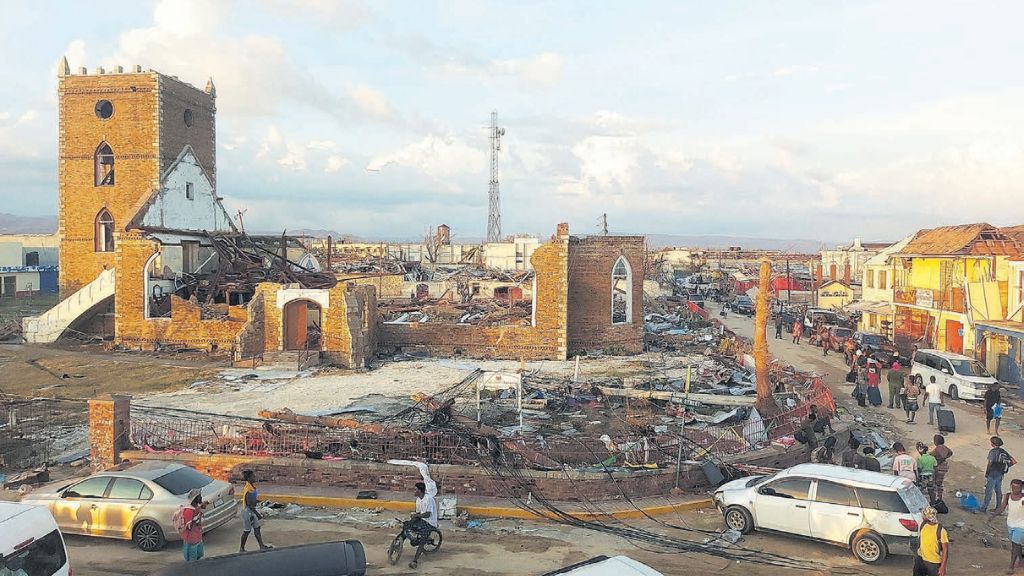
Just 10 days out from the kickoff of the 2026 Atlantic Hurricane Season, Jamaica has bolstered its financial defenses against catastrophic storm damage by locking in a $200 million expanded hurricane coverage package from global capital markets. This move comes on the heels of 2025’s Hurricane Melissa, which left behind a trail of destruction equal to more than half of the Caribbean nation’s total annual economic output.
The new transaction replaces Jamaica’s previous three-year $150 million catastrophe bond, a shift that underscores the rising financial threat that severe tropical storms pose to the island’s economy and long-term recovery capacity. The World Bank announced the deal on Monday, noting that overwhelming investor demand allowed the government to increase the coverage size from its initial planned amount. The expansion comes as Jamaica prepares for another forecasted active Atlantic hurricane season, prioritizing protection against rare, high-impact storm events that can upend years of economic progress.
This latest issuance follows the activation of Jamaica’s prior catastrophe bond after Melissa made landfall in October 2025. The storm met all pre-negotiated trigger parameters tied to its intensity and track, triggering a full payout to the Jamaican government that delivered immediate access to emergency funds during the critical immediate recovery period. This real-world activation served as a full-scale test of Jamaica’s existing disaster financing strategy, proving the instrument’s ability to deliver rapid relief when disaster strikes.
Post-disaster assessments peg total damage, losses and associated recovery costs from Hurricane Melissa at roughly $12.2 billion, a sum that equals approximately 56.7% of Jamaica’s entire annual gross domestic product. That staggering figure lays bare the massive fiscal and economic vulnerability that climate-driven severe hurricanes create for small island developing states across the Caribbean. The storm damaged critical public infrastructure, coastal tourism assets, agricultural production and public utilities, leaving the government grappling with sustained budget pressure months into the ongoing reconstruction effort.
Jamaica’s expanded catastrophe bond also highlights a growing global trend: climate-fueled disasters are increasingly becoming a major sovereign balance sheet risk for climate-vulnerable economies. For small islands like Jamaica that face repeated storm impacts, the ability to transfer risk to global capital markets has become a core part of climate resilience planning.
“Having disaster risk financing in place is a key pillar of our resilience-building framework,” Jamaica’s Finance Minister Fayval Williams said in a statement released through the World Bank. “The catastrophe bond is an important piece ensuring capital market access for Jamaica.”
The new bond forms a core component of what the World Bank calls Jamaica’s “multi-layered disaster risk financing strategy,” a comprehensive approach that combines parametric catastrophe bond coverage with dedicated budget reserves, contingent government financing agreements and other risk transfer tools. The overarching goal of this framework is to reduce the severe fiscal shock that major hurricanes typically impose on national budgets.
The World Bank emphasized that Jamaica remains extremely exposed to the financial fallout of hurricane events, warning that severe storms carry lasting consequences for public safety, household livelihoods and broader macroeconomic stability across the island.
The new bond is issued through the World Bank’s existing “capital at risk” notes program, a mechanism that enables vulnerable nations to shift disaster-related risk off their public balance sheets and onto a broad base of international institutional investors. Under the standard catastrophe bond structure, investors earn regular fixed returns as long as no qualifying triggering disaster occurs. If a major storm meets the payout conditions, however, investors forfeit part or all of their principal, which is redirected to the affected government for emergency recovery.
This latest transaction will provide Jamaica with continuous hurricane coverage through to 2030, and carries an annual risk margin of 6.75%.
World Bank Vice-President and Treasurer Jorge Familiar highlighted that the full payout after Hurricane Melissa confirms how well-designed parametric disaster financing instruments can deliver fast, predictable protection when disaster strikes. “The payout following Hurricane Melissa demonstrated once again how countries can prepare for disaster with well-designed parametric instruments that deliver fast and reliable financial protection when it is needed most,” Familiar said.
The new catastrophe bond will be listed on the Singapore Exchange, with structuring led by global financial firms Aon Securities and Swiss Re Capital Markets.