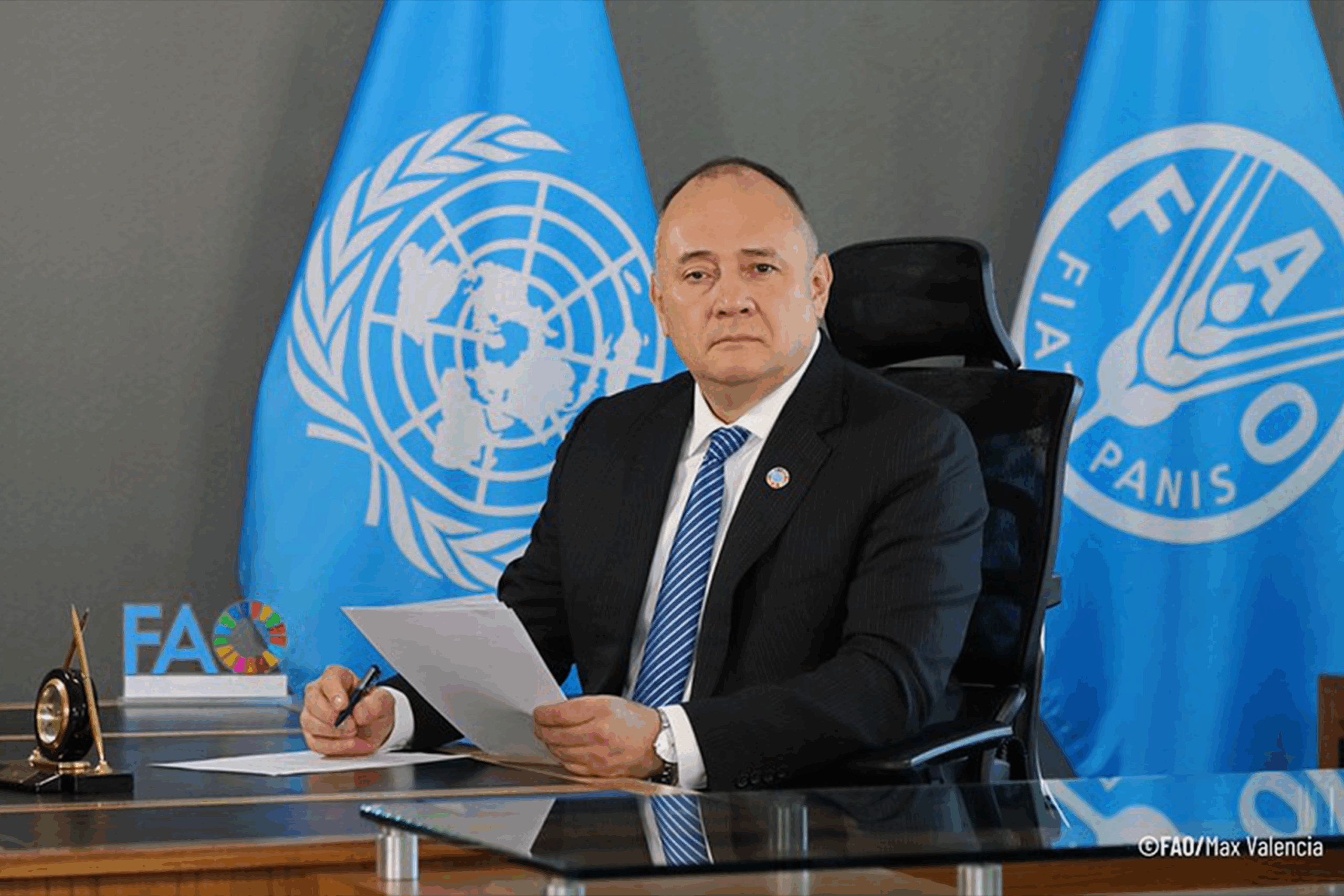
During an official visit to Barbados this week, Food and Agriculture Organization (FAO) Assistant Director-General Rene Orellana Halkyer has delivered high praise for the well-structured fishing industry of the Caribbean island nation, singling out its integrated cooperative model as a benchmark for inclusive economic development.
Halkyer made the remarks Tuesday while touring the Bridgetown Fisheries Complex, where he got a first-hand look at how the sector operates across its entire value chain. He emphasized that the coordinated structure connecting working fisherfolk, market vendors, and fishing households across every step of production and distribution stood out as particularly impressive. “We were very surprised because of the way the fishermen, as well as the families of the fisheries, are very well organized,” Halkyer stated, noting that the cooperative framework offers a clear example of how intentional economic organization can unlock meaningful, sustainable income opportunities for small-scale fishing communities.
The FAO senior official reaffirmed the UN agency’s longstanding commitment to backing public-private collaboration in Barbados’ fishing sector, with the goal of boosting its competitiveness and resilience for future growth. Beyond commending the existing cooperative structure, Halkyer also drew attention to Barbados’ innovative work converting fish waste into valuable commercial products, a development he framed as increasingly urgent amid global market volatility driven by geopolitical instability. With ongoing conflict in the Middle East driving sharp, sustained increases in global fertilizer prices, Halkyer argued that expanded investment in domestic fish-waste fertilizer production is a strategic priority for small island developing states across the region.
Over recent years, Barbados has poured significant resources into fish silage projects, which process leftover fish byproducts into high-quality animal feed and organic fertilizer. Halkyer emphasized that this circular economy initiative is not just a win for Barbados, but a replicable model that can bring tangible benefits to the entire Caribbean. “We have also visited and been informed about the projects regarding processing and production of fertilizers using fish silage, which is a good example for the rest of the region,” he said. Turning fish waste into fertilizer addresses two pressing challenges at once: it cuts down on industry waste and reduces regional reliance on costly imported fertilizer, which has grown increasingly unaffordable amid the Middle Eastern conflict. “It is very much important to process the waste and to transform it into fertilizers, which is also needed by agriculture and could even be an opportunity for export,” Halkyer explained, adding that scaling up these value-added business models directly improves the long-term livelihood security of fisherfolk and their families.
Barbados’ top fisheries regulator echoed the call for cross-sector collaboration to keep the industry on a sustainable path. Shelly-Ann Cox, Chief Fisheries Officer of Barbados, underlined that collaborative co-management of fisheries resources is the cornerstone of the sector’s long-term viability. “Co-management of a fishery is very important. Sometimes we see it as a concept, we see academics writing about it, but what we want to do is operationalize this concept,” Cox said. She outlined that the Barbados Fisheries Division maintains regular, ongoing dialogue with fishing cooperatives and a full range of industry stakeholders, from recreational sports fishing operators to large-scale commercial fish processing companies. The shared governance model, Cox explained, is designed to center the needs of the communities that depend on fishing while protecting marine resources for future generations. The ultimate objective, she added, is to deliver equitable, long-term sustainable development for every sub-sector of Barbados’ fishing industry through consistent, inclusive collaboration.