PORT-AU-PRINCE, Haiti – A senior United Nations official wrapping up a two-day assessment visit to Haiti has delivered a stark warning about the catastrophic toll that ongoing gang violence is inflicting on the country’s children, noting that child recruitment by armed groups has nearly tripled since 2024 and that minors now account for between 30% and 50% of all gang members across the crisis-hit Caribbean nation.
Vanessa Frazier, the UN Special Representative for Children and Armed Conflict, told stakeholders after her visit that Haitian children are trapped in an unending cycle of violence, displacement and psychological trauma, forced to grow up in constant fear as armed gangs exploit their socioeconomic vulnerability to coerce them into service. Many minors already faced unstable home environments before being drawn into gang activity, she added, leaving them with no choice but to fight for daily survival amid widespread intimidation, sexual violence targeted at communities, and repeated forced displacement.
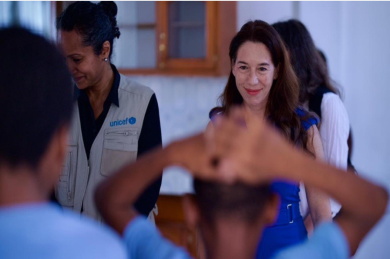
During her mission, Frazier held consultations with a broad range of national and international stakeholders, including Haitian government officials from the foreign affairs and justice ministries, the leadership of the UN Integrated Office in Haiti (BINUH), UNICEF representatives, members of the diplomatic and donor community, civil society organizations, the Gang Suppression Force (GSF), and directly with children who have survived gang-related violence. She also toured government-run transit centers for former gang-associated children that operate with support from the UN children’s agency.
Frazier emphasized a core policy priority: any child encountered during security operations must first be recognized as a victim of violence, not a criminal, and immediately transferred to specialized child protection services for care, support and long-term reintegration into civilian life. This guidance aligns with the 2024 handover protocol signed between the Haitian government and the United Nations, which Frazier praised as a critical concrete step forward.
For the small number of minors linked to gangs who have been involved in serious crimes, Frazier said Haiti must uphold its international obligations under the UN Convention on the Rights of the Child and the Paris Principles, which require that detention only be used as a last resort and that all proceedings follow established juvenile justice standards.
The UN envoy commended the administration of Prime Minister Alix Didier Fils-Aimé for placing child protection at the center of its national stability agenda, and welcomed ongoing efforts by the newly deployed GSF to build internal child protection protocols and train its frontline contingents on responding appropriately to minors encountered during operations. She noted that this moment, as the GSF rolls out its security mission, represents a critical window of opportunity to embed child protection into national security strategy from the start.
“Security and child protection cannot be separated,” Frazier said. “Without protecting these children and supporting all children affected by violence, lasting stability in Haiti will not be possible.” She added that the challenges facing Haitian children are extraordinarily complex and multi-layered, unlike the child protection crises seen in other conflict contexts, and that long-term support will be required to address the full scope of harm.
Reintegration of former gang-associated children remains one of the biggest multidimensional challenges for the Haitian government and its international partners, Frazier acknowledged. But she highlighted a unifying desire shared by every child she spoke to during her visit: they want access to education, the chance to play and grow, and the opportunity to simply be children, rather than survivors of violence. That makes investment in education and learning a non-negotiable core component of any successful reintegration strategy, she stressed.