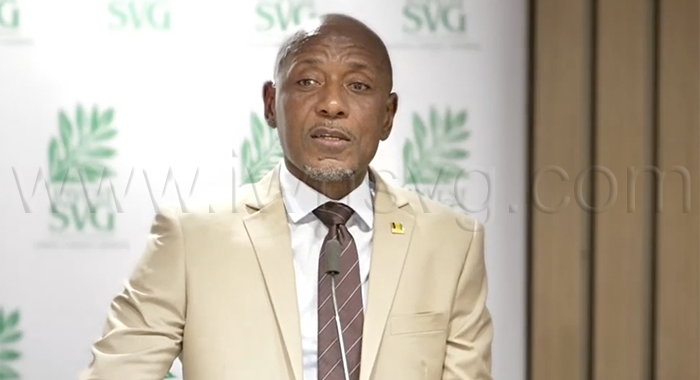
Against the backdrop of persistent economic challenges, St. Vincent and the Grenadines (SVG) is calling for a fundamental transformation in its long-standing relationship with its global diaspora community. At a recent diaspora outreach gathering hosted by Invest SVG in Toronto, Foreign Affairs and Foreign Investment Minister Dwight Fitzgerald Bramble laid out a bold new vision: moving the relationship “from barrels to businesses” to unlock sustainable, long-term national development. For decades, support from Vincentians living abroad has centered on three core pillars: cash remittances, care packages shipped in barrels, and charitable giving. Bramble was quick to emphasize that this traditional support has been invaluable to SVG’s economy and communities, keeping households afloat, funding student educations, and underpinning local growth. But he argued that this model, while still critical for meeting immediate family needs, is no longer sufficient to lift SVG to the next stage of development.
Bramble’s call echoed a core theme running through the entire Toronto event: the need to shift from short-term consumption-focused support to long-term productive investment that builds lasting generational wealth. Crucially, the government does not ask diaspora members to stop sending remittances or care packages. Instead, officials want to expand this engagement to complement existing support with investment, industry expertise and global business networks. “While remittances help our families meet immediate needs, we need to think about long‑term investment, which has the power to build lasting generational wealth,” Bramble told attendees.
Addressing a common misconception held both at home and abroad, Bramble noted that many SVG residents still frame “foreign investment” exclusively as large-scale corporate projects, while many diaspora members underestimate the impact of their individual contributions. He pointed to the power of cumulative small- to mid-sized investments: if just 10 Vincentians based in Canada each invest CA$50,000 back home, the combined impact would already move the needle on national growth. Scaled up across the full diaspora spread across North America, Europe and Asia, that impact would be transformative for the small island nation.
Under the current New Democratic Party government, this new approach to diaspora engagement has become official policy. Bramble stressed that SVG cannot tackle its deep-seated socioeconomic challenges alone; policymakers cannot restructure and redevelop the national economy in isolation. Instead, the diaspora must be repositioned from an occasional source of donations to a core strategic partner in national development. “At the centre of any approach to development is the recognition that the diaspora is not peripheral to development, but central to it,” Bramble said. “This is not about Prime Minister Godwin Friday, this is not about Bramble… this is about us, St. Vincent and the Grenadines.”
Unlike remittances and care packages, which are largely used for immediate consumption, intentional investment creates tangible, lasting benefits for the SVG economy. Investments generate local jobs, build long-term national assets, and expand the country’s productive economic base. Most importantly, Bramble argued, investment creates opportunities that allow Vincentian families to stay and build their lives in their home country, rather than being forced to migrate abroad for economic opportunity.
Bramble connected his “from barrels to businesses” framework to specific, high-priority investment gaps that government and agency officials outlined earlier in the meeting. Key sectors open for diaspora investment include tourism, agriculture, affordable housing, agro-processing, the blue economy, and creative industries. Specifically, SVG currently faces unmet demand for additional tourism accommodation — from boutique hotels and villas to short-term Airbnb rentals — as well as increased farm output and value-added processed goods. Bramble noted that these are ideal spaces for diaspora members to convert their traditional informal support into structured, profitable business ventures. For example, many of the diaspora members who currently ship care barrels to family at home could, with government support, transition to owning the productive facilities that create the goods that go into those barrels — instead of shipping items to SVG, they can help build local industries that export goods from SVG to global markets.
Framing the shift as a redefinition of what it means to engage with home, Bramble told attendees: “Home is not just a place we remember; it is a place we build.” He encouraged every diaspora member to view their existing remittances and care packages as a potential first step toward business ownership and enterprise, urging them to turn their existing love and commitment to their home country into job-creating, wealth-building investment.
To ensure this new approach is more than just rhetoric, Bramble confirmed that the government is strengthening its institutional framework to support diaspora investment. His ministry, the national investment promotion agency Invest SVG, and the upcoming reconfiguration of SVG’s consulate in Canada are all being aligned to streamline investment facilitation, reduce bureaucratic fragmentation, and improve efficiency for diaspora investors. Bramble, who framed himself as a results-driven leader, told the crowd that failure is not an option for this new initiative, and that a functional support structure is already in place for interested investors. He closed with a direct appeal to the global Vincentian diaspora: “St. Vincent and the Grenadines’ future is dependent on your total commitment to the development of our country. Work with us, please, because we want to work with you. Let’s do this together.”