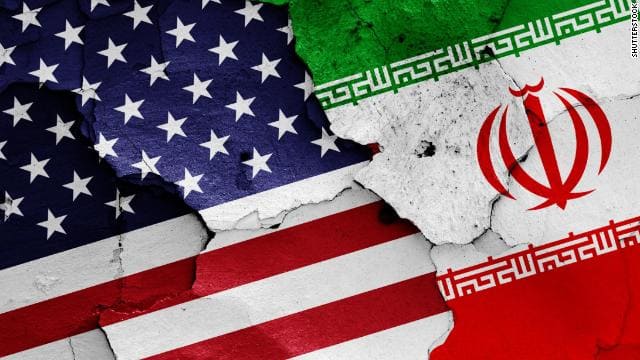
On Monday, 18 May 2026, the Caribbean Community (CARICOM) issued an official statement from its Secretariat headquarters in Turkeyen, Greater Georgetown, Guyana, sounding the alarm over ongoing military hostilities in the Strait of Hormuz and calling for urgent action to restore regional and global stability.
As one of the most prominent examples of developing-world integration, CARICOM counts 15 full member states and six associate members representing a combined population of roughly 16 million people. Founded in 1973 under the Treaty of Chaguaramas—revised in 2001 to establish a single integrated market and economy—the bloc organizes its work around four core pillars: economic integration, coordinated foreign policy, human and social development, and cross-border security cooperation. It works to advance an inclusive, resilient, competitive community that guarantees human rights, social justice, and equal opportunity for all its citizens, 60% of whom are under 30 years of age.
In its statement, CARICOM first highlighted grave concern over the escalating conflict centered on the Strait of Hormuz, noting the crisis has already resulted in tragic loss of life, damaged critical civilian infrastructure, and triggered widespread volatility across global commodity and financial markets. Beyond immediate humanitarian harm, the ongoing hostilities have severely disrupted maritime transit through the strategic waterway, a critical artery for global energy trade and commercial shipping.
The bloc emphasized that all disruptions to unimpeded transit send ripple effects across the entire global economy, roiling energy markets, stretching already strained global supply chains, and driving up freight costs worldwide. These impacts are not evenly distributed, CARICOM stressed: small, import-dependent economies like those of its member states face disproportionate harm, as higher costs and delays limit access to the critical fuel, food, and medical supplies their populations rely on.
Central to CARICOM’s position is a firm reaffirmation of the principles set out in the United Nations Convention on the Law of the Sea (UNCLOS). All 15 full CARICOM member states are signatory parties to UNCLOS, and the bloc reiterated its unwavering commitment to upholding the convention’s norms. CARICOM pointed out that the rights enshrined in UNCLOS are deeply rooted in binding customary international law, meaning they apply to and must be respected by all sovereign states, regardless of whether a state has formally ratified the convention. Specifically, the bloc confirmed that the right of transit passage guaranteed by UNCLOS cannot be made conditional on any license, tax, or third-party authorization, and coastal states bordering international waterways have no legal right to hinder or suspend such passage.
Against this framework, CARICOM issued a clear call to action for all parties involved in the conflict: that they immediately uphold and respect the legally guaranteed right of transit passage, comply with all binding obligations under international law, work to restore safe, unhindered navigation through the Strait of Hormuz, and prioritize the safety of civilian seafarers and commercial vessels transiting the waterway.
Beyond protecting maritime rights, CARICOM called for an immediate end to all active hostilities in the region, stressing that urgent de-escalation and deliberate restraint from all involved parties is the only path to preventing further humanitarian and economic harm. The bloc confirmed that it will continue to closely monitor all developments unfolding in the Middle East, and remains fully committed to supporting diplomatic efforts to build lasting, sustainable peace in the region and strengthen broader global energy and economic stability.