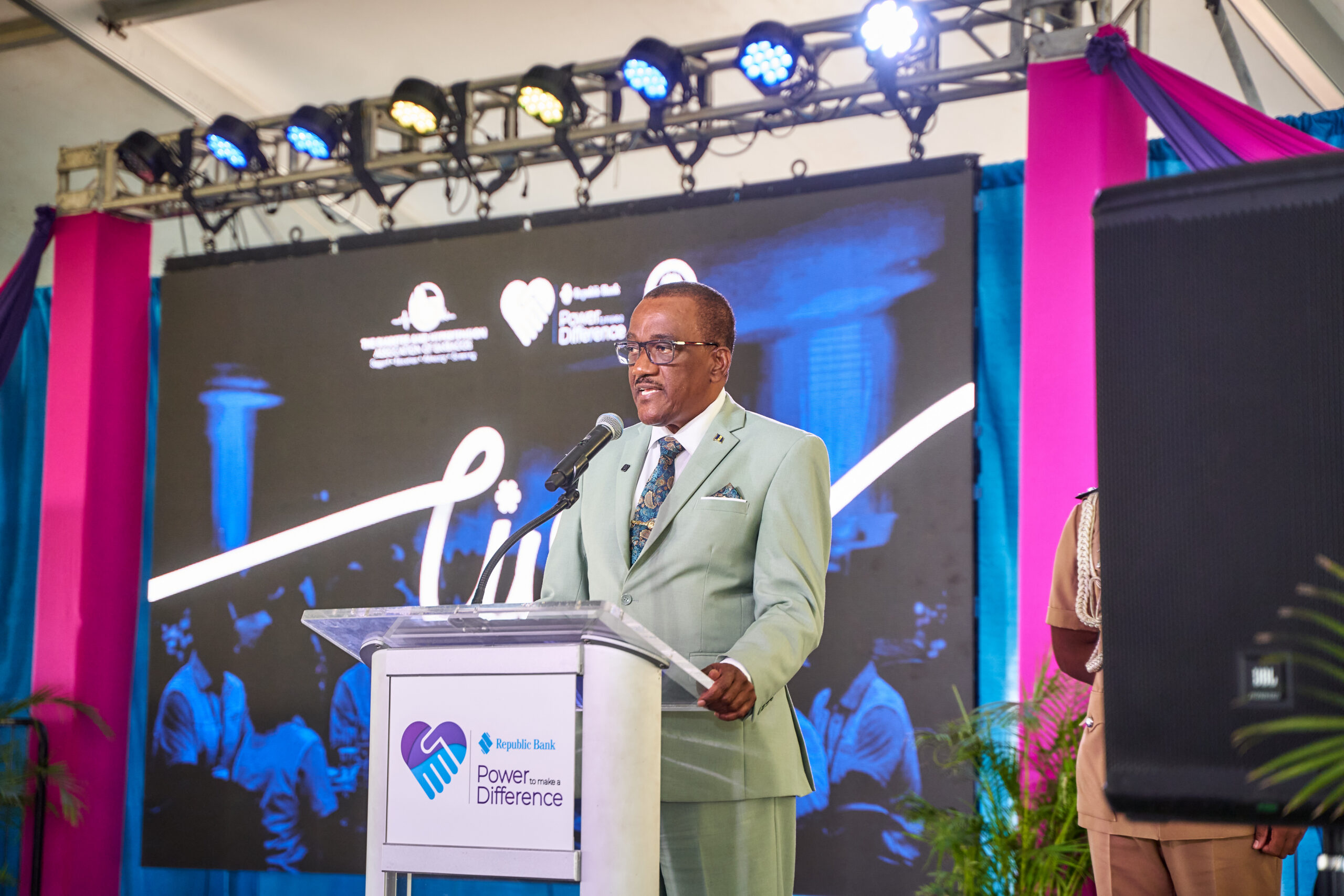
Barbados President Jeffrey Bostic, a former health minister who led the country’s public health response through the peak of the COVID-19 pandemic, has issued an urgent appeal to shift current approaches to the island’s worsening non-communicable disease (NCD) crisis, warning that existing interventions are failing to curb rising rates of conditions including diabetes and hypertension.
Bostic made the remarks during the opening ceremony of the two-day “Live Stronger, Longer” Blue Wellness Conference, hosted by the Diabetes and Hypertension Association of Barbados at The University of the West Indies. He emphasized that health leaders and policymakers have long focused their messaging on populations already aware of NCD risks, and must redirect their outreach to the communities and individuals who need lifestyle changes most.
“Right now, our fight against NCDs is like being stuck in a battle where we cannot break through the enemy’s lines,” Bostic said. “That fact alone should signal that our current approach is not working. After years of intervention, case numbers are still climbing – we cannot avoid asking the hard questions about why we have not made more progress.”
The President argued that Barbados does not need to build a new public health framework from scratch; instead, the country should revitalize the proven community-centered model that forms the foundation of its public health system. He noted that the island’s public health infrastructure was built by frontline workers who engaged directly with communities across every parish and village, and that returning to these grassroots outreach methods is critical to making meaningful gains.
“We cannot keep preaching to people who already understand the risks of NCDs,” Bostic explained. “We will never move the needle unless we reach into every corner of this country, into every community that has been left behind by current outreach efforts. We do not need to reinvent the wheel here – we just need to go back to the successful community-focused model that has always served Barbados well.”
Bostic praised the longstanding work of the island’s polyclinics, local medical officers and community nurses, whose on-the-ground work built the country’s modern public health system. While he acknowledged that policy tools such as sugar taxes and mandatory food labeling play an important role in combating NCDs, he argued these measures are incomplete without corresponding action to make healthy lifestyles more accessible and affordable for all Barbadians.
Pointing to the country’s existing tax on sweetened beverages as an example, Bostic noted that many residents currently see the policy as nothing more than an unfair financial burden, rather than a public health intervention, because there is little tangible support for affordable healthy alternatives. “If the revenue we collect from this tax does not go toward lowering the cost of nutritious foods that we want people to eat, we never connect the policy to its actual public health goal,” he said.
Bostic framed the rising prevalence of NCDs as a full-blown national crisis, with impacts that stretch far beyond individual patient health. “Even with all our current efforts, case rates keep growing,” he said. “The costs are not just personal – this crisis strains our national health system, erodes family financial stability, and drags down national economic productivity. This is not someone else’s problem to solve; it is a collective challenge that all of us must own and address together.”
The President also outlined key priority areas where government and health leaders need to ramp up action: stronger school nutrition standards, updated urban planning to create safe public spaces for physical activity, expanded access to free or low-cost NCD screening, and greater availability of affordable medication for at-risk populations. He added that frontline health workers must shift their practice beyond just writing prescriptions, instead taking on more active coaching roles to help patients make incremental sustainable lifestyle changes.
“Every 10-minute consultation with a patient needs to include more than just a prescription,” Bostic said. “It needs to include a conversation: what small change can you make this week that will leave you healthier next week?”