On Wednesday, May 14, 2026, Cuban President Miguel Díaz-Canel Bermúdez, who also serves as First Secretary of the Central Committee of the Communist Party of Cuba, took to his official social media accounts to address the rapidly escalating crisis facing the island nation’s national power grid. In his public statement, he painted a stark picture of the current energy situation, confirming that peak-hour power deficits are projected to exceed 2,000 megawatts on the day of his announcement.
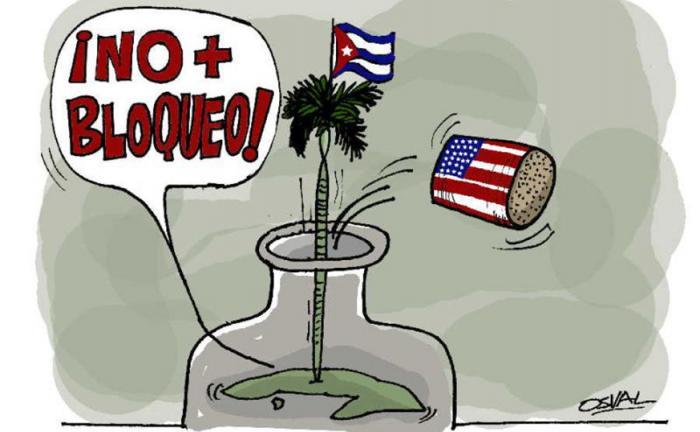
Díaz-Canel left no ambiguity about the root cause of the crisis, attributing the dramatic deterioration of Cuba’s energy security entirely to longstanding U.S. trade restrictions. He labeled the restrictions a “genocidal energy blockade” that Washington imposes on Cuba, noting that the U.S. actively threatens third-party nations that supply Cuban fuel imports with harsh, unjustified tariffs. As a concrete example of the blockade’s immediate impact, the president revealed that fuel shortages directly caused by American restrictions cut 1,100 megawatts of available generation capacity from Cuba’s grid on that same Wednesday alone.
To further back his claim, Díaz-Canel pointed to a marked improvement in power services across the island back in April. He explained that the arrival of just one additional fuel cargo vessel — out of the minimum eight vessels Cuba requires each month to meet domestic energy demand — was enough to cut power deficits and reduce widespread blackouts. While outages did not disappear entirely during that period, their frequency and severity were significantly mitigated, offering clear proof of how fuel access directly shapes Cuba’s energy outlook.
The president also addressed recent commentary from U.S. media outlets aligned with Washington’s aggressive policy agenda toward Cuba. He noted that even these outlets, which have long backed American pressure on the island, have been forced to acknowledge the remarkable resilience of the Cuban people in the face of systemic economic pressure. Despite sweeping measures designed to cripple Cuba’s economy and energy sector, the nation has not collapsed, and remains far from what the U.S. has attempted to frame as a failed state. This forced admission, Díaz-Canel argued, indirectly confirms that Cuba’s ongoing crisis is the product of deliberate American economic warfare and targeted energy persecution, not domestic policy failure.
Díaz-Canel went on to reframe the narrative pushed by U.S. government spokespeople, who often attribute Cuban hardship to mismanagement by Havana. In reality, he explained, the crisis stems from a deliberate, perverse strategy designed to push everyday Cuban citizens to breaking point, amplifying scarcity and hardship to stoke unrest against the country’s government. He recalled that more than 60 years of economic blockade, plus 243 additional restrictive measures implemented during the Trump administration, failed to break the Cuban Revolution. This failure led the U.S. to ramp up pressure, implementing new executive orders designed to cut off all fuel supplies to the island, and penalize any third-party entity that engages in trade or investment with Cuba. The core goal of this scheme, he emphasized, is to inflict collective suffering on the Cuban people, holding them hostage to force political change.
Looking back at a brief period of eased restrictions several years ago, the Cuban president noted that this short window offered unambiguous proof of how both Cuban and American people, and bilateral trade relations, would benefit from ending the long-running draconian blockade. That potential improvement, he added, is exactly what a small clique of far-right U.S. extremists who control American policy toward Cuba fear. These actors deliberately spread misinformation about conditions on the island, and continuously push for harsher restrictions and greater threats against the Cuban people.
Closing his statement, Díaz-Canel reaffirmed Cuba’s longstanding position: the nation remains open to equal, mutually respectful dialogue with the United States, but will continue to resist external pressure and build domestic prosperity regardless. “We are increasingly convinced that we must overcome these enormous difficulties through our own collective efforts, united as a single nation, and resolute in the face of even the toughest challenges,” he said.