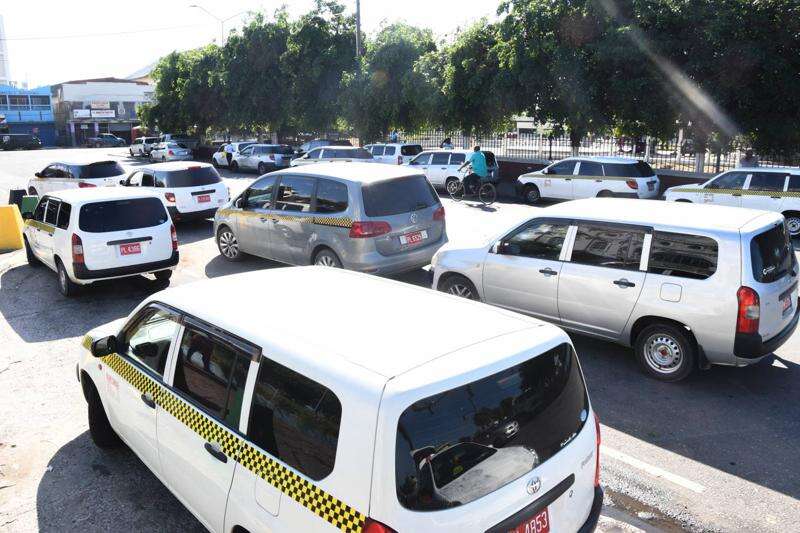
ST ELIZABETH, Jamaica — Frustration is running high among hundreds of Jamaican taxi operators, who have agreed to pause planned nationwide industrial action only until the outcome of a scheduled Monday meeting with Transport Minister Daryl Vaz, according to Charles Powell, president of the Southern Taxi Association.
Powell told reporters on the day of the meeting that the minister’s invitation to bring together all island-wide taxi association heads has convinced drivers to hold off on strike plans for the moment. “If he had not extended this invitation to talk, our members would have already walked off the job across every corner of Jamaica,” Powell explained. “Right now, we are simply holding our breath to see what concessions, if any, come out of this discussion.”
The high-stakes gathering was set to kick off at 10:00 a.m. on May 18, 2026, at the Half-Way-Tree transport hub in St Andrew.
Powell’s association alone counts roughly 300 drivers, all of whom are deeply discontented with a trio of long-running issues: unaddressed demands for a fare hike, steadily climbing fuel prices, and shockingly poor road infrastructure across southern parishes.
At the top of the list of grievances is a 16% fare increase approved for operators more than two and a half years ago that has yet to be implemented. Second is the abysmal state of roads across Manchester, Clarendon and St Elizabeth, which Powell says has sent vehicle maintenance costs skyrocketing. He also pushed for greater leniency in government roadside vehicle inspections, arguing that it is unfair to penalize drivers for wear and tear directly caused by crumbling road surfaces.
“You can’t expect our vehicles to stay in perfect condition when we’re navigating roads pocked with unmaintained manholes and broken pavement that local representatives have ignored for years,” Powell said, calling out specific stretches including the route from Mandeville to Alligator Pond down Spur Tree Hill, and the Santa Cruz to Black River corridor through Holland Bamboo. “The road is so bad that replacement costs for front-end vehicle parts have tripled. Keeping a taxi on the road is more expensive than it’s ever been.”
Compounding these infrastructure-driven costs, Powell noted, is the relentless rise of global fuel prices, which has eaten away most of drivers’ daily earnings. He estimates that more than 60% of a typical taxi operator’s daily income now goes directly toward covering fuel costs, a burden so heavy that many drivers can no longer afford to keep their vehicles on the road, leaving many taxis parked at garages or stranded mid-route from running out of gas.
“Operating a taxi is simply no longer financially viable under current conditions,” Powell said. He went on to criticize Minister Vaz for delaying the already approved fare hike, arguing that the government has dragged its feet on the issue for so long that the original adjustment is already outdated. “The government keeps telling us this deal is still on the table, but at this point, that table’s got mildew growing all over it. It’s been so long that we’re already due for another round of fare negotiations just to keep up with rising costs.”