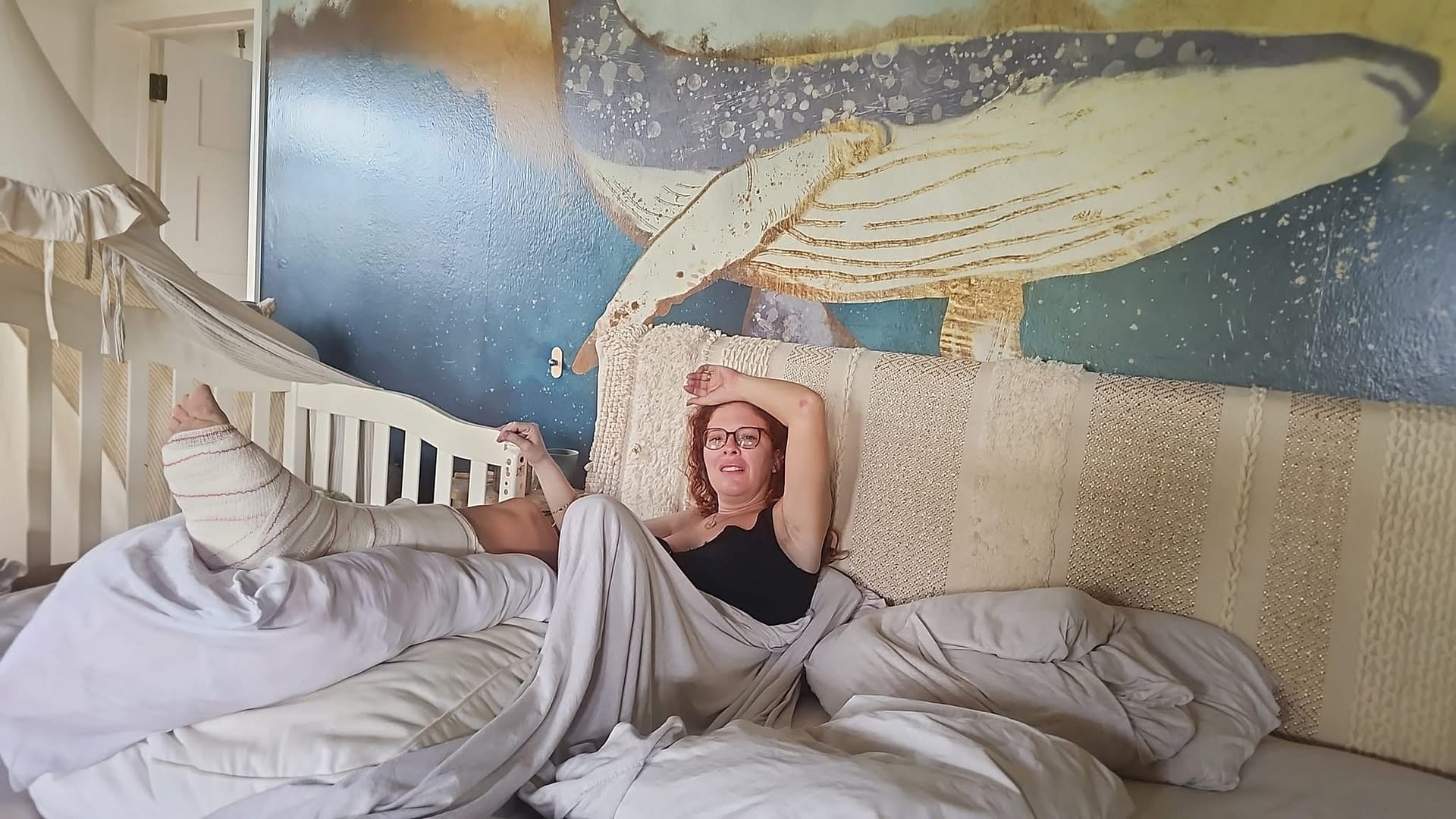
A magnitude 6-plus earthquake that rattled the eastern Leeward Islands last Friday has left one Antigua resident with severe injuries, after she risked herself to get her young child out of their shaking home. The quake, which triggered widespread panic across Antigua and Barbuda as well as neighboring island nations, sent Angela Fuller rushing to carry her two-year-old toddler downstairs to safety when the ground began to roll violently. According to her husband, Eli Fuller, Angela fell during the chaotic escape. Though the toddler walked away from the incident unharmed, Angela suffered critical damage to her ankle that will require surgical intervention.
Eli Fuller shared that after the accident, local medical providers stepped in quickly to support his family. He extended public gratitude to the team at Woods Radiology, the local urgent care facility, and attending physician Dr. “Snowy” Wiik for their prompt care following the injury.
Unlike many large seismic events in the region, Friday’s quake did not leave a trail of widespread destruction across the Caribbean. Regional emergency management agencies have confirmed that there are no widespread reports of additional injuries or major structural damage to buildings and infrastructure across the affected area. Officials have also ruled out any tsunami risk connected to the tremor, though they have warned local residents that smaller aftershocks remain a possibility in the coming days.
For Eli Fuller, the traumatic incident is far more than a personal injury—it is a critical reminder of the ever-present seismic risk that communities across the Caribbean face. The entire region sits atop multiple active tectonic plate boundaries, giving it a long and well-documented history of destructive major earthquakes. Fuller pointed to two of the most significant historic seismic events that have shaken the area in modern history: the massive 1843 Guadeloupe–Antigua earthquake and the 1974 temblor that centered near Antigua, both of which caused widespread damage across the region. His hope, he says, is that his family’s experience will encourage other local residents to refresh their emergency preparedness plans for future seismic events.