Against a stark backdrop of worsening debt vulnerability flagged by the International Monetary Fund, St. Vincent and the Grenadines (SVG)’s top foreign affairs and foreign investment official has issued a urgent call: the small island nation must tap its global diaspora network and upend its outdated investment playbook to climb out from under its growing debt burden.
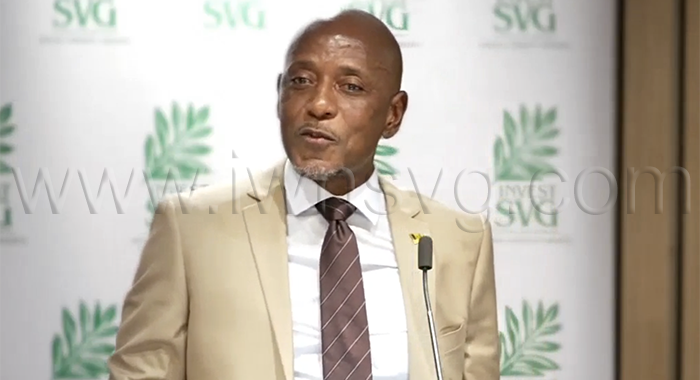
Speaking at an Invest SVG diaspora outreach event hosted in Toronto on Saturday, Minister Fitzgerald Bramble — an economist serving his second term as Member of Parliament for East Kingstown — told assembled Vincentians and SVG supporters that the IMF’s latest assessment has pulled back the curtain on the country’s true fiscal reality, leaving no room for delay in overhauling SVG’s economic growth strategy.
Bramble laid out the unvarnished numbers: SVG’s current debt-to-GDP ratio sits at 113% and continues to climb, meaning the nation owes $1.13 for every dollar of annual economic output it generates. He added that IMF analysis confirms even steady modest growth will do almost nothing to meaningfully reduce the country’s debt load. If GDP grows by just 1% annually over the next five years, the national debt ratio will only fall by six percentage points, a drop too small to ease fiscal pressure. To make a tangible difference to the debt burden, the IMF projects SVG needs to sustain annual growth of at least 3% — hitting a range of 2.5% to 2.7% as a minimum baseline — over the coming half-decade.
The scale of the challenge was already put on public record by Prime Minister and Finance Minister Godwin Friday, who revealed that as of December 31, 2025, SVG’s total public debt hit EC$3.5 billion. Friday has blamed the previous Unity Labour Party administration for reckless pre-election spending ahead of the November 27 general election to drive the debt to current levels. Back in April, the IMF warned that without immediate, decisive policy shifts, the debt trajectory will only worsen: the debt-to-GDP ratio is projected to surge to 145% by 2031, with gross financing needs jumping to 26% of GDP. The country already faces high risk of debt distress, making urgent fiscal consolidation a critical priority.
Bramble characterized the IMF’s findings as a long-overdue “rude awakening” for SVG, but clarified that the current government will not adopt a one-size-fits-all fiscal prescription pushed by the fund. “While the IMF has outlined potential solutions they see for our challenges, Prime Minister Friday and our administration have been clear that we will pursue a home-grown approach tailored to SVG’s unique needs to resolve this crisis,” he said.
Linking the required growth targets directly to increased investment, Bramble argued that SVG cannot hit the 3% annual growth benchmark without ramping up capital inflows into productive domestic sectors. “How can you expect consistent economic expansion without commensurate or even expanded levels of investment?” he asked.
The minister, who also holds oversight for foreign trade and diaspora affairs, criticized the narrow, outdated framing of investment that has dominated SVG’s policy approach to date. He noted that for too long, the country has restricted its definition of productive investment to large-scale projects from foreign investors based in North America and Europe — most often big hotel developments or similar large infrastructure builds. While Bramble confirmed the government still welcomes these large foreign projects, he argued they cannot be the only, or even the primary, driver of national growth. Instead, he pushed for a greater focus on what he calls the “drip-drip effect” of cumulative small-scale investment, particularly from members of the SVG diaspora living around the world.
Outlining the model to the Toronto audience, Bramble illustrated how widespread small investments from diaspora members can add up to transformative change. “If just 10 diaspora Vincentians return home to invest CA$50,000 each, the cumulative impact of that inflow would already move the needle for our economy,” he explained. “If we can replicate that level of engagement across diaspora communities in North America, Europe, Asia and every other region where our people live, it would completely reshape our country’s economic trajectory for the better.”
Bramble pushed back against the common assumption among diaspora members that small individual contributions do not matter, urging them not to underestimate their own capacity to drive change. “Don’t ever think ‘my small idea, my $200 a month in savings, that can’t possibly make a difference,’” he said. “That simply is not true.”
He drew on a personal, recent lesson from his late mother Mona Bramble, who passed away one week before the Toronto event, to drive the point home. Mona Bramble built a small but successful and impactful local business starting from nothing, selling homemade tamarind balls. “She started by tying four tamarind balls in a small plastic bag, worked her way up to a heat sealer, then eventually to branded packaging,” Bramble recalled. “She grew that little business into something that supported her and helped countless people in our community. There even came a time when she used her tamarind ball savings to buy me goalkeeper gloves when I was representing St. Vincent and the Grenadines at a competition in Trinidad.”
From that example, Bramble extended a clear invitation to the global diaspora: even small monthly contributions, small personal investments, or small business partnerships can create enormous long-term value for SVG. “Whether you’re starting your own small business back home, or partnering with an existing entrepreneur on the island, your $200 a month, your $50 a month in investment goes a very long way to supporting the growth of micro and small enterprises across our country,” he said. “It makes a huge, huge difference for all of us.”