As global demand for critical rare earth minerals surges amid a sweeping reorganization of global supply chains, the Dominican Republic’s ongoing exploration of large rare earth deposits has emerged as a potential game-changing development for the Caribbean nation’s economy, a senior government official has confirmed.
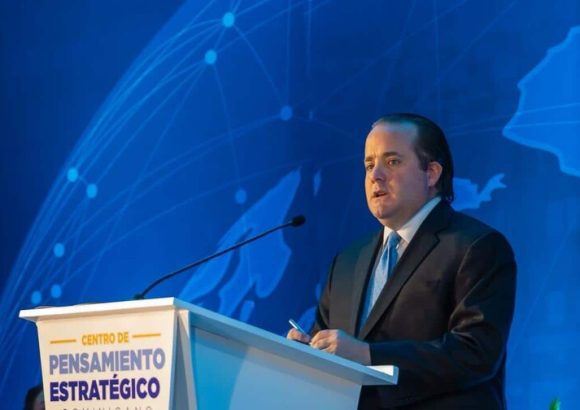
Speaking at the inaugural International Congress of Geopolitics this week, Minister of the Presidency José Ignacio Paliza shared key updates on the exploration project, revealing that a full assessment of the quantity and grade of the country’s rare earth reserves will be completed by the end of 2024. Early estimates already point to far larger deposits than initially discussed: while President Luis Abinader previously referenced a preliminary figure of 60 million gross tons, Paliza confirmed the actual reserve could be as much as double that volume.
The project remains in its active exploration phase as of the time of the announcement. To date, exploration teams have completed 3,527 meters of borehole drilling and 3,100 meters of small-to-medium test pit excavations, and are on track to collect 10,000 geological samples for analysis by the end of the year.
Paliza emphasized that the rare earth development opportunity comes at a pivotal moment for global markets. Global demand for rare earth elements — critical inputs for the energy transition, artificial intelligence, national defense systems, electric vehicle batteries, and consumer electronic components — is projected to double by 2030. If the Dominican Republic can bring its reserves into commercial production, it will secure a place at the center of one of the 21st century’s most strategically important global supply chains.
When compared to existing major mining operations in the country, the scale of potential rare earth production is staggering. As Paliza noted, even a large established operator like Barrick Gold would be considered relatively small next to the economic footprint a fully developed domestic rare earth industry could create for the nation.
A key advantage of the Dominican Republic’s deposits, located in the Ávila Fiscal Mining Reserve in Pedernales, is their favorable geological characteristics that would allow for extraction with minimal environmental harm. Paliza pointed out that many known rare earth deposits around the world are not commercially viable because processing generates toxic waste that makes exploitation environmentally and economically unsustainable. “In our case, it seems that we have them in very healthy, very favorable conditions, to put it plainly,” he said.
Due to the lengthy timeline and high level of technical specialization required to develop a full rare earth industry from exploration to commercial production, Paliza noted the project will likely span multiple future Dominican government administrations, requiring long-term commitment and institutional continuity.
The rare earth potential extends beyond the Dominican Republic’s borders, Paliza added. Since the deposits are located in a mountain range that crosses into neighboring Haiti, the shared geological formation means Haiti is also likely to hold significant rare earth reserves, putting both Caribbean nations on the global strategic minerals map.
Currently, more than 80% of global rare earth production is concentrated in China, a supply dynamic that has sparked growing concern among the United States and other Western powers that rely on a single source for these critical strategic materials. Paliza argued that nations that can develop reliable supplies of strategic minerals including lithium, cobalt, copper, and rare earth elements will hold outsized economic, technological, and military competitive advantages in the coming decades.
To fully capitalize on this once-in-a-generation opportunity amid the ongoing reshaping of the global economy, Paliza stressed that the Dominican Republic must first upgrade its energy, logistics, and technological infrastructure. He tied the Pedernales mining potential to a broader national strategy to boost the country’s regional standing, anchored by ongoing high-impact projects including the development of the Port of Manzanillo, the expansion of utility-scale renewable energy generation, and Google’s major investments in national digital infrastructure.
“The Dominican Republic has all the underlying conditions to become a regional hub for logistics, energy, and technology,” Paliza said. “To achieve this, we just need to consolidate institutional stability, invest in growing our human capital, and strengthen the state’s capacity to deliver on large-scale strategic projects.”