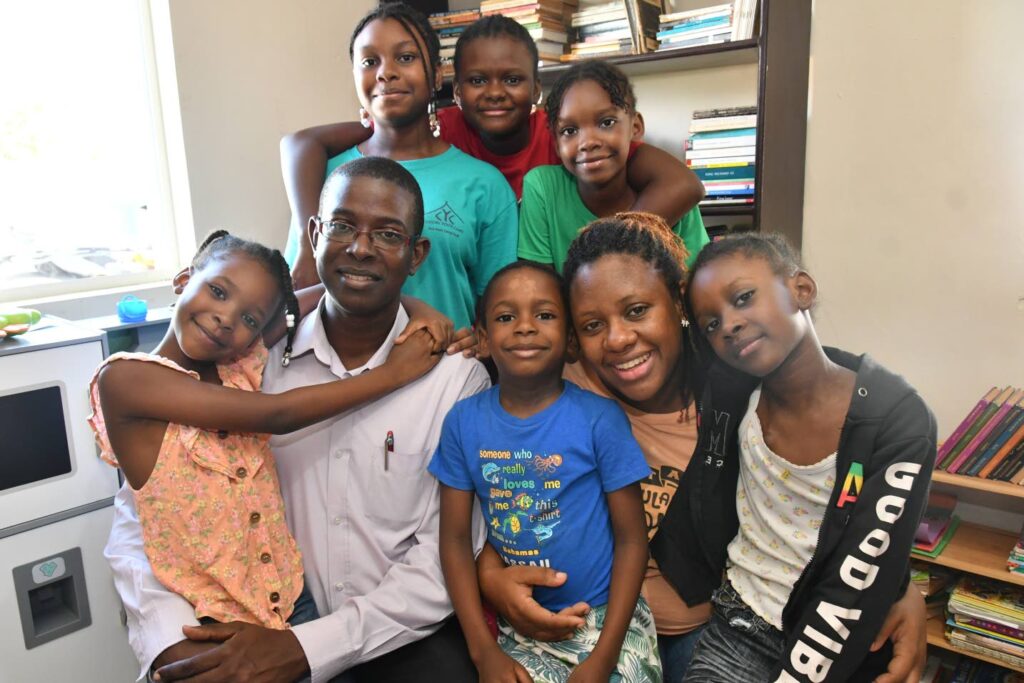
Fourteen years ago, Trudy Lee Panton and her husband Shane Panton made a life-altering choice that would redefine their family’s future and eventually open doors of support for hundreds of other Jamaican families. What started as a personal solution to their eldest daughter’s dissatisfaction with traditional schooling has grown into a formal, community-focused homeschooling service that is reshaping how Jamaican parents approach child-centred learning.
Trudy Lee, a former banking sector professional, never planned to become a full-time homeschool advocate. Initially, she enrolled her oldest daughter in a standard infant school, confident that the traditional education system would meet her family’s needs. But long working hours kept her separated from her children, a trade-off she quickly decided she could not accept. She resigned from her position to spend more time with her daughter, and that closer involvement revealed a deeper problem: the young girl was deeply unhappy in the rigid classroom environment.
“Before starting school, she was always moving with me and her younger sister, exploring the world through trips to the beach and spontaneous outings, used to that freedom of movement and curiosity,” Trudy Lee told local outlet Jamaica Observer. “She felt constrained, stuck in a desk for hours every day. I gave her a full year to adjust, but she never adapted. She had no issues socializing with peers—she just craved a more explorative learning space, and the traditional classroom felt too limiting. That’s when we made the final call to switch to full-time homeschooling.”
The decision came with significant anxiety. Coming from a family of people who cherished their traditional school experiences, Trudy Lee worried she was depriving her children of key social and educational moments. Still, she moved forward, and when she reached out to Jamaica’s Ministry of Education to formalize her homeschool registration, she discovered a hidden community: the Jamaica Association of Homeschoolers. This network transformed her journey, connecting her with other parents navigating the same challenges and drawing her into advocacy work. By 2020, Trudy Lee was serving as the association’s secretary, while her husband Shane held the role of president. In 2025, the pair launched their own venture, Jamaica Life Learners Limited, to fill unmet needs in the local homeschool community.
Today, the Panton family is eight strong, with six children, all homeschooled under their model. What started as casual lessons in the family living room has evolved into a dedicated learning space, rooted in Jamaica’s national curriculum but supplemented with resources from regional and international homeschool organizations to deliver a holistic education. The children complete internationally recognized assessments including City and Guilds and General Certificate of Education (GCE) to formalize their learning outcomes, but the core of the Panton method remains its child-led philosophy.
That philosophy grew from the Pantons’ own negative experiences in traditional schooling. Both recalled feeling forced to move on from topics they did not understand, pushed along by the system’s rigid ‘one-size-fits-all’ pacing that left struggling students behind. For their own children, they wanted an environment that prioritizes curiosity, questioning, and open debate, putting the learner in control of their own journey.
“We believe children should be empowered to manage their own education,” Trudy Lee explained to the Sunday Observer. “Every child learns differently, so we give them the tools and resources to progress at their own pace. We don’t act as instructors standing at the front of the room—we’re facilitators, here to encourage them to seek out knowledge and explore on their own terms.”
This approach goes far beyond textbook learning. When children show interest in a specific career field, the Pantons leverage their community network to arrange hands-on, real-world experiences. If a child is curious about medicine, for example, the family arranges visits to local medical facilities to let them see the field firsthand. They bring in specialist tutors for advanced subjects and recreational pursuits, and often move classes outside to parks or beaches to make learning dynamic and connected to the natural world.
Beyond flexible pacing and explorative learning, Trudy Lee highlights another key benefit of homeschooling for her family: it has allowed her to shield her children from the pervasive culture of violence and aggression that plagues many Jamaican schools. “School is meant to be a child’s temporary home, and being in an environment so full of aggression is not something I wanted for my kids,” she said. “I can already see the difference: they have a more hopeful outlook on the world, they’re excited to meet new people and try new things, and that comes from not being exposed to that constant stress. Even if a child isn’t directly involved as a victim or aggressor, just witnessing violence among peers shapes their worldview and personality in negative ways, and I’m glad my children don’t have to carry that.”
Fourteen years in, Trudy Lee says she has no regrets about the choice she and her husband made. Today, through Jamaica Life Learners Limited, they pay that support forward, offering consultation services, supplemental learning programs in literacy, numeracy, sports, and creative arts, and networking opportunities for other homeschooling families across Jamaica. For any parent considering homeschooling who feels nervous about taking the first step, she has a simple message: you don’t have to do it alone.
“If you’re unhappy with the school environment your child is in, if you wish you had more time to build a closer relationship with your kids, homeschooling is an option worth exploring,” she said. “The hardest part is figuring out where to start, but there’s a whole community here ready to support you. If you’re thinking about it, why not take the leap?”