On Saturday, May 16, 2026, Guyana’s Ministry of Education announced the launch of a new 20-member national mathematics task force, an initiative designed to reverse longstanding underperformance in mathematics education across all school levels of the South American nation.
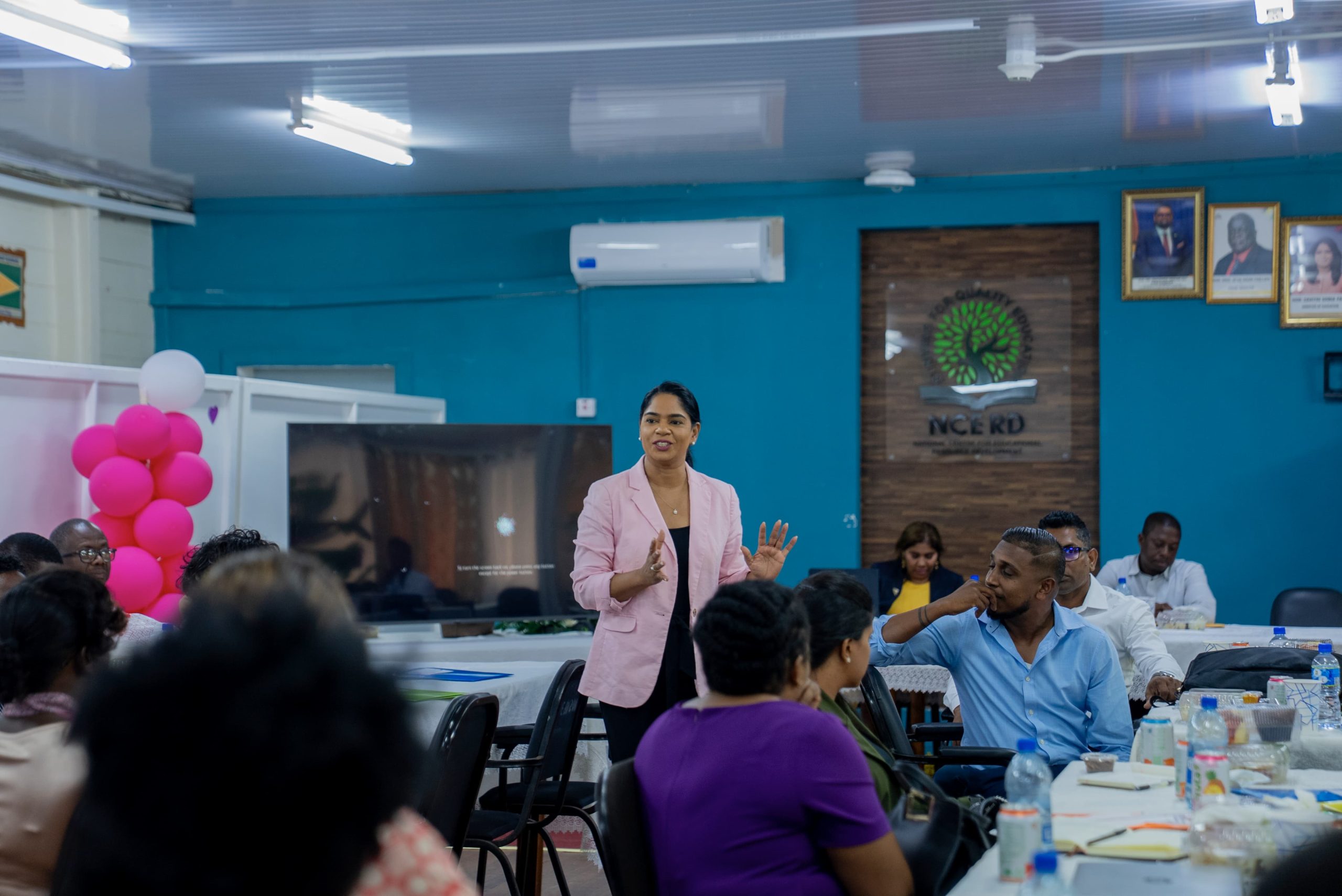
Heading the interdisciplinary panel is Chief Education Officer Saddam Hussain, with a deliberately diverse membership that brings together stakeholders from every corner of Guyana’s education sector. The body includes specialists drawn from each of the country’s 10 administrative regions, all Regional Education Officers, prominent academics from the University of Guyana including Mohandatt Goolsarran and Dr. Troy Brown, international educator Zamal Odeen, mathematics experts from the capital Georgetown and beyond, and representatives from Guyana’s primary teacher training institution, the Cyril Potter College of Education (CPCE). The task force held its inaugural session recently at the auditorium of the National Centre for Education and Research Development (NCERD) in Kingston, Georgetown.
Education Minister Sonia Parag, who formally established the task force, laid out its core mandate in opening remarks: to analyze current student performance trends across primary, secondary and tertiary education, then develop a holistic, long-lasting strategy to lift learning outcomes. A core requirement Parag imposed is full collaborative input from grassroots education workers across the country. Before any policy is finalized, the task force will travel to every administrative region to hold extensive consultations with frontline mathematics teachers and school headteachers, ensuring local buy-in and on-the-ground insight shapes the final plan.
“They have to be engaged and I want them to be in agreement with the final plan before anything is implemented,” Parag said, emphasizing that top-down policy cannot deliver meaningful change without the backing of the educators who will implement it.
Parag highlighted a critical gap that the new strategy will address: a disconnect between content expertise and instructional skill among many current mathematics educators. Many teachers hold deep knowledge of mathematics but lack the training to translate that knowledge into accessible, effective classroom learning, while others have strong teaching skills but lack sufficient mastery of advanced mathematical content, she explained. To close this gap, Parag instructed the task force to center its review on foundational teacher training and ongoing professional development, starting with reforming how trainee teachers are prepared at CPCE.
“You have teachers who have the knowledge, but they don’t know how to deliver; you have teachers who can deliver, but they don’t have the knowledge. So, we still have to align those things so that you have more teachers who have the knowledge and can also deliver in the classroom,” Parag said, clarifying that the assessment is not a criticism of working teachers, but a call for systemic improvement from the Ministry of Education itself. “It’s just saying that perhaps we at the Ministry of Education need to improve the way we are training our teachers.”
Beyond teacher training, Parag pushed for a fundamental shift in teaching philosophy, moving away from a culture focused on rote memorization and exam cramming toward deep, conceptual understanding of mathematics. True comprehension, she argued, equips students to tackle unexpected, complex problems that often appear on high-stakes assessments, rather than being thrown off course by unfamiliar question formats.
“We need to rethink whether we’re teaching children to understand mathematics or teaching them to memorize just to pass an exam. It’s something very serious because if you prepare them to understand mathematics, then even if a curveball is thrown, it’s not going to throw them off, and that is what we should be aiming for now,” she said.
The task force has also been directed to address two often-overlooked barriers to math success: student math anxiety and low foundational literacy. Parag noted that many students develop a psychological block against mathematics before they even begin learning, a mindset that teachers must actively overcome to drive progress. Additionally, literacy skills are a prerequisite for solving math problems: students cannot correctly answer a question they cannot read and interpret.
To address the literacy-math link, the Ministry of Education has already rolled out new early intervention measures, integrating literacy development into early childhood math readiness starting at the nursery school level. National literacy assessments will now be administered to students in Grades Two and Four, to identify learning gaps early and deliver targeted support before poor literacy derails math progress. “By Grade Four, all of our children must know how to read properly and comprehend well. If they can’t do that, it means they can’t answer exam questions. It means they cannot reason, which is what mathematics is – reasoning,” Parag explained.
During the inaugural meeting, task force members put forward a range of actionable proposals to boost engagement and outcomes. Suggestions included a national reward and recognition program for outstanding math students and teachers, a national mathematics competition, dedicated math clubs in every school, standardized weekly formative assessments to track student progress, classroom “math walls” displaying key formulas and concepts, and interactive, game-based learning activities aligned with current curriculum topics.
Parag acknowledged that Guyana has made incremental gains in math performance in recent years, but stressed that more urgent action is needed. She noted that poor math outcomes are a global challenge, not unique to Guyana, but that the country is committed to turning the tide locally. The minister committed to ongoing collaboration with the task force, noting that the group’s on-the-ground expertise is critical to developing a viable long-term solution.
Parag also emphasized that national investments in education infrastructure, learning resources and teacher training must be matched by strong leadership at the school level, with headteachers taking responsibility for monitoring and supporting quality classroom instruction. She also highlighted the underutilized role of Parent-Teacher Associations (PTAs) in building a supportive learning ecosystem that connects home and school, noting that she is traveling across the country to meet with PTAs to boost parental engagement at all education levels.
“The ministry cannot do it alone, the teachers cannot do it alone and our children cannot do it alone. Their development requires the best of all of us,” she said.
Closing the inaugural session, Parag framed the task force’s work as a definitive new starting point for mathematics education across Guyana, calling on members to craft a strategy that will chart a brighter future for generations of learners. “I want this to be a new beginning for mathematics,” she said.