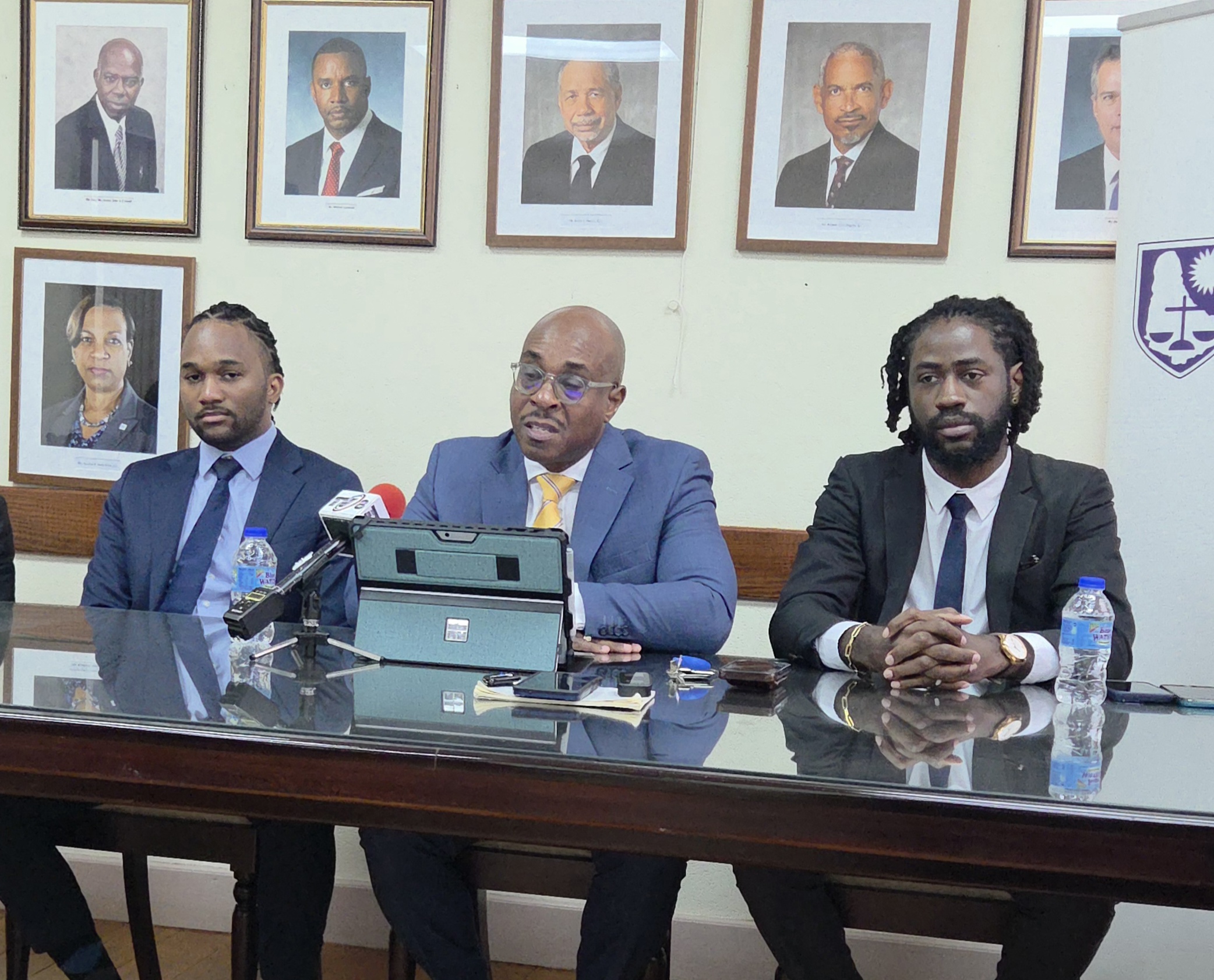
A growing wave of complaints against unlicensed people offering legal services has prompted the Barbados Bar Association (BBA) to sound an urgent alarm to local residents, outlining the substantial risks consumers face when turning to unqualified providers for legal support. The industry body has moved to publicly clarify its position after questions were raised about its motivation for the notice, stressing that consumer protection, not private professional interests, drives the campaign.
Speaking at the BBA’s headquarters on Roebuck Street, association president Larry Smith KC confirmed that the governing council has received multiple reports of people falsely presenting themselves as certified attorneys and offering legal services without holding active, valid practicing certificates. In response, the BBA published a formal public notice urging residents to avoid working with any individuals not officially enrolled as licensed legal practitioners.
Smith pushed back against early speculation that the warning was a deliberate move to protect the financial positions and existing market share of registered BBA members. He emphasized that the public notice was not issued casually, but as a core responsibility of the association to safeguard the public and preserve the integrity of the island’s justice system.
“Let me be clear: this initiative has nothing to do with protecting our members’ livelihoods or locking in market share,” Smith stated. “The BBA’s core mandates include upholding fair administration of justice, cracking down on unauthorized legal practice, and protecting residents who engage with people claiming to offer legal representation.”
The BBA president went on to outline the key difference between working with a licensed attorney and an unqualified provider. All formally admitted attorneys in Barbados operate within a strict, comprehensive regulatory framework that binds them to formal ethical codes, mandatory professional competence standards, and ongoing disciplinary oversight. If a licensed attorney acts incompetently, mismanages client funds, or breaches client trust, clients have clear formal avenues for recourse: they can file an official complaint with the BBA’s disciplinary committee, and pursue civil remedies in appropriate cases where a professional duty of care has been broken.
Unqualified, unregulated providers operate entirely outside this system, Smith warned. They are not bound by enforceable professional standards, face no disciplinary consequences for misconduct, and leave consumers with almost no options to seek redress if services go wrong. “This is not a hypothetical risk,” Smith noted. “These are tangible, damaging consequences that actual local residents have already experienced.”
When asked whether the BBA supports increasing penalties for unauthorized legal practice, which currently carries a maximum $5,000 fine per year, Smith confirmed that harsher penalties could be included in a forthcoming full review of the island’s Legal Profession Act. The association has also formally pushed for an expansion of the national Legal Aid Scheme to improve access to licensed legal services for low-income residents.
Smith added that while the BBA is prepared to offer its expertise and input to parliamentary lawmakers on legislative changes, all final decisions on regulatory reform rest with Barbados’ elected Parliament. “All matters of public importance will be considered as part of the overhaul, and increased penalties may well be one of those. But the BBA cannot dictate legislative outcomes — lawmaking is the responsibility of Parliament, and we will contribute our perspective if invited to do so,” he said.