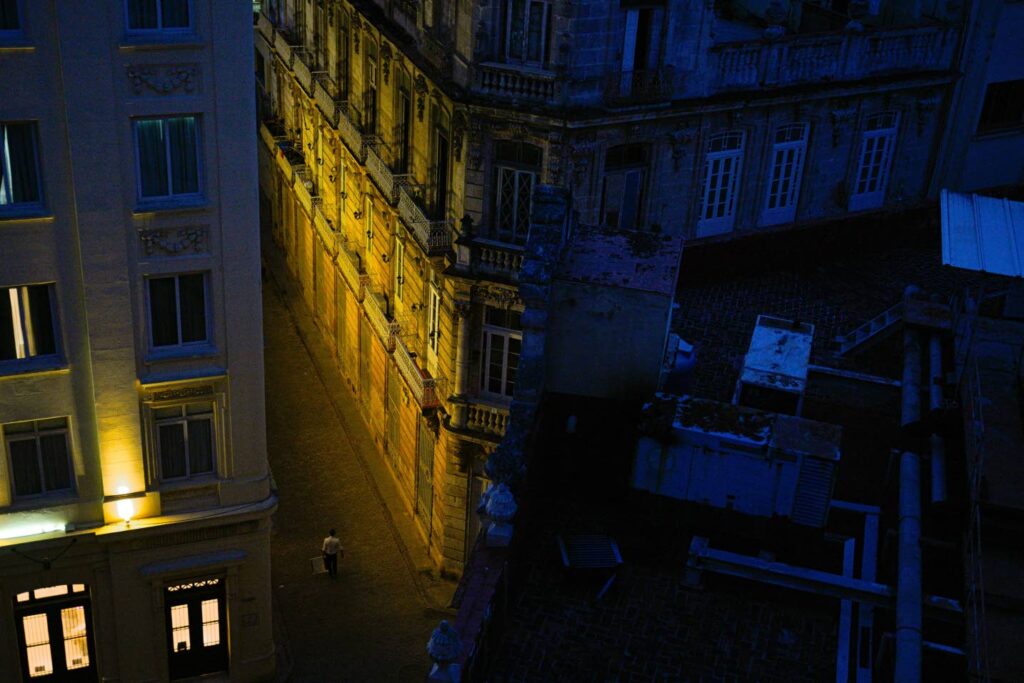
HAVANA, Cuba — After days of widespread outages that plunged large swathes of the Caribbean nation into darkness, Cuban authorities announced full restoration of national electricity service on Friday. However, the country’s long-running energy crisis remains far from resolved, with critical oil supplies completely exhausted and key aging power infrastructure still out of commission.
With a population of 9.6 million, Cuba has grappled with plummeting energy reserves in recent weeks, a situation exacerbated by a broad U.S. energy embargo that took effect in January. Data collected by Agence France-Presse shows that roughly 65 percent of the country lost power simultaneously during peak outage conditions on Tuesday. On Wednesday, Cuban Energy Minister Vicente de la O Levy confirmed in an appearance on state television that the nation’s stored oil reserves had been fully depleted.
By Thursday, power cuts persisted across seven of Cuba’s 15 administrative departments. The national electric utility UNE confirmed Friday that it had successfully reconnected the entire national grid, but rolling scheduled outages remain in place to cope with limited generation capacity. The country’s largest and most critical thermoelectric plant — a workhorse of Cuba’s aging energy system that supports most baseline power generation — remains offline following an unexpected mechanical breakdown.
The widespread blackouts sparked immediate public frustration, with small-scale protests breaking out across the country. A resident of the Havana suburban neighborhood San Miguel del Padron told AFP that local residents staged a cacerolazo — a protest where demonstrators bang pots and pans — on Wednesday evening. Multiple additional small demonstrations were reported in residential neighborhoods across the capital, according to on-the-ground accounts collected by the news agency.
The energy shortage has further inflamed long-running geopolitical tensions between Havana and Washington. Cuban leaders squarely blame the decades-old U.S. blockade for creating and worsening the acute energy crisis, while U.S. officials argue that mismanagement by the Cuban communist government is the root cause of the crisis.
Bilateral relations have remained at a low point during the Trump administration, which has expanded harsh economic sanctions on Cuba and publicly raised the possibility of taking control of the island nation. Even amid this frosty atmosphere, formal intergovernmental discussions continue behind the scenes. A high-level diplomatic meeting held in Havana on April 10 marked the first time a U.S. government plane had landed in the Cuban capital since 2016. On Thursday, CIA Director John Ratcliffe held talks with senior Cuban government representatives in Havana. The Cuban government has framed the rare high-level visit as a potential step toward easing long-standing bilateral tensions.