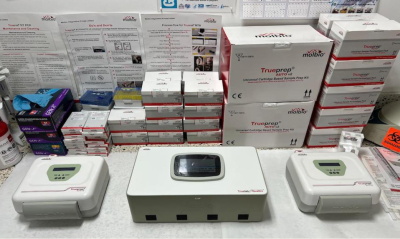
PORT OF SPAIN, Trinidad — The Caribbean Public Health Agency (CARPHA), a regional public health body headquartered in Trinidad, has announced the successful completion of Molbio rapid molecular testing platform installations across 10 participating Caribbean member territories under the global Pandemic Fund Project.
As of March 26, 2024, the new diagnostic systems have been fully set up in Barbados, The Bahamas, Belize, Dominica, Grenada, Guyana, Jamaica, St Lucia, the Turks and Caicos Islands, and Trinidad and Tobago. These cutting-edge platforms are designed to dramatically upgrade the Caribbean region’s ability to conduct fast, accurate testing for a wide range of high-risk infectious diseases and pathogens with pandemic potential.
The new systems support diagnostic testing for more than a dozen pathogens of critical public health concern, including SARS-CoV-2, the virus that causes COVID-19, along with Norovirus, Rabies, Leptospira, Salmonella, Cholera, Nipah virus, Influenza, Malaria, HIV, Hepatitis and Tuberculosis. By expanding equitable access to rapid PCR testing technology across the region, CARPHA and participating national governments are working in tandem to reinforce collective pandemic preparedness and emergency response capacity.
Dr. Lisa Indar, Executive Director of CARPHA, emphasized that the completion of installations marks a transformative milestone for regional public health infrastructure. “The successful completion of the Molbio installations across our member states represents a transformative step in advancing regional laboratory capacity,” Indar stated. “By combining cutting-edge diagnostic technology with targeted workforce training, CARPHA is ensuring that countries are better prepared to detect, respond to and manage public health threats in real time.”
Alongside platform deployment, CARPHA has already delivered specialized hands-on training for more than 50 local laboratory professionals across participating territories, building the on-the-ground expertise needed to operate the new systems reliably. This investment in workforce development strengthens technical capabilities within national laboratory networks and ensures the long-term sustainability of expanded diagnostic services across the region.
The critical value of rapid deployment of these systems was already proven during a public health emergency last year. When Hurricane Melissa struck Jamaica in October 2023, the Molbio platform was installed and local staff fully trained within days of the disaster, preserving ongoing testing capacity and shoring up emergency response readiness amid the crisis.
CARPHA officials note that these modern diagnostic resources deliver major improvements to regional outbreak management: they cut testing turnaround times from multiple days to less than two hours, enabling earlier diagnosis of cases, faster isolation of infected individuals, and more effective containment of emerging outbreaks before they can spread widely. This, in turn, helps mitigate and even prevent avoidable threats to both public health and local livelihoods across the Caribbean.
Beyond individual testing capacity, the initiative also strengthens regional public health surveillance networks, improves overall outbreak detection and response coordination, reinforces early warning systems, and boosts the long-term resilience of national health systems across participating territories.
Founded in 2011, CARPHA serves as the Caribbean’s central coordinating body for disease prevention, health promotion, and public health emergency response. The agency says it remains committed to supporting member states through the integrated Caribbean Public Health Laboratory Network (CariPHLN), with continued investment in laboratory infrastructure upgrades and pandemic preparedness initiatives.
Looking ahead, the next phase of the project will launch routine testing across all 10 participating territories, with aggregated testing data shared weekly with CARPHA via a standardized Molbio reporting framework. This standardized reporting will support timely integration of local data into regional surveillance systems, enabling ongoing monitoring of platform performance and public health trends. The strengthened reporting mechanism will further enhance regional early warning systems, providing CARPHA and national governments with the real-time data needed to activate rapid response measures when new public health threats emerge.