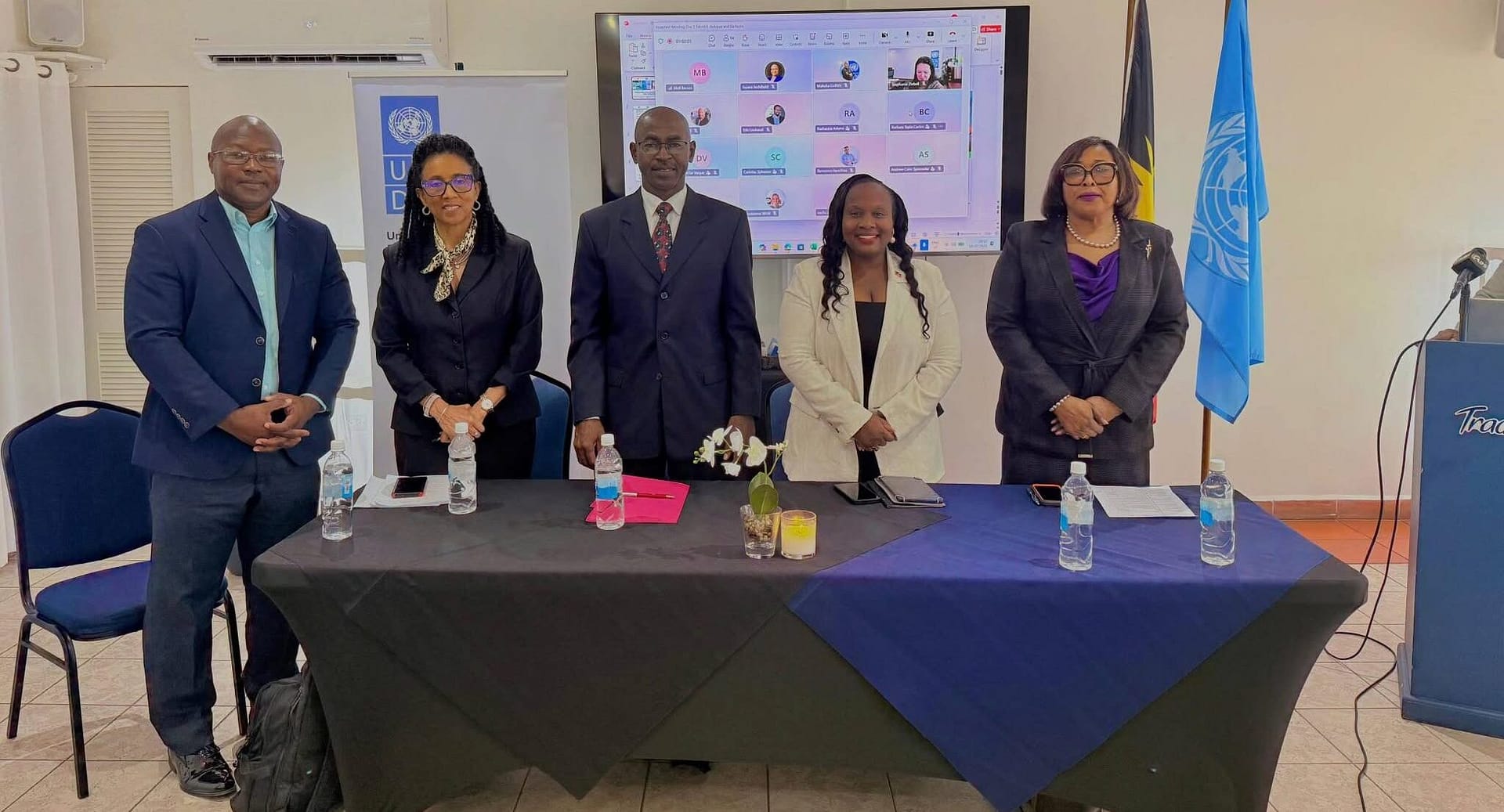
Against a backdrop of escalating climate uncertainty and worsening extreme weather events across the Caribbean, Antigua and Barbuda has formally launched a landmark five-year initiative to transform the nation’s disaster preparedness infrastructure, centered on delivering universal early warning access for all residents. The $12.3 million project, part of the global Early Warnings for All (EW4ALL) movement, is backed by a grant from the Green Climate Fund (GCF) and implemented in partnership with the United Nations Development Programme (UNDP). Its official launch was marked by the National Inception Workshop, hosted at St. John’s Trade Winds Hotel, which brought together senior government leaders, disaster risk management specialists, and representatives from multiple United Nations agencies to align technical strategies and regulatory frameworks for the initiative.
As one of the nations most acutely vulnerable to climate-driven disasters globally, Antigua and Barbuda holds the fifth position on the World Risk Index – a ranking that makes a proactive shift from reactive disaster response to pre-emptive risk mitigation an urgent national priority. Speaking at the workshop’s keynote session, Hon. Kiz Johnson, Minister of State in the Ministry of Social and Urban Transformation, stressed that the project is intentionally designed to close coverage gaps for marginalized and hard-to-reach communities across the twin-island nation. “We are here to ensure that early warning information reaches the last mile,” Johnson said. “Whether it is a fisherman working off the coast of Barbuda or a household in a remote rural area of Antigua, this new system will deliver critical, life-saving updates in a language they understand, through communication channels they regularly use and trust.”
The initiative will deliver two core sets of upgrades to the country’s disaster management ecosystem: first, it will update and modernize the national Disaster Management Act to align with modern resilience standards, and second, it will overhaul outdated monitoring hardware and digital infrastructure for the Antigua and Barbuda Meteorological Service (ABMS). This project is one component of a broader $103 million GCF-funded regional program led by UNDP, which is rolling out universal early warning systems across seven highly climate-vulnerable nations across the globe.
Kristin Lang, GCF Regional Director for Latin America and the Caribbean, explained the urgent rationale for investing in early warning infrastructure across the region. “Communities across the Caribbean are already facing more intense hurricanes, sudden flash floods, and extended, crippling droughts as climate change progresses,” Lang noted. “Reliable early warning systems are non-negotiable for protecting lives, protecting local livelihoods, and preserving the hard-won development gains communities have worked for generations to build. Through this project, GCF is helping strengthen the institutional and information systems that let people anticipate climate risks and act before a disaster makes landfall. This country-led, practical approach to building resilience is exactly what the Caribbean needs as climate impacts continue to intensify.”
A defining strength of the Antigua and Barbuda initiative is its multi-agency collaborative framework, which brings together all four UN lead pillar agencies for the global EW4ALL initiative: the World Meteorological Organization (WMO), the United Nations Office for Disaster Risk Reduction (UNDRR), the International Telecommunication Union (ITU), and the International Federation of Red Cross and Red Crescent Societies (IFRC). This cross-specialty partnership combines global technical expertise with local on-the-ground knowledge to build a system tailored to the unique needs of Antigua and Barbuda. On-the-ground implementation will be coordinated jointly by UNDP and the country’s National Office of Disaster Services (NODS), a government agency established in 1984 to coordinate all disaster management activities across the twin islands.
Stephanie Ziebell, UNDP Deputy Resident Representative for Barbados and the Eastern Caribbean, framed the project as a transformative shift in how climate resilience action is delivered. “By combining the specialized technical expertise of our UN sister agencies with the nuanced local knowledge of national and community stakeholders, we are building a proactive protective shield for these islands,” Ziebell said during the workshop’s opening session.
The two-day inception workshop structured a clear path forward for the initiative’s rollout. On the first day, participants focused on establishing a technical baseline for forecasting upgrades, with specific attention to improving monitoring for high-risk hazards including flash floods and storm surges. The second day is scheduled to include guided site visits to local Community Emergency Response Units (CERUs) and the Crabbs Search and Rescue Training Area, where delegates will observe firsthand how centralized technical data is translated into actionable public safety information at the community level. The workshop will wrap with the inaugural meeting of the EW4ALL Project Board, where the team will review milestones and plans for the first year of implementation.
As climate patterns become increasingly unpredictable around the globe, the EW4ALL initiative stands as a top national priority for Antigua and Barbuda, designed to protect local livelihoods and ensure that no resident is left without life-saving information when a climate hazard approaches. For context, the Green Climate Fund is the world’s largest dedicated climate fund, operating as an independent financial entity under the UN Framework Convention on Climate Change to support the Paris Agreement’s goal of limiting global average temperature rise to well below 2°C above pre-industrial levels. To date, GCF manages a portfolio of 286 projects totaling $15.9 billion in direct investment ($61.3 billion including co-financing) that deliver transformative climate action across 133 developing countries, supporting a shift to low-emission, climate-resilient development pathways.