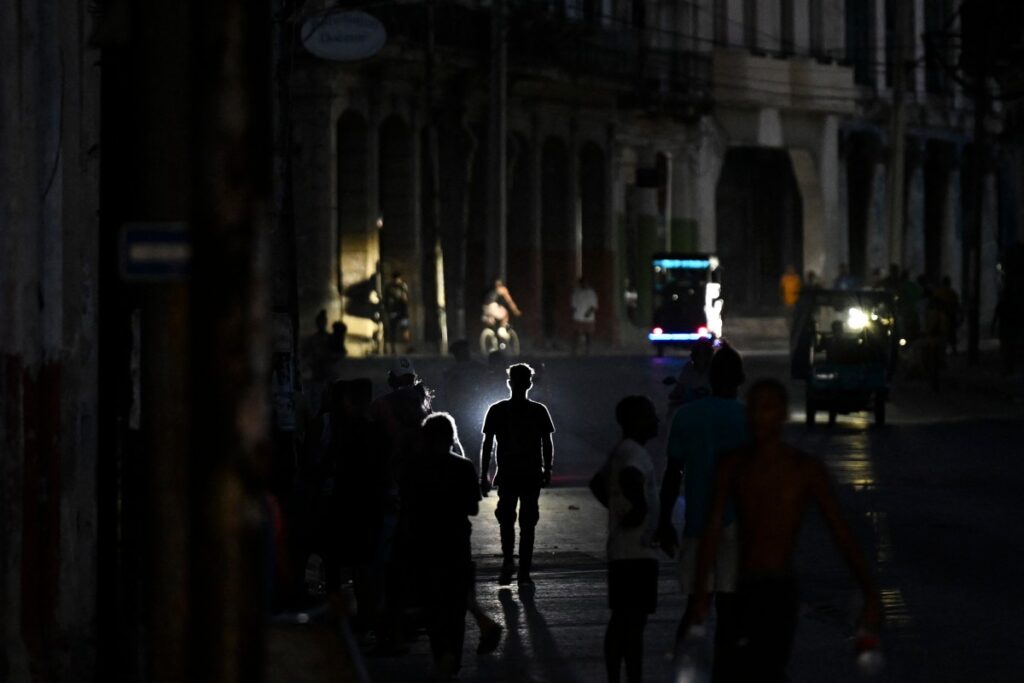
HAVANA, CUBA – The Caribbean island of Cuba entered a new phase of acute crisis on Thursday, as worsening nationwide power outages, fueled by depleted Russian oil reserves, sparked rare scattered demonstrations across the capital Havana. The unfolding energy emergency has deepened long-standing economic strain on the country, with blame and competing diplomatic proposals emerging from both the Cuban government and the United States.
The most recent round of blackouts first engulfed eastern regions of the island on Thursday, extending rolling electricity cuts that have already disrupted daily life across every part of Cuba. In residential neighborhoods surrounding western Havana, local residents gathered to voice their anger over persistent blackouts in small, decentralized protests. Energy Minister Vicente de la O Levy confirmed in an interview with state television that all fuel shipments supplied by Moscow have been exhausted, labeling the current operational environment as “very tense.”
Levy added that rising seasonal temperatures, combined with the decades-long U.S. trade embargo, have amplified the crisis, as the country continues to face critical gaps in consistent fuel deliveries. Amid the unfolding emergency, U.S. Secretary of State Marco Rubio reissued a pre-existing offer of $100 million in humanitarian aid, but attached a strict condition: the assistance must be distributed exclusively through the Catholic Church, entirely bypassing Cuba’s communist government.
Cuba’s top diplomatic official, Bruno Rodriguez, responded publicly via social media, stating that the Cuban government is open to reviewing the full details of the proposal and its planned implementation mechanisms. Local reporting from AFP gathered accounts of grassroots demonstrations across the capital: in the outer Havana neighborhood of San Miguel del Padron, residents banged pots and pans in a widespread collective protest of extended outages Wednesday evening. Small, similar actions popped up in multiple other residential districts, with demonstrators in the western Playa neighborhood chanting “Turn on the lights!” to demand government action.
On Wednesday, Cuban President Miguel Diaz-Canel placed full responsibility for the energy crisis on the United States, describing the U.S. embargo on fuel supplies as a “genocidal energy blockade.” Aggregated data from AFP confirms that the island has seen record levels of generation shortfalls and prolonged blackouts in recent days. On Tuesday alone, 65 percent of Cuban territory was affected by simultaneous power outages.
Diaz-Canel emphasized that the rapid deterioration of the energy situation has one clear root cause: U.S. sanctions that threaten punitive tariffs on any third country that agrees to ship fuel to Cuba. The current crisis escalated in January, when the U.S. formally expanded its blockade to target all oil shipments to the island, which is home to 9.6 million people. Since that policy change, only a single Russian oil tanker has successfully delivered fuel to Cuba, a country already grappling with decades of economic stagnation and widespread supply shortages.
In the capital Havana, many residents now face more than 19 hours of power cuts every single day, while multiple provincial regions experience full-day blackouts with no consistent restoration. Cuba’s entire electricity generation system relies on a network of eight thermoelectric plants, most of which are over 40 years old. The aging infrastructure suffers from constant mechanical breakdowns and requires frequent, prolonged shutdowns for routine maintenance, further straining the country’s ability to meet even basic energy demand.
Since the start of 2024, Cuba has experienced seven full nationwide blackouts, while domestic fuel prices have skyrocketed to record levels. U.S. President Donald Trump, who has overseen the removal of Venezuela’s leftist government so far this year but has faced limited progress in his administration’s conflict with Iran, has publicly suggested that Cuba could be the next target for U.S. intervention, even floating the possibility of the U.S. taking control of the island.