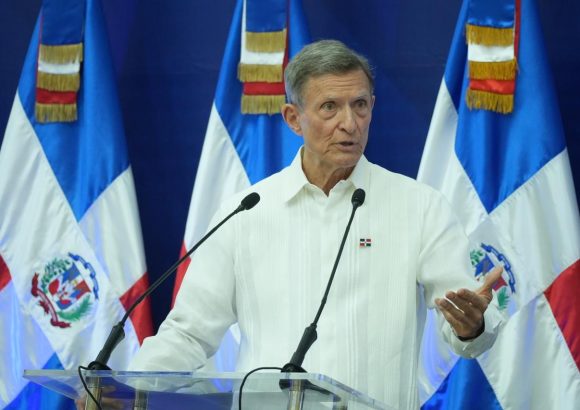
In the capital city of Santo Domingo, top Dominican diplomatic official Roberto Álvarez has moved to quell growing public controversy over a recently struck bilateral agreement between the Dominican Republic and the United States, pushing back firmly against claims of lack of transparency and hidden provisions.
Addressing reporters during an official press briefing held at the Dominican Ministry of Foreign Affairs headquarters, Álvarez outlined key details of the memorandum of understanding (MOU) that have sparked fierce debate among political circles in recent days. The foreign minister stressed repeatedly that the agreement is an open document with no confidential clauses, maintaining that the Dominican government has absolutely nothing to conceal from the public or legislative bodies.
Alvarez clarified a critical procedural point that has been at the center of opposition demands: the MOU is not classified as a formal international treaty under Dominican law. This classification means the agreement does not require formal ratification votes from the country’s National Congress, nor does it need a constitutional compatibility review from the Constitutional Court, he explained.
Expanding on the nature of such agreements, Álvarez noted that the vast majority of bilateral memorandums of understanding crafted between sovereign states are non-binding instruments. They are designed simply to lay out a framework for future collaborative work, rather than imposing rigid, enforceable legal obligations on either signatory nation. The minister added that the MOU can be terminated unilaterally by the Dominican government at any point, and that the commitments outlined in the text are not substantial enough to justify the full legislative review process that applies to formal treaties.
Álvarez’s public defense comes in direct response to mounting criticism from opposition lawmakers and opposition political leaders, who have spent days calling for the full release of the agreement and demanding clearer answers about its contents. Much of the opposition’s scrutiny has centered on unconfirmed speculation that the MOU includes provisions for the Dominican Republic to accept migrants deported from U.S. territory, a politically sensitive issue in the country.
In response to these calls for more information, the foreign minister affirmed that the Dominican government has already published the full text of the agreement in a timely manner, fulfilling all public transparency requirements. He added that he stands ready to appear in person before the National Congress to answer additional questions and provide further context for the agreement if legislative leaders formally request his attendance.