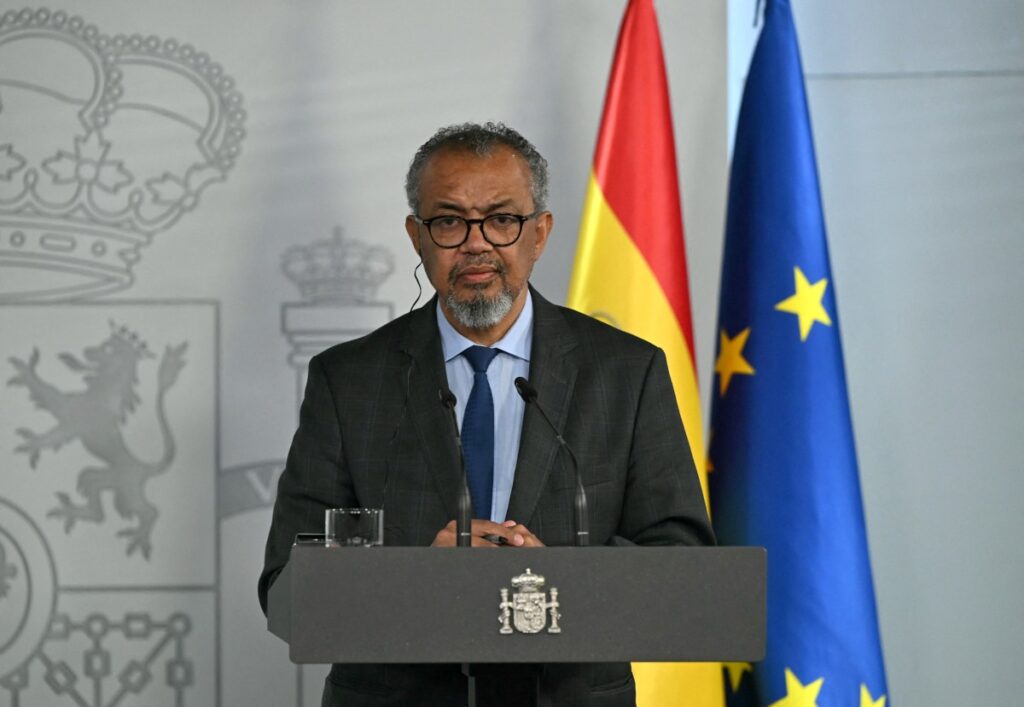
MADRID, SPAIN – In the wake of a fatal hantavirus outbreak aboard the cruise vessel MV Hondius that prompted a full evacuation of passengers and crew, World Health Organization Director-General Tedros Adhanom Ghebreyesus has emphasized that the global public health threat remains low, even as vigilance must be maintained to contain the rare virus. The incident, which has claimed three lives and left one French passenger in critical condition, has triggered international public health coordination, alongside diplomatic negotiations over repatriation and care for those exposed. As of this week, health authorities are working to prevent further spread, while stressing that the outbreak does not mirror the early days of the COVID-19 pandemic.
Three passengers have now died from the Andes variant of hantavirus, the only strain confirmed to transmit between humans. There are currently no licensed vaccines or targeted antiviral treatments for the pathogen, making monitoring and quarantine the primary public health interventions. As of Tuesday, an AFP compilation of official data places the total number of confirmed cases at seven, with one additional probable case, all among the ship’s passengers and crew. Exposed individuals hold citizenship from six nations: the United States, the United Kingdom, France, Spain, Switzerland and the Netherlands.
One French national over the age of 65 with pre-existing underlying health conditions remains in intensive care on mechanical ventilation, according to Dr. Xavier Lescure, speaking at a French health ministry press conference. The patient is classified as having a severe case of the rare disease, Lescure confirmed, without providing further personal or clinical details.
The full-scale evacuation of more than 120 passengers and crew from the MV Hondius was carried out over Sunday and Monday off Spain’s Canary Islands, after the vessel was denied entry to Cape Verde. It had previously anchored off Cape Verde’s capital Praia, where three infected people were airlifted to Europe for emergency care last week. After Spain agreed to allow the ship to anchor for evacuation, the regional government of the Canary Islands publicly and strongly opposed the decision, creating tension between national and regional authorities.
In a joint press conference with Spanish Prime Minister Pedro Sanchez held in Madrid Tuesday, following the completion of evacuation operations, Tedros pushed back against comparisons to the emergence of COVID-19. “There is no sign that we are seeing the start of a larger outbreak,” he stated, though he cautioned that vigilance is far from over. “But of course the situation could change, and given the long incubation period of the virus, it’s possible we might see more cases in the coming weeks.”
All repatriated individuals are following public health protocols aligned with WHO guidance, which call for a 42-day quarantine period and continuous monitoring for high-risk contacts – a timeline matched to hantavirus’ maximum six-week incubation period. The Netherlands, which received 26 evacuees on the first repatriation flight Sunday, reported all passengers tested negative for the virus after thorough medical screenings. All 26 are still required to complete quarantine, per public health rules, and two subsequent flights carrying an additional 28 evacuees have also arrived in the country, with all passengers entering isolation.
Tedros noted that while the WHO encourages all nations to adopt the organization’s recommended guidelines, individual countries retain the authority to set their own public health measures. Speaking at a summit in Nairobi, Kenya Tuesday, French President Emmanuel Macron said his country has the situation fully under control, and called for strengthened coordinated action between European nations and the WHO to manage the outbreak.
The incident created unexpected diplomatic friction, as nations negotiated over responsibility for receiving the vessel and caring for exposed passengers and crew. In his remarks, Sanchez defended Spain’s decision to allow the evacuation off the Canary Islands, framing the choice as an act of global solidarity. “The world does not need more selfishness or more fear. What it needs are countries that show solidarity and want to step forward,” he said.
After the full evacuation was completed, the MV Hondius departed Tenerife Monday with only a minimal skeleton crew on board. It is scheduled to arrive in the Netherlands this Sunday, where it will undergo full disinfection protocols.
Hantavirus is naturally transmitted through contact with the urine, feces, and saliva of infected rodents. The Andes variant is endemic to parts of South America, including Argentina, where the MV Hondius departed on its transatlantic cruise bound for Cape Verde on April 1.