In a stark new update from the United Nations, humanitarian officials have sounded the alarm over a dramatic and deeply concerning spike in gender-based violence (GBV) across Haiti in the first quarter of this year, as the Caribbean nation grapples with an already devastating, wide-ranging humanitarian crisis.
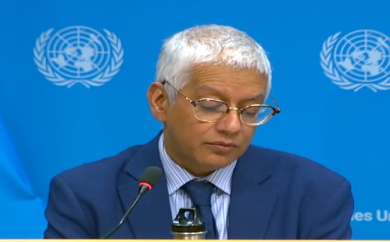
Farhan Haq, the United Nations Deputy Spokesperson, told reporters Tuesday that UN humanitarian partners working on the ground in Haiti have documented nearly 2,000 reported incidents of gender-based violence between January and March 2025 – averaging 21 reported cases every single day. What makes this surge even more alarming is the sharp rise in the proportion of cases involving the most extreme form of violence: rape. Data shows that over 70 percent of all recorded GBV incidents in the first three months of the year were rape, a major jump from the final quarter of 2024, when rapes accounted for 49 percent of total incidents.
The overwhelming majority of these recent rape cases were gang rapes, Haq confirmed, with armed groups identified as the primary perpetrators. Nearly all survivors are women and girls, reflecting a targeted pattern of violence against vulnerable communities in Haiti’s ongoing conflict. This jump in gender-based violence is not an isolated shift; it follows a consistent upward trend that began last year, when humanitarian partners recorded just over 8,000 total GBV incidents across the country – a 25 percent increase compared to 2024 figures.
As the crisis deepens, however, life-saving support services for survivors are facing crippling funding shortfalls that are putting lives at further risk. Haq emphasized that as of mid-year, only $1.2 million of the $15 million required to fund GBV response and support services has been secured by humanitarian groups – that equals just 8 percent of the total funding needed to meet existing needs.
This severe underfunding is already having direct, deadly consequences for survivors. Haq explained that the funding gap is drastically limiting survivors’ ability to access emergency medical care within the critical 72-hour window immediately following an assault, a window that is essential to preventing long-term health harm and providing life-saving interventions. It also restricts access to specialized psychosocial support, which helps survivors process trauma, and cuts off access to temporary emergency shelter for those forced to flee their homes after an attack.
While Haq noted that some survivors have still been able to access core services, including medical care, mental health support, and safe spaces for women and girls, through the limited resources currently available, he stressed that the scale of unmet need far outpaces what humanitarian groups can currently provide.
The United Nations and its partner organizations operating in Haiti have issued an urgent call for immediate action to scale up funding for critical services, including gender-based violence response, physical health care, protection programming, and psychosocial support. The call specifically prioritizes regions that have seen the highest concentrations of violence and displacement in recent months.
Gender-based violence is just one facet of the broader humanitarian catastrophe unfolding across Haiti. Haq confirmed that an estimated 1.45 million Haitians are currently internally displaced by ongoing conflict and insecurity, while close to 6 million people – half of the country’s total population – are currently facing acute food insecurity, with many struggling to access even basic daily necessities.
In response to the growing crisis, the UN Office for the Coordination of Humanitarian Affairs (OCHA) has renewed its appeal for additional international funding, to both expand and strengthen support services for survivors of gender-based violence and scale up protection efforts in the areas of Haiti hardest hit by ongoing violence.