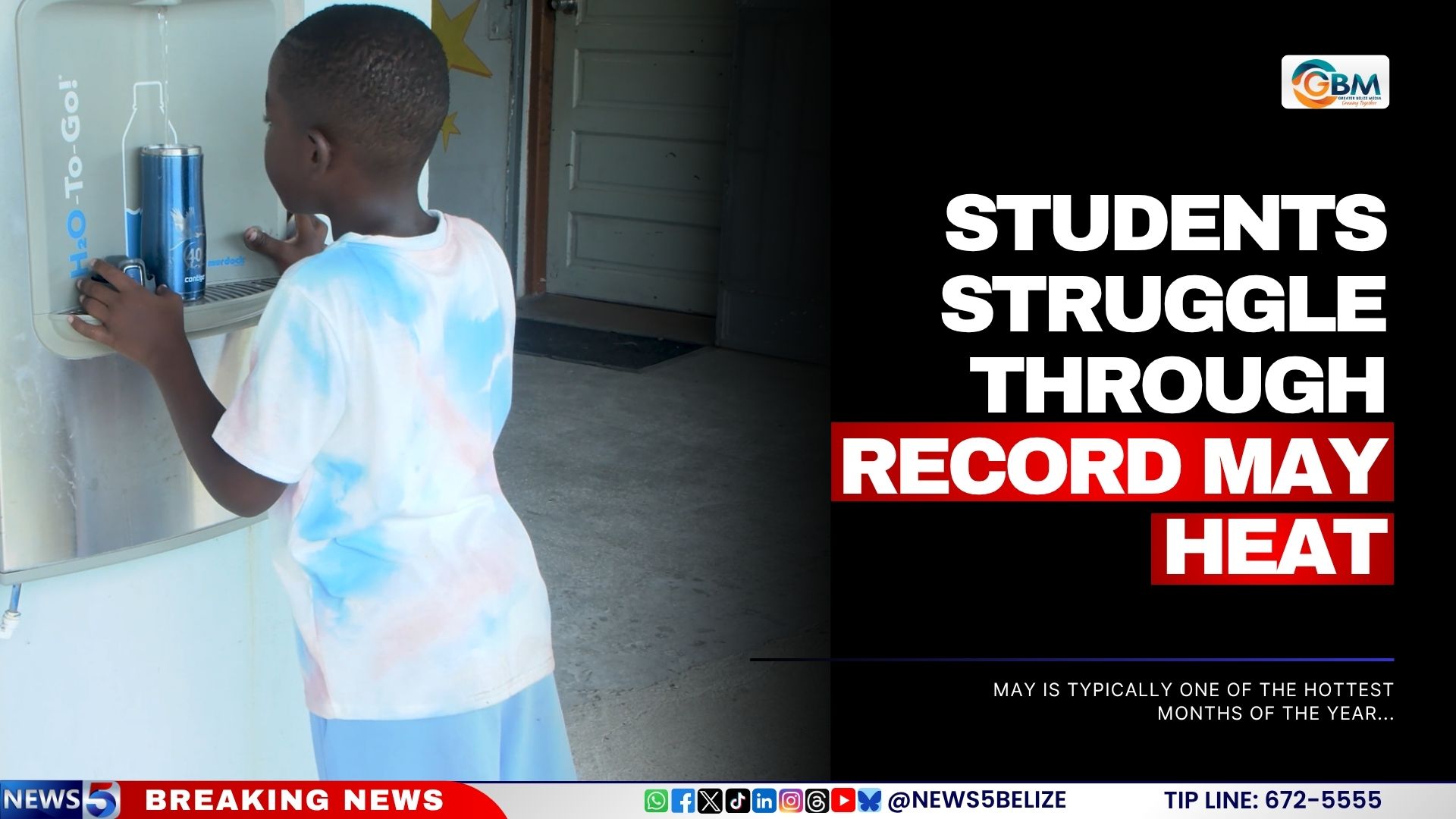
As the 2026 calendar moves into mid-May, the small Central American nation of Belize is grappling with an unprecedented heatwave that has spilled beyond outdoor public spaces to upend end-of-school-year learning in classrooms nationwide. What was already known as one of the hottest annual periods in the Caribbean has pushed into uncharted territory this year, with sweltering temperatures and crippling humidity creating unhealthy, distracting learning conditions for primary and secondary students across the country.
In Belize City, Belize Elementary School has moved quickly to implement last-minute adaptations to help its student body cope with the extreme heat as the academic year draws to a close. Recent daily temperature readings in the capital have hovered consistently around 90 degrees Fahrenheit, but the region’s notoriously high humidity pushes the real-feel heat index well above 100 degrees – a dangerous level that leaves young people vulnerable to fatigue, heat discomfort and even heat-related illness. Regional meteorological trends across the Caribbean confirm that this pre-wet season period is running far hotter and more humid than historical averages, signaling a widespread shift in early-season weather patterns for the area.
Majiba Sharp, principal of Belize Elementary School, told reporters that school staff first began observing clear impacts of the extreme heat on student performance and comfort earlier this month. “May is always extremely hot as we head into June, but this year is different – we could immediately see how many children were being affected by the heat trapped in our classrooms,” Sharp explained. In response, the administration rolled out two key temporary policy changes for the final weeks of the school year: first, it relaxed the formal school dress code to allow students to wear lightweight casual clothing instead of the standard structured uniforms. Second, it expanded access to drinking water to encourage consistent hydration, a critical protection against heat-related health issues.
Under the new hydration rules, students are permitted to carry personal water bottles with them into all classes, and school-wide water coolers positioned across campus are open for unlimited refills throughout the school day. According to educators at the school, these small adjustments have already yielded measurable improvements. Before the changes, afternoon heat left students sluggish, distracted and disengaged during lessons – a problem that was particularly acute in the many classrooms across the school that are not equipped with air conditioning.
Sharp confirmed that the student response to the new policies has been overwhelmingly positive, even as the high temperatures persist. “We haven’t had a single case of heat-related fainting among students since we made the changes,” she noted. “The kids don’t feel as sluggish and logy as they did before, and complaints about heat have dropped off dramatically. It’s still very hot, but we’ve made the environment manageable for learning.”
Across Belize and the broader Caribbean region, May is historically one of the hottest months of the year, with heat indexes regularly climbing above 100 degrees due to the region’s tropical humidity. This year’s record-breaking event has drawn attention to the growing vulnerability of public infrastructure – including schools – to rising temperatures linked to shifting global climate patterns, prompting discussions about potential long-term adaptations for educational facilities across the country.