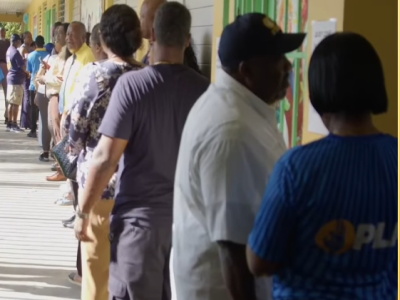
As the Bahamas heads to the polls for a snap general election on Tuesday, more than 209,000 registered Bahamian voters are set to determine the country’s next government, in a contest that could deliver the first consecutive term for a ruling administration in over 10 years. Prime Minister Phillip “Brave” Davis, leader of the incumbent Progressive Liberal Party (PLP), called the election ahead of the constitutionally mandated deadline, betting on his administration’s policy track record to secure a second term.
Pre-election polling from independent research firm Public Domain Research & Strategy points to a mixed political landscape that defies the country’s longstanding two-party duopoly. The survey places the PLP ahead of competitors among likely voters, holding 46% support, with the relatively new Coalition of Independents (COI) emerging as a surprising second at 22%, leaving the traditional opposition Free National Movement (FNM) trailing in third with just 18% support. Davis also leads the field as the most popular pick for prime minister, earning 42% backing from respondents likely to cast a ballot. Most voters surveyed expressed clear confidence that the electoral process will be free and fair, despite partisan tensions.
Davis first led the PLP to a landslide victory in the 2021 general election, when the party captured 32 of 39 available parliamentary seats to oust the then-incumbent FNM administration. For this 2024 contest, the number of parliamentary seats up for grabs has expanded to 41. A majority of these seats – 25 in total – are based on the most populous island of New Providence, home to the capital Nassau, with five seats allocated to Grand Bahama and the remaining 11 spread across the country’s numerous smaller Family Islands, many of which group multiple small cays into single electoral districts.
A major new change to this year’s electoral process is the introduction of biometric voting cards, a reform the Davis administration says is designed to modernize the country’s election infrastructure and reduce fraud. The rollout has not been without controversy, however: the opposition FNM has repeatedly claimed the new system is a deliberate ploy to manipulate the election outcome in the PLP’s favor. Tensions flared during advance voting held late last month, when the FNM alleged that thousands of eligible voters were incorrectly turned away from polling stations and disenfranchised. Officials from the Parliamentary Registration Department have pushed back on those claims, with Assistant Commissioner Denise Pinder saying she expects a seamless, well-organized voting process on election day. To ensure transparency, multiple international observer teams, including a delegation from the Caribbean Community (Caricom), are on the ground monitoring the voting and counting process.
The 2024 election marks a breakthrough for the COI, a third-party movement that has capitalized on growing voter frustration with the two major parties to build a substantial following since the 2021 contest. Running on a platform of grassroots empowerment, anti-corruption enforcement, and stricter immigration controls, the COI is seeking to break the decades-old two-party system that has dominated Bahamian politics.
Political analysts note that despite the PLP’s lead in pre-election polling, the final outcome remains far too uncertain to predict. If re-elected, Davis has pledged that his administration will deliver sweeping policy reforms, including expanded access to affordable housing, stronger legal protections for renters, broader healthcare coverage, new job training programs, and faster approval processes for small business owners and real estate developers. Key to his campaign is the Upskill Bahamas initiative, which promises to provide vocational training to 25,000 Bahamian workers by 2031, building on existing programs including the National Apprenticeship Programme.
For the FNM, leader Michael Pintard has centered his campaign on attacking the incumbent government’s credibility, telling supporters that the PLP has broken its promises to the Bahamian people and betrayed public trust. Pintard has accused the Davis administration of repeatedly lying to voters and pledged that an FNM government would prioritize rooting out widespread corruption in public agencies if elected.