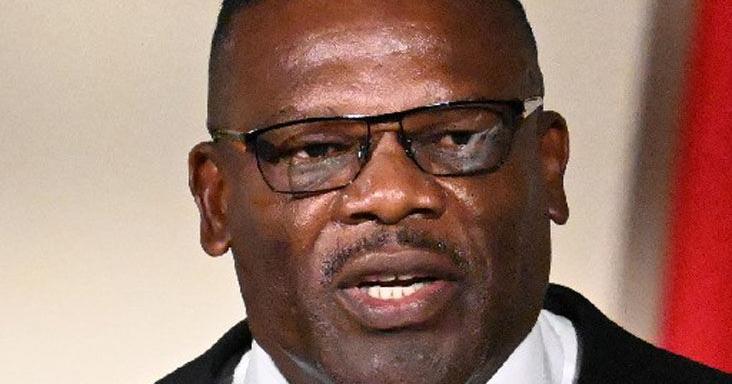
A public debate over race, crime and systemic inequality has erupted in Trinidad and Tobago after Homeland Security Minister Roger Alexander made targeted comments calling on young Black men to reject a life of criminality. The remarks came in the immediate aftermath of a fatal police shooting of four Black men suspected of carrying out a string of home invasions, putting the long-simmering conversation over how to address crime and racial stereotyping back into the national spotlight.
In his public address, Alexander urged young Black men to abandon criminal activity, framing collective action within the community as a path to national and familial pride. “To the young black men, life does not revolve around crime and criminality. We must not be seen as a threat to humanity. We can do better than that,” Alexander said, adding that young people should choose to build stable foundations rather than become part of troubling crime statistics.
But community and academic leaders across the country have pushed back on the minister’s framing, arguing that the conversation about crime must extend far beyond racial targeting to address the underlying systemic and social conditions that drive violent offending.
Reverend Kwame Clarke was among the first to respond, acknowledging that Alexander had every right to speak publicly on rising crime but emphasizing that the problem is far more complex than surface-level discussions about race allow. “I think that as a minister, it is within his purview to comment on the impact of crime on both the community and in the lives of those involved in criminal activity,” Clarke noted. However, he argued that concentrated economic disadvantage and failing social systems are the true catalysts for criminal behavior, noting that “the issue is more tied to economics and socialisation. It is a fact that communities which are considered oppressed by dysfunctional family structures, little to no income in the home, or insufficient social support infrastructure are the farm houses for gang culture and criminalisation.”
Clarke added that solving the national crime crisis requires a collective “whole village approach” that brings together all segments of society to contribute resources and solutions to the multifaceted problem, rather than focusing on a single demographic.
David Muhammed, founder and director of the Black Agenda Project, shared that while he understands the minister’s concern over rising violent crime, he worries that narrowly targeting Black youth reinforces harmful, unfounded stereotypes that paint an entire community as inherently dangerous. He compared the framing to unfair generalizations made against other ethnic groups, such as stereotypical assumptions linking Syrians to drug trafficking or Indo-Trinidadian men to domestic abuse.
Muhammed also pointed out that the outsized focus on street crime committed by poor Black people often overshadows the far greater economic damage caused by white-collar crime, which is predominantly committed by non-Black Trinidadian citizens. “The impact of white-collar crime by non-Africans still has much more of a consequential effect on our economy than all the crimes committed by poor black people all put together,” he said. He further criticized the repeated politicization of Black youth, noting that politicians from all parties regularly deploy these comments to score cheap political points, with little sincerity behind the calls for change.
Criminologist Kerron King added his expertise to the debate, arguing that crime statistics should be used to investigate root causes, not to stigmatize an entire group of people. He noted that while Black men are overrepresented as both perpetrators and victims of violent crime in national statistics, the vast majority of young Black men in Trinidad and Tobago never engage in criminal activity. “The vast majority of young black men in our nation are not involved in crime, and whilst it’s true that they are over-represented in violent crime statistics as both perpetrators and victims of violent crime, we must use this statistic to ask why,” King said.
King outlined multiple well-documented social risk factors that push youth toward crime: poor academic performance, low civic engagement, association with criminally involved peers or family members, and a lack of consistent adult supervision during adolescence. To address these gaps, he called for a sweeping overhaul of the national education system, from primary to secondary school, with a core policy goal of ensuring every child completes secondary education. “We must adopt a policy that no child, boy or girl, must be left behind. Every child will graduate, every child will cross the stage. This should be our mantra. It’s such a low-hanging fruit with such great returns. We’re not too far gone—we just need to be smart on crime and not tough on crime,” King said.
Rhondall Feeles, president of the Single Fathers Association of Trinidad and Tobago, echoed the critique of the minister’s broad comments, noting that the speech overgeneralized a problem that is specific to gang-related crime, not all Black communities. Feeles pointed out that every ethnic group in Trinidad and Tobago is stereotypically linked to specific types of crime: gang-related murder is most often associated with Afro-Trinidadian communities, while domestic murder is more prevalent in Indo-Trinidadian communities, and drug and arms trafficking stereotypes are frequently attached to Syrian and Hispanic communities.
Crucially, Feeles emphasized that no ethnicity is inherently predisposed to crime, arguing that environmental factors are the primary shaper of criminal behavior. “Someone is not born criminal. If you are in a location where gang affiliation is prominent and strong, and you don’t have the right mentorship and the right person to harness that young mind in a positive way, then you will end up with someone with gang affiliation,” Feeles said. He extended this logic to all types of crime, noting that exposure to domestic abuse cultivates domestic abusers, and growing up around corrupt unethical parents often produces people who engage in white-collar crime.
Feeles also raised a critical underdiscussed point: the street-level gang members that are the focus of public attention are rarely the ones behind the large-scale importation of illegal weapons and narcotics that fuel gang violence. He argued that focusing solely on Black street gang members ignores the larger transnational criminal networks that supply the weapons driving the violence, many of which are led by people of other ethnicities.
To truly eradicate crime, Feeles said, the country must focus on preventing the development of criminal minds by transforming vulnerable communities through a collaborative two-pronged approach that pairs state institutions with local non-governmental organizations. This strategy would center on empowering marginalized communities with critical skills: financial literacy, small business development, digital literacy, emotional and psychosocial support, and trade training, giving residents viable alternatives to criminal activity and reducing the systemic conditions that drive offending.