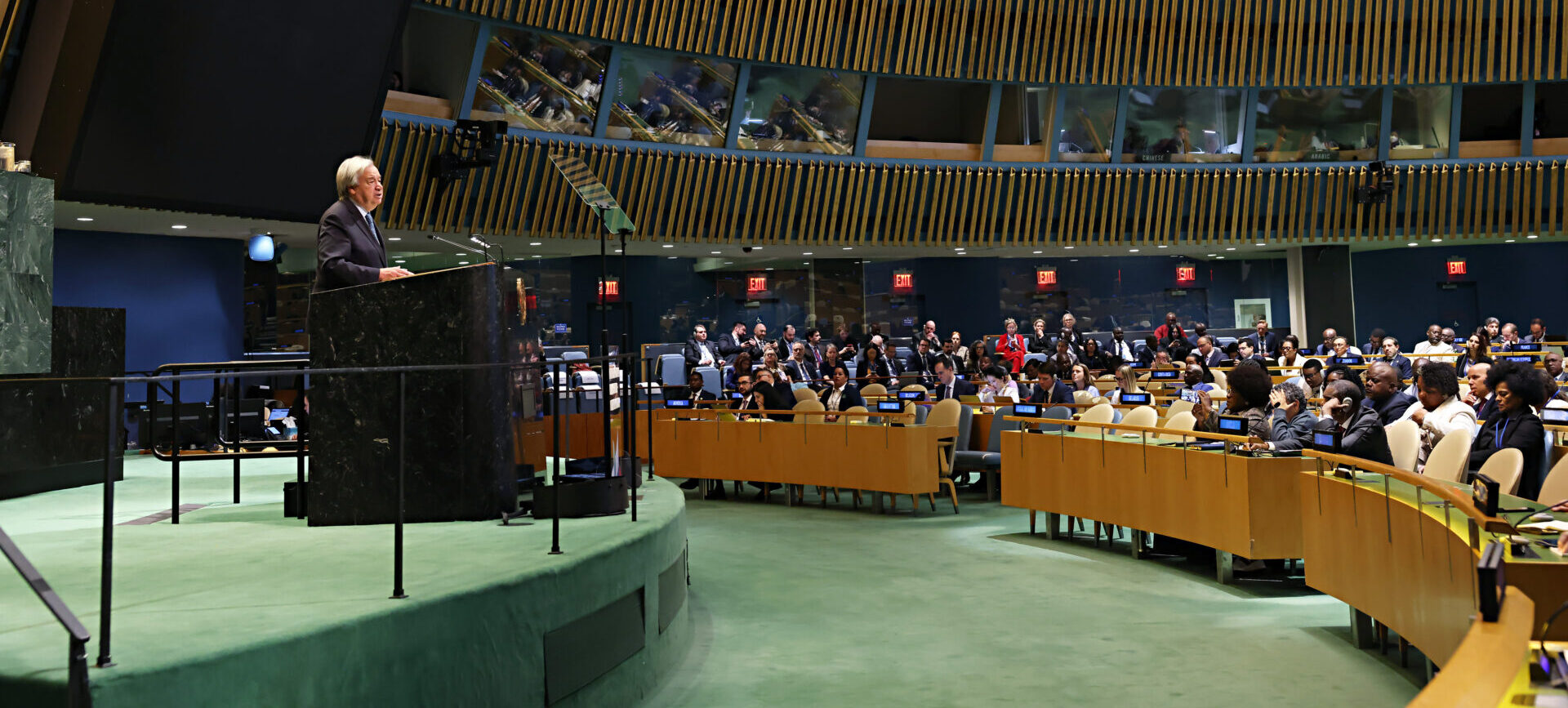
At the conclusion of the second International Migration Review Forum (IMRF) hosted at United Nations Headquarters in New York, national governments from every region of the globe have finalized four days of intensive negotiations on cross-border migration challenges and shared opportunities, unanimously approving a new Progress Declaration to guide collective action over the coming years.
Negotiated directly by all participating UN Member States, the new declaration formally reaffirms the international community’s shared commitment to the Global Compact for Safe, Orderly and Regular Migration (GCM), the landmark non-binding global agreement on migration first adopted in 2018, according to an official statement released by the International Organization for Migration (IOM). Beyond restating this core commitment, the declaration takes stock of all progress made in implementing the GCM since the first review forum, and outlines clear priority action areas for member states through 2030. Key priorities highlighted in the text include upholding fundamental labor rights for migrant workers, expanding access to official legal identity documentation for all migrants, creating more safe and regular migration pathways, reducing preventable deaths along migration routes, and strengthening cross-border collaboration between nations connected by major migration corridors.
H.E. Annalena Baerbock, who presided over the forum in accordance with existing UN General Assembly resolutions, emphasized that migration is a universal reality that touches every nation in some capacity. “Migration is an inevitable human reality. The question is not whether migration is good or bad. The question is whether we manage it well, and manage it together. As every country today is either a country of origin, transit, or destination – and most times even all three at once,” Baerbock told delegates. She added that coordinated international cooperation remains indispensable to tackling migration-related challenges, noting that “No state can manage migration alone. It requires cooperation, it requires international regulation. And that is precisely the purpose of the Global Compact. This is precisely the purpose of multilateralism.”
Held from May 5 to 8, this second IMRF marked the second global progress review of the GCM, a voluntary agreement designed to address all forms of migration, guided by ten principle aligned with international law. Months before the forum opened, participating member states submitted 90 voluntary national reviews of their own GCM implementation efforts – a 30 percent increase compared to submissions ahead of the first forum in 2022, with submissions from every global region. Forum organizers note that these reviews represent the most detailed global snapshot of national migration compact implementation compiled to date.
Amy Pope, Director General of the International Organization for Migration and Coordinator of the UN Network on Migration, highlighted a key takeaway from the forum’s deliberations: that national sovereignty and the human rights of migrants do not have to be mutually exclusive. “Every sovereign state has the right to set its own migration priorities. Every migrant has the right to be treated with dignity. This Forum showed that these two truths are not in tension – and that when countries work together, both can be upheld,” Pope said.
In a nod to the GCM’s inclusive whole-of-society approach, organizers held an informal multi-stakeholder pre-forum hearing on May 4, one day ahead of the official plenary opening. The hearing brought together a diverse cross-section of stakeholders beyond national government delegates, including migrant representatives, civil society organizations, diaspora and faith-based groups, local government officials, private sector leaders, trade union representatives, parliamentarians, independent human rights institutions, delegates from the International Red Cross and Red Crescent Movement, academic researchers, media representatives, and UN partner agencies.
Over the four days of official forum proceedings, delegates joined roundtable discussions, policy dialogues, and general plenary debates focused on advancing the agreed 2030 migration priorities, with conversations shaped by earlier consultations held at local, national, and regional levels across the globe. In addition to the Progress Declaration, the forum also saw a dramatic expansion of concrete commitments to support global migration action. Since December 2021, governments, UN agencies, and allied partner organizations have contributed more than 450 individual pledges to advance GCM goals, compared to just 158 pledges recorded ahead of the first review forum. These pledges cover a wide range of initiatives, from improving working conditions for migrant workers and scaling up digital civil registration systems to supporting nations hosting large displaced migrant populations and contributing funding to the Migration Multi-Partner Trust Fund established under the GCM framework.
The United Nations Network on Migration, a coalition of 39 UN entities coordinated by IOM, has continued to support national governments in their GCM implementation efforts, providing support for resource mobilization, capacity building, and the development of national action plans. The next full International Migration Review Forum is scheduled to convene in 2030, in line with the GCM’s review timeline.