Long stereotyped as the more measured, low-temperature chamber of Jamaica’s bicameral parliament, the Senate transformed into a charged political battlefield on Friday, as sharp ideological clashes erupted over the deeply contentious National Reconstruction and Resilience Authority (NaRRA) Bill. The legislation, which the ruling government is pushing to fast-track in the wake of last October’s catastrophic Category 5 Hurricane Melissa, has split the upper house along partisan lines, pitting demands for urgent disaster recovery against warnings of unchecked executive overreach.
On one side, government senators frame the NaRRA Bill as a critical, transformative intervention to address the unprecedented devastation left by the storm, which damaged or destroyed infrastructure equal to 56% of Jamaica’s entire annual gross domestic product. On the other, opposition lawmakers have launched a relentless campaign against the legislation, arguing that it concentrates dangerous levels of power in the executive branch, erodes critical oversight safeguards, and sets the stage for future constitutional crises similar to past controversial government policies.
The most heated exchanges of the day centered on the opposition’s demand that the bill be referred to a joint select committee for expanded cross-party scrutiny and public consultation. Opposition leaders argue that any legislation of this magnitude, which will reshape how post-disaster recovery is governed for years, requires broad input from civil society and communities before it can be signed into law. Government senators have rejected these calls as unworkable, arguing that the urgent timeline of post-disaster reconstruction—paired with the impending start of a new Atlantic hurricane season—leaves no room for months of delay that a lengthy consultation process would bring.
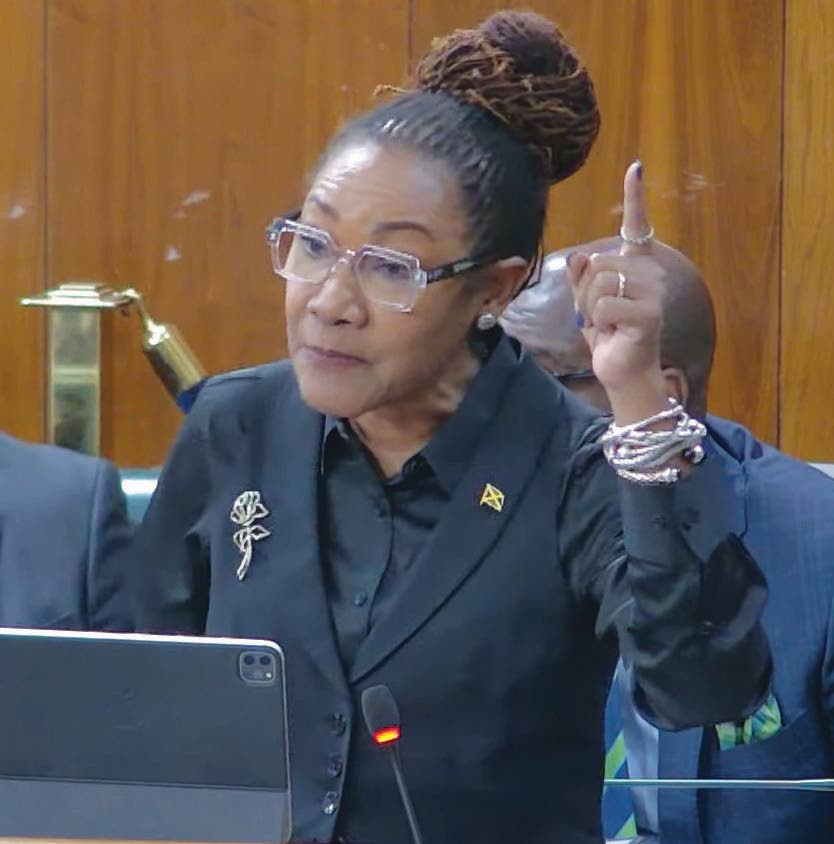
Leader of Opposition Business in the Senate Donna Scott-Mottley led the charge against the bill, drawing a direct parallel between the NaRRA legislation and the polarizing National Identification and Registration Act (NIDS), which was ultimately struck down in whole or in part by Jamaica’s Constitutional Court over constitutional violations. Scott-Mottley warned that the government is repeating a dangerous pattern of rushing sweeping, high-stakes legislation through parliament despite widespread pushback from civil society groups and the opposition, while refusing to accommodate amendments or address legitimate concerns.
She stressed that Jamaicans have every reason to fear granting broad, unaccountable powers to a new standalone authority, particularly given the administration’s history of facing successful constitutional challenges to major legislation. Scott-Mottley also directly refuted the government’s core argument that extraordinary new powers are needed to speed up recovery, pointing out that six months after Hurricane Melissa, thousands of impacted residents are still living in inadequate temporary housing, including converted school buildings, despite the existence of existing state disaster response agencies.
“Did you need a NaRRA to help the people from Westmoreland? Did you fail to help the people from Westmoreland because you had no NaRRA?” Scott-Mottley asked during her speech. “You have people who have just been removed from shelters into surroundings which are far from adequate. You have people who live in a school — hanging out their clothes on a line, and indeed cohabit in the school — because the school has become their home. That is how you deal with people? That is how you handle people who are suffering? And then come to tell me that a strategic investment has people at the heart when for six months they are driving down in St Elizabeth that they say don’t look any different from the day the hurricane hit.”
Government senators pushed back aggressively against these criticisms, rejecting claims that the bill lacks sufficient accountability guardrails and reiterating that the scale of destruction from Hurricane Melissa demands unprecedented urgency and decisive executive action. Senator Abka Fitz-Henley argued that Jamaica simply cannot afford to drag its feet on reconstruction, noting that at the current pace of standard government capital spending, it would take 25 years to fully repair all damage from the storm.
Fitz-Henley also pushed back against claims the bill opens the door to corruption, arguing that many of the civil society groups leading criticism of the legislation are secretly aligned with the opposition People’s National Party (PNP) and engaging in selective partisan outrage. Government Senator Kavan Gayle echoed this defense of the decision to bypass a joint select committee, noting that the formal consultation process would require weeks of waiting for submissions, scheduling hearings, and building consensus—time Jamaica does not have as it enters the peak of the annual Atlantic hurricane season.
Opposition Senator Cleveland Tomlinson countered that speed cannot come at the cost of constitutional checks and balances, warning that the bill grants sweeping authority to a single minister to override existing regulatory bodies without requiring public gazetting, parliamentary reporting, or any formal public record of the action. He also criticized provisions that exempt approved NaRRA projects from key parts of the Public Investment Management System, arguing that the lack of oversight is a deliberate choice that creates an open invitation to mismanagement and graft. “Speed without scrutiny is not efficiency — it is an invitation to waste,” Tomlinson said.
In an emotional address to the chamber, Government Senator Rosemarie Bennett-Cooper urged lawmakers not to lose sight of the ongoing human cost of Hurricane Melissa, which she said continues to impact thousands of Jamaican families long after the storm passed. “Long after the winds subsided and the floodwaters receded, what remains are not simply damaged buildings and broken infrastructure; what remains are the faces of Jamaicans who are trying to make sense of loss,” Bennett-Cooper said. She also sought to reassure the public that the bill does not seek to dismantle existing development laws or bypass all required regulatory approvals for reconstruction projects.
Friday’s debate in the Senate marks the latest flashpoint in what has become one of the most divisive legislative fights in Jamaica in recent memory. The debate comes one week after chaotic, overnight scenes in the House of Representatives during consideration of the same bill, highlighting how deeply partisan the proposal has become. If passed, the NaRRA Bill would create a centralized authority tasked with coordinating all post-Hurricane Melissa reconstruction work and streamlining approval for major infrastructure and recovery investment projects across the island.