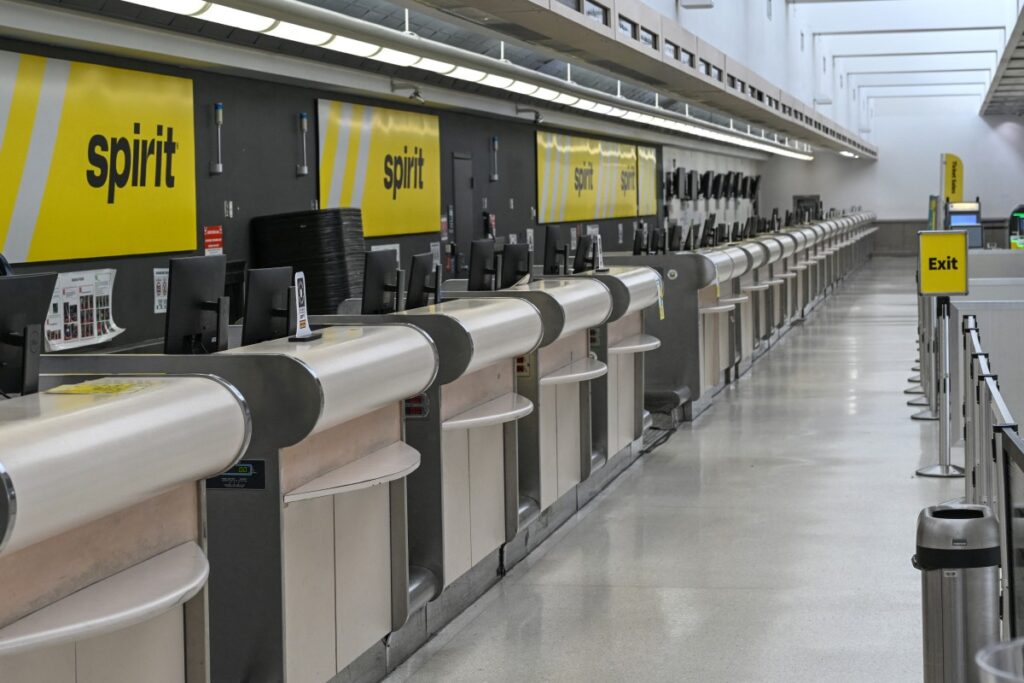
When Spirit Airlines, the pioneering ultra-low-cost carrier that reshaped U.S. air travel for 32 years, ceased all operations on May 2, it left behind more than thousands of rebooked passengers and empty route slots: industry analysts and economists broadly agree that its exit will add significant new upward pressure on already climbing U.S. airfares.
Founded in 1992, Spirit built its legacy on the so-called “Spirit Effect”, a market phenomenon that turned affordable air travel from a luxury into an accessible option for millions of consumers who had previously been priced out of flying. Its stripped-down business model — which eliminated free checked bags, complimentary in-flight meals, and other non-essential extras to keep base fares as low as possible — earned it a reputation as the industry’s most disruptive competitive force. This impact was so significant that the U.S. Department of Justice (DOJ) highlighted it in 2023, when regulators moved to block Spirit’s proposed merger with JetBlue, arguing that losing Spirit’s independent presence would harm consumer competition.
Official DOJ data underscores just how much Spirit shaped market pricing: when the carrier entered a new route, average fares across all competing airlines on that route dropped by an immediate 17%, and when it exits a market, fares jump by an average of 30%. That historical trend has left experts bracing for broad fare increases as the aviation industry absorbs Spirit’s exit.
The timing of Spirit’s collapse could not be worse for consumers, who are already facing rising ticket costs driven by skyrocketing jet fuel prices tied to ongoing conflict in the Middle East. New data from the U.S. Department of Transportation released this week confirms that U.S. airline jet fuel costs surged 56% in March compared to February, and are up 30% from the same period one year ago.
While many carriers have moved quickly to fill the gap left by Spirit, with low-cost peers including Frontier, Breeze and Avelo adding capacity and new routes to capture Spirit’s former customer base, all of these existing competitors already price their tickets slightly higher than Spirit did. Frontier, the largest of Spirit’s ultra-low-cost rivals, has announced plans to add nine new routes this summer and 15 extra daily departures across 18 former Spirit routes, a move the airline projects will boost its key revenue metric by 3 to 5% and grow its total capacity by 6 to 8%.
Even as existing carriers maintain the basic economy fare tiers that major airlines originally launched specifically to compete with Spirit and other budget carriers, experts say those low-cost options will likely become less attractive for consumers. Jan Brueckner, emeritus economics professor at the University of California, Irvine, noted that while basic economy tickets are not expected to disappear entirely, airlines will almost certainly raise their prices. “They might be less attractive” to budget-focused travelers, Brueckner explained.
Aviation analysts broadly echo this assessment. “There’s no question in some markets fares will probably increase,” said Richard Aboulafia, an aviation expert at consultancy AeroDynamic. Richard Masler, head of analysis for the Centre for Aviation, pointed out that for more than a decade, Spirit’s disruptive presence forced legacy major airlines to cut their own fares and adopt more granular pricing models to stay competitive.
Bradley Akubuiro, a partner at advisory firm Bully Pulpit International, noted that Spirit’s exit will not make air travel entirely unavailable to consumers, but it will eliminate the industry’s most powerful check on excessive pricing. “The likely consequence for passengers is not that air travel suddenly becomes unavailable,” he said. “It’s that the cheapest version of air travel becomes immediately harder to find in some markets.” Over time, he added, fares will continue to creep upward because “a meaningful check on the system is now gone.”