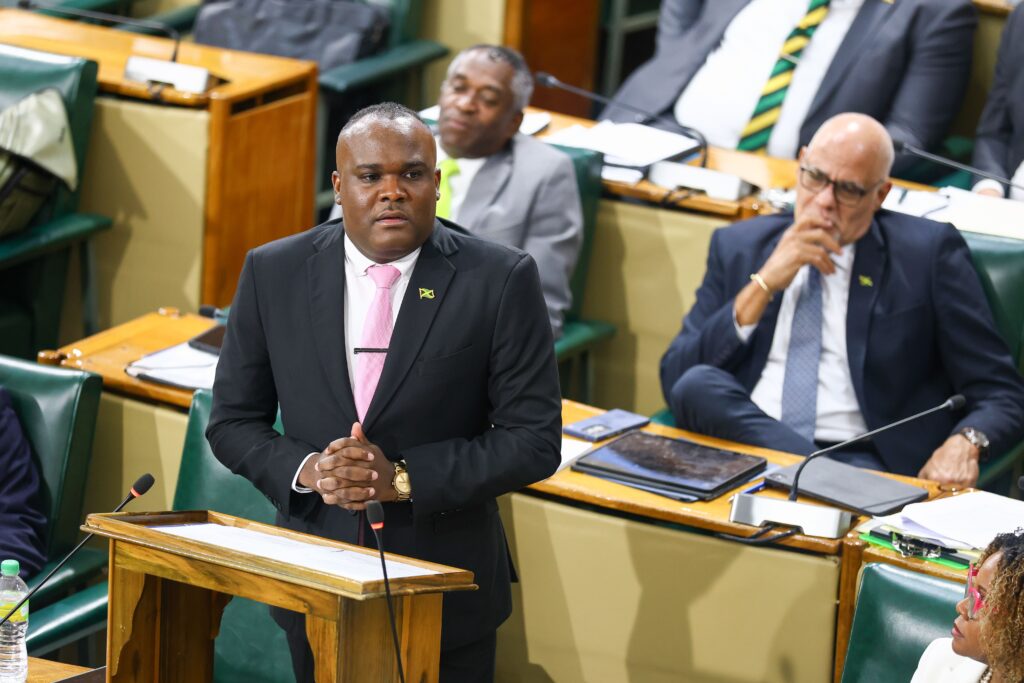
KINGSTON, Jamaica — As debate over the National Reconstruction and Resilience Authority (NaRRA) Bill unfolds in Jamaica’s Senate, government Senator Abka Fitz-Henley has issued a forceful rebuttal to widespread claims that the proposed legislation lacks robust checks and balances to ensure accountability for the new disaster recovery body. The NaRRA Bill, if passed, will formalize the legal mandate of the already-established NaRRA, the government’s lead agency for rebuilding infrastructure and communities devastated by Hurricane Melissa. That powerful storm slammed into Jamaica’s southwestern parishes last October, leaving behind an unprecedented US$12.2 billion in total damage.
Critics of the bill have repeatedly argued that the draft legislation does not include enough formal mechanisms to oversee NaRRA’s operations and prevent misuse of public reconstruction funds. Addressing these claims directly on the Senate floor, Fitz-Henley rejected the criticism as entirely unfounded, then walked through a comprehensive list of accountability guardrails built into the proposed framework.
First, NaRRA will fall fully under the jurisdiction of Jamaica’s Auditor General, who retains the authority to launch audits and assessments of the agency’s activities at any time. All of NaRRA’s work, including every cent of public expenditure, will also be subject to ongoing oversight by two key parliamentary committees: the Public Accounts Committee and the Public Appropriations and Administration Committee.
The bill also requires NaRRA to maintain all financial records in strict alignment with accounting standards set by the Institute of Chartered Accountants of Jamaica. The agency must submit annual audited financial statements to the responsible government minister, who is legally required to table those documents for full review by Parliament. Additionally, NaRRA is mandated to conduct an independent internal audit each year, led by a certified registered public accountant meeting the qualifications outlined in Jamaica’s Public Accountancy Act.
Other requirements include the submission of a yearly corporate plan, complete with detailed revenue and expenditure projections, to the responsible minister. NaRRA must also maintain a public, searchable register of all its projects and initiatives with full pertinent details, which will be published in the official government gazette and open to inspection by any member of the Jamaican public. To top these existing safeguards, the government has established an entirely independent oversight body, the Jamaica Reconstruction and Resilience Oversight Committee (JAMRROC), tasked specifically with monitoring NaRRA’s activities.
To put the scope of these safeguards in context, Fitz-Henley drew a comparison to the post-disaster reconstruction framework put in place by the former People’s National Party (PNP) administration after Hurricane Ivan struck Jamaica in 2004. At that time, the PNP government launched the Office of National Reconstruction (ONR) to oversee billions in recovery spending, but the agency lacked most of the formal oversight mechanisms included in the current NaRRA Bill, he noted. The ONR’s chief executive officer also served as its chairman, and the body answered directly to then-Prime Minister Percival Patterson, with only a private sector auditor providing limited review. Fitz-Henley emphasized that the comparison is not intended to undermine the ONR’s work, but rather to put current criticisms of the NaRRA Bill in proper historical context.
The senator also acknowledged concerns raised by Jamaican citizens that the new agency could create opportunities for corruption, noting that many well-meaning members of the public hold this worry out of genuine concern for public funds. “To them I say, we hear the concern and we are not dismissive,” he stated.
Fitz-Henley admitted that no legal framework anywhere in the world can completely eliminate the risk of public office abuse. But he argued that the multiple layers of checks and balances built into the NaRRA Bill address this risk head-on. He added that the current administration has strengthened Jamaica’s anti-corruption ecosystem through both increased funding for independent anti-corruption bodies and legislative reforms that have toughened existing anti-corruption laws.
Closing his remarks, Fitz-Henley took a direct swipe at the opposition PNP, noting that when credible, evidence-backed allegations of public malfeasance have emerged during the current administration’s tenure led by Prime Minister Dr. Andrew Holness, the government has acted swiftly and decisively to address wrongdoing. He also highlighted that Jamaica has achieved its highest ever anti-corruption transparency score from international assessment bodies during the Jamaica Labour Party administration’s time in office.