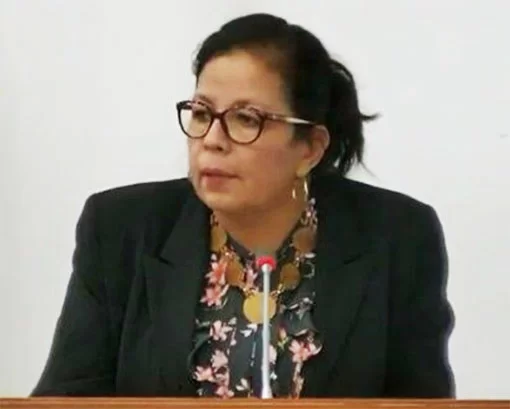
Suriname stands at a critical crossroads over its broken food safety system, and a ruling party parliamentarian is pressing leaders to answer a pressing question: how many more warnings, rejected exports, and public health risks must the nation endure before politicians finally acknowledge the system is failing.
Jennifer Vreedzaam, a member of the National Assembly for the National Democratic Party (NDP), has reintroduced a long-delayed modern food safety bill to the Surinamese legislature, nearly six years after the draft was first submitted. In an opinion piece published May 8, 2026, she argues the public can no longer afford to wait for systemic reform, despite bureaucratic delays and quiet resistance from entrenched official interests that have blocked the creation of an independent national food authority.
The crisis is not new. As far back as May 2022, Suriname’s authorities dismissed public concerns over toxic chemical contamination in local produce, claiming “there was no reason for panic.” Independent testing later proved the alarm was justified: every tested sample contained residues of banned pesticides, including the highly toxic carbofuran, also known as Furodan.
Four years on, Vreedzaam says nothing has changed. In late April 2026, the European Union rejected a shipment of Surinamese red chili peppers due to dangerous excess pesticide residues. Just five days later, a second shipment of yardlong beans was turned away for the same violation. Most strikingly, as of the publication of Vreedzaam’s piece, there had been no product recall for the batches already circulating in Suriname, and no public warning was issued to local consumers. The contaminated goods remain available for purchase in domestic markets.
Officials from the Ministry of Agriculture, Livestock and Fisheries (LVV) and the National Food Safety Board (BOG) have repeatedly claimed functional inspection and safety systems are already in place. But Vreedzaam argues the repeated EU rejections tell the opposite story. A working system would not generate the same recurring failures, she notes, adding that a properly structured framework would not allow for informal profit schemes at every step of the supply chain, whose proceeds go unreported to the public and cannot be tracked.
This systemic failure is not just an economic issue—it puts the lives and long-term health of all Surinamese people at direct risk. Vreedzaam points to local health data that already shows rising rates of colon cancer and other chronic conditions linked to toxic pesticide exposure.
Suriname’s existing food regulation dates all the way back to 1911, a century before the emergence of modern global food supply chains, cross-border trade, standardized pesticide testing, product traceability systems, and international food safety frameworks. The out-of-date law is completely unequipped to address 21st century challenges, Vreedzaam argues.
Vreedzaam’s newly reintroduced 2026 Food Act aims to close these gaps and bring Suriname’s regulation in line with international standards. Key provisions of the legislation include mandatory registration and official certification for all food businesses, clear requirements for end-to-end product traceability, formal legal authority to order recalls of dangerous contaminated products, mandatory public transparency around safety risks, and strengthened inspection protocols for pesticides, additives, and environmental contaminants.
The bill also accounts for Suriname’s unique geographic and socio-cultural diversity, making space for traditional and indigenous food production practices, while enshrining the principle that public health and food safety must be protected equally across all of the nation’s districts.
Vreedzaam warns that repeated non-compliance with international safety rules will only lead the EU to tighten inspection requirements even further, driving up costs and increasing the risk of broader trade restrictions for all Surinamese agricultural exports. The resulting economic damage will be severe, but Vreedzaam stresses that food safety is never a secondary concern: it is a fundamental prerequisite for public health, sustainable trade, and Suriname’s international credibility.
Despite the urgent need for reform, the bill continues to face significant political resistance. Vreedzaam says opposition is not rooted in disagreement over the importance of food safety, but in the institutional changes the bill would enforce. The National Institute for Food Safety (NIVS), an independent food authority that was formally authorized by law back in 2021, would upend existing power structures and vested interests. By law, NIVS is supposed to be led by independent scientists and food safety experts, rather than political appointees, but the body has never been fully staffed or made operational. Vreedzaam says this deliberate delay explains the continued resistance to passing the modern Food Act.
Questions have long been raised about why NIVS’s governing board was never appointed, why funding for the agency was never allocated, and why no operational support was ever provided. The LVV has publicly criticized NIVS for failing to become active, but Vreedzaam says the finger-pointing clearly points to deliberate political obstruction, not any lack of need or clear vision for the agency.
“Food safety does not wait for political debates,” Vreedzaam writes. “Pesticides do not wait for bureaucracy. Health risks do not care about political sensitivities.”
The Surinamese public has a right to safe, uncontaminated food, Vreedzaam argues. Exporters deserve a reliable, trusted inspection system that lets them compete in global markets. Small-scale producers deserve clear guidance and government support to meet safety standards. And Suriname deserves modern legislation that fits the reality of 2026—not the outdated norms of 1911.
The recent rejections by the EU are not an attack on Suriname, she says. They are a clear wake-up call for political leaders to act. Vreedzaam closes by pressing for immediate action, arguing that any official who does not recognize that an independent, depoliticized food safety system is essential for public health, food security, economic stability, and public safety has no business holding ministerial office. She also criticizes the government’s high-profile plans for agricultural fairs and new state-run fruit processing facilities, noting that leaders appear to pay little attention to how much toxic pesticide residue ends up on local produce consumed by the Surinamese public.
With two high-profile export rejections in the first week of May 2026, the question that remains for Suriname’s leaders is unchanged: how many more warnings will the nation need before it finally acts?