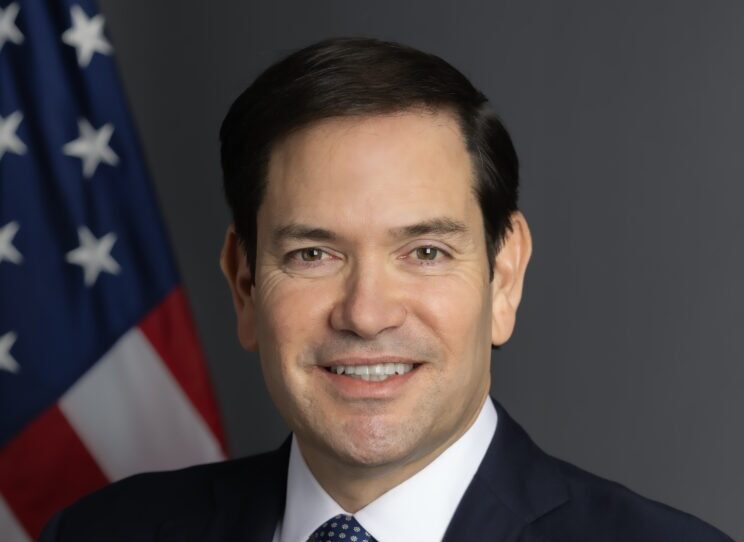
In a new step to escalate pressure on the Cuban government, the second Donald Trump administration has announced sweeping sanctions targeting three major Cuban entities and a senior executive, framing the move as decisive action to safeguard United States national security. U.S. Secretary of State Marco Rubio, who is the child of Cuban immigrants, outlined the penalties during a formal announcement Thursday, saying the measures are designed to cut off access to what Washington calls illicit assets held by Cuba’s ruling government and military establishment.
The sanctions are issued under the authority of Executive Order 14404, signed by President Trump on May 1, 2026, which grants the administration power to penalize actors deemed responsible for political repression in Cuba and threats to U.S. national security and foreign policy interests. Under the order, Rubio formally designated three entities for sanctions: Grupo de Administración Empresarial S.A. (GAESA), a sprawling military-controlled holding conglomerate; Moa Nickel SA (MNSA), a major nickel mining joint venture; and Ania Guillermina Lastres Morera, GAESA’s top executive.
GAESA was targeted for its operations within Cuba’s financial services sector, while MNSA was sanctioned for its activities in the country’s metals and mining industry. Lastres, who serves as executive president of GAESA, was designated for her role as a senior leader of the conglomerate. Rubio described the sanctions as a core component of the administration’s broader campaign to counter what it calls growing national security risks from Cuba’s communist government, and to hold the regime and its backers accountable for their actions.
In his remarks, Rubio doubled down on the administration’s sharp criticism of the Cuban government, claiming that just 90 miles off the U.S. coast, Cuban leaders have reduced the island to economic ruin while opening it up to foreign intelligence, military, and terrorist activities that threaten U.S. interests. He added that additional sanctions designations will be rolled out in the coming days and weeks, warning that the campaign is only in its early stages.
The secretary of state positioned GAESA as the central node of what he called Cuba’s kleptocratic communist system, noting that the conglomerate controls an estimated 40 percent or more of the island’s entire national economy. Rubio alleged that GAESA operates across multiple key economic sectors not to generate broad-based prosperity for the Cuban people, but solely to enrich a small circle of corrupt ruling elites. He claimed that as ordinary Cubans grapple with widespread food insecurity, inadequate healthcare, and crumbling critical infrastructure including the national power grid, most of GAESA’s profits are siphoned off into hidden offshore bank accounts held by elite figures. Citing recent independent public estimates, Rubio said GAESA’s annual revenues likely exceed three times the Cuban state’s official public budget, and that the conglomerate controls as much as $20 billion in undeclared illicit assets globally. Lastres, he added, directly oversees the management of these hidden international assets.
Turning to MNSA, Rubio said the joint venture between Canadian firm Sherritt International Corporation and Cuban state-owned enterprise La Compania General de Niquel exploits the island’s natural resource wealth to line the pockets of regime leaders, at the direct expense of ordinary Cuban citizens. He also noted that the company operates assets that were originally seized by the Cuban government from U.S. citizens and corporations decades ago, a longstanding point of contention between the two nations.
As part of the sanctions announcement, Rubio confirmed that all property and financial interests held by the designated actors that are located within the U.S. or controlled by any U.S. person are immediately frozen, and must be reported to the U.S. Treasury Department’s Office of Foreign Assets Control (OFAC), the agency responsible for enforcing U.S. sanctions programs. Any entity that is 50 percent or more owned, directly or indirectly, by one or more of the sanctioned individuals or groups is also subject to the same blocking measures.
All transactions involving the sanctioned parties carried out by U.S. persons or conducted within or transiting through U.S. jurisdiction are prohibited, unless explicitly authorized via a general or specific license issued by OFAC. These prohibitions extend to any contributions of funds, goods, or services to or for the benefit of a blocked party, as well as the receipt of any such contributions from sanctioned actors.
Rubio also issued a stark warning to third-country actors, saying that any foreign individual or entity that conducts transactions with the newly designated parties, or operates in any of the Cuban sectors identified as high-risk in Executive Order 14404 — including energy, defense, metals and mining, financial services, and security — faces significant risk of being added to U.S. sanctions lists themselves. “Non-U.S. persons, including foreign financial institutions, should proceed with caution in any dealings with a party sanctioned under this authority,” Rubio said. “Actions to return assets to a sanctioned party or transfer them to another jurisdiction for potential use by the target could expose non-U.S. persons to significant sanctions risk.”
The sanctions align with longstanding U.S. trade restrictions on Cuba enforced under the Cuban Assets Control Regulations (CACR), the foundational regulatory framework for the decades-long U.S. embargo on Cuba managed by OFAC. The CACR prohibits any person subject to U.S. jurisdiction from engaging in transactions involving property in which Cuba or a Cuban national holds an interest, unless a specific exemption or authorization is granted. All existing blocked property under the CACR remains frozen following the new designations, Rubio confirmed.
Rubio emphasized that the new sanctions advance multiple core policy objectives of the second Trump administration, not only fulfilling the authority granted by Executive Order 14404, but also advancing the goals of Executive Order 14380 — which addresses perceived threats to the U.S. from the Cuban government — and National Security Presidential Memorandum 5. That memorandum directs the executive branch to prioritize efforts to improve human rights, establish rule of law, build free market systems, and advance democratic governance in Cuba.