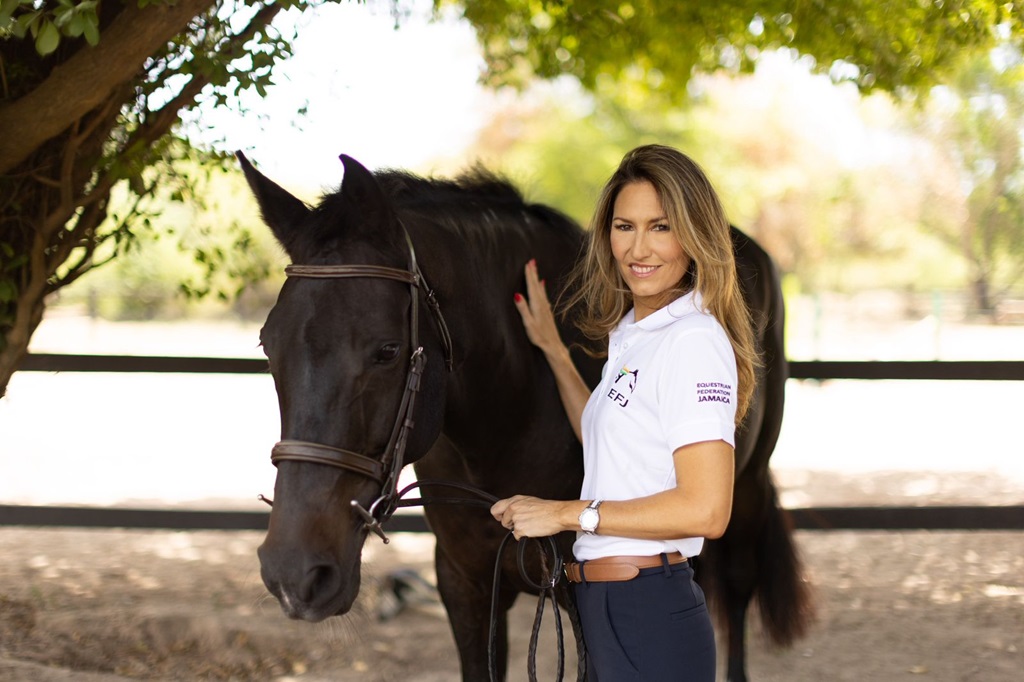
A historic milestone for Caribbean equestrian sports has been reached, with Heidi Lalor, President of the Equestrian Federation of Jamaica (EFJ), earning a coveted seat on the prestigious FEI Solidarity Committee — the first appointment of a Jamaican representative to the high-level global body. The confirmation of Lalor’s appointment came during the FEI General Assembly held in Hong Kong, where she secured the seat representing Group IV, a regional bloc encompassing Canada, the United States, and all Caribbean nations. She takes her place on a diverse international panel that includes delegates from Qatar, Bolivia, Cambodia, Kenya, Uzbekistan, Finland, and Guatemala.
Prior to this breakthrough, the Caribbean has seen limited representation on the committee from nations including Haiti, the Cayman Islands, and The Bahamas, making Lalor’s appointment a new chapter for regional representation in global equestrian governance. The appointment follows five years of transformative strategic leadership from Lalor at the helm of the EFJ, a period marked by effective stewardship of international development grants, expanded investment in athlete training and coach education, and growing participation in FEI World Challenge competitions across Jamaica.
Reflecting on her selection, Lalor attributed the historic appointment to two key factors: aligned priorities with FEI’s global development initiatives, and a proven track record of growing equestrian sports across the Caribbean region. “My selection came from alignment with global programs that boost awareness and participation, like the Racehorse Retraining Programme and the Eventing World Challenge, paired with my track record of delivering results and promoting the sport across the Caribbean,” Lalor noted. She added that her five years of leading Jamaica’s national federation have delivered measurable progress: “We have seen rising motivation, growing volunteer engagement, new sponsorship opportunities, higher competitive standards, and the development of a new generation of certified officials under the Jamaican flag.”
Lalor emphasized that her appointment is part of a broader trend of growing Caribbean influence in global equestrian circles, pointing to tangible progress across the region. Barbados now holds a seat on the FEI Board, while Trinidad and Tobago has built a consistent record of competitive success across Olympic disciplines using exclusively locally trained horses. Other regional nations, including the Cayman Islands, Bermuda, and The Bahamas, are also advancing their own FEI Solidarity-backed development projects.
For Lalor, the appointment is also deeply personal, rooted in decades of support from FEI development programs. Since 2003, she has benefited from FEI-funded coaching initiatives across the Caribbean, training in Trinidad and Tobago, the Cayman Islands, and her home country of Jamaica. “I am a direct product of these development initiatives,” she explained. “They provided coaching education for local federations that lifted up athletes, and built the professional governance frameworks that allow national federations to effectively manage and grow the sport.”
Now working directly alongside FEI President Ingmar De Vos — who also serves as Solidarity Chair and a newly appointed International Olympic Committee Board member — Lalor says her role will extend far beyond formal representation. She plans to actively drive inclusive global development of the sport. “This appointment proves that doors are opening for small island nations,” she said. “It gives me the opportunity to support multiple regional countries, assist with equitable funding allocation, and help shape the future of equestrian sport on a global scale.”
Looking ahead, Lalor’s core priorities are clear: unify the Caribbean region to raise its global profile, and expand access to equestrian sports by creating more development opportunities on local islands. “My central goal is to continue lifting regional standards and creating more on-island access through professional courses delivered by FEI Solidarity,” she said, noting that expanded certification for local coaches and officials will be the foundation of long-term sustainable growth. She also highlighted the critical role of strong governance, noting that robust administrative frameworks build trust with international bodies and unlock sustained investment. “With solid governance in place, you gain greater confidence and more effective productive management, which paves the way for long-term development,” Lalor explained. “I am eager to elevate the Caribbean’s presence on the global stage with energy, inspiration, and a deep commitment to sustainable growth.”
Despite the progress, Lalor acknowledges persistent challenges, most notably the gap between grassroots participation and elite international competition for small island nations. “Bridging that divide is always a unique challenge for island communities,” she admitted, “but with clear vision, a strong foundational framework, and intentional advocacy, programs like the FEI World Challenge Series can help close that gap.”
Beyond infrastructure and funding, Lalor says her appointment carries an important message for young aspiring equestrians across the Caribbean and the globe. “It is critical for young people to see this level of international representation from our region,” she shared. “One of my first core goals when I became EFJ President in 2022 was to show young people that this pathway exists — that broader global opportunities come from active engagement with your national federation.”
Her advice to emerging equestrian leaders is simple but impactful: “Whether you are an Olympian, a recreational rider, or a coach, show up for your National Federation. Stay committed, stay positive, put in the work, and the support will follow.”
Founded in 2012, the FEI Solidarity program remains focused on core global missions: expanding access to equestrian sports, growing global participation rates, raising competitive and governance standards, and strengthening the interconnected global equestrian community.