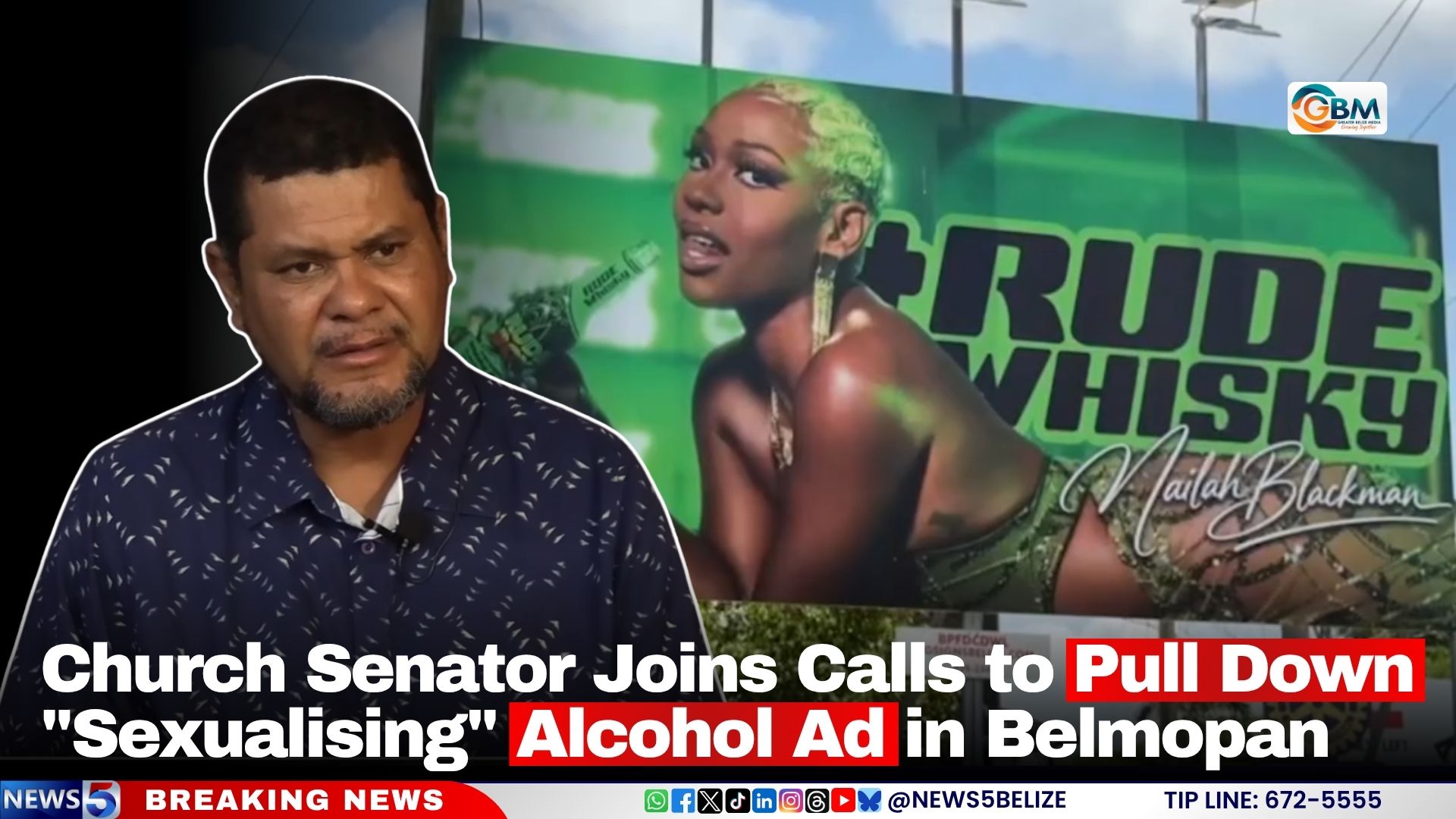
In the capital city of Belize, a single outdoor alcohol advertisement has ignited a fiery nationwide debate over public morality, gender representation, and the normalization of harmful content in shared public spaces. At the center of the growing outcry is Senator Louis Wade Jr., a church-affiliated lawmaker who also operates one of Belize’s only alcohol rehabilitation facilities, who has become the most high-profile voice demanding the immediate removal of the controversial billboard positioned at Belmopan’s main city entrance.
The advertisement in question features Trinidadian musician Nailah Blackman in what critics describe as a sexually suggestive pose, while holding a product from an alcohol brand that has drawn repeated criticism for its marketing tactics. Wade has echoed the growing frustration of thousands of Belizean residents who argue the billboard violates widely held community standards of public decency, framing the display as more than just a marketing misstep — as a dangerous amplification of preexisting social crises gripping the small Caribbean nation.
Speaking to Plus TV News, the media outlet owned by Wade himself, the senator laid out his sharp condemnation: “I want to join my voice along with thousands of other Belizeans in Belmopan and around the country that say that this billboard needs to be removed because it violates the sensibilities of respectable Belizeans.” He pushed back against claims that the controversy over the ad is a distraction from more urgent national issues, arguing that residents of the capital have consistently prioritized advocacy for public values that affect daily community life.
Wade went further, linking the billboard’s content to three of Belize’s most pressing social challenges: high rates of sexual abuse, pervasive domestic violence, and widespread problematic alcohol consumption. He called out the brand behind the ad for a pattern of problematic marketing, noting that the company has long targeted women with aggressive alcohol promotion, incorporated marijuana-themed imagery into its product packaging, and now relies on overtly sexualized depictions of women to drive sales. “This is the sexualisation of women,” Wade stated. “This is literally taking advantage of the weakness within the population in a very undignified manner.”
His position as the operator of an alcohol treatment center gives him unique standing to speak on the harms of irresponsible alcohol marketing, he argued: “I sit here running one of the country’s only alcohol rehabs. So if we can’t speak against alcohol, then who can?”
The debate has split public opinion, with some residents dismissing the controversy as an overreaction to a standard commercial advertisement, while others have labeled the display harmful, disrespectful, and completely unsuitable for public viewing. The uproar has also pushed broader questions about Belize’s regulatory framework for public advertising, and what content the nation chooses to normalize in shared public spaces that all community members, including children, access daily.