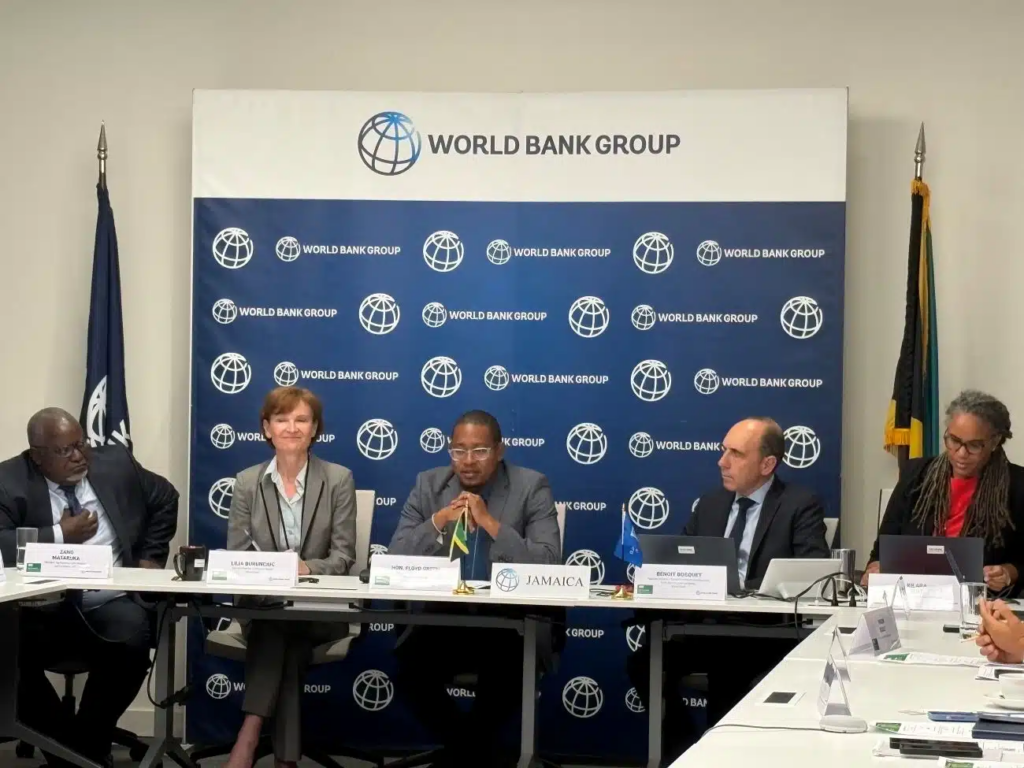
KINGSTON, JAMAICA – Two leading global development institutions, the World Bank Group (WBG) and the Inter-American Institute for Cooperation on Agriculture (IICA), have officially launched the landmark AgriConnect initiative in Jamaica, kicking off a global effort to expand rural digital access, boost digital inclusion, and integrate small-scale family farmers into formal local and global value chains.
At its core, the transformative program sets an ambitious target: by 2030, it will deliver targeted support to as many as 300 million smallholder producers worldwide, guiding the shift from low-yield subsistence farming models to scalable, commercially viable agricultural enterprises. Jamaica’s role as an early implementation site marks a key milestone in the WBG’s broader global strategy to drive inclusive, sustainable transformation of the international agrifood sector.
Speaking at the official launch event, Jamaica’s Minister of Agriculture Floyd Green framed AgriConnect as a transformative opportunity for the island nation. Green emphasized that the initiative’s core philosophy, which combines institutional partnership with on-the-ground farmer support, aligns perfectly with Jamaica’s ongoing efforts to build a more resilient, technologically advanced, and inclusive agricultural sector that works for all producers.
The launch drew senior leadership from both partnering institutions, including Lilia Burunciuc, the World Bank’s Country Director for the Caribbean, and Kent Coipel, IICA’s Jamaica-based representative. Both leaders reaffirmed the longstanding collaborative alliance between the inter-American hemispheric body and the World Bank, underlining their shared commitment to strengthening agricultural productivity and resilience across the Caribbean region. Additional senior attendees included Benoît Bosquet, the World Bank’s Director of Sustainable Development for Latin America and the Caribbean, and Diego Arias, Practice Manager for Agriculture and Food for the same region.
Coipel, speaking on behalf of IICA, highlighted the institute’s decades-long track record of supporting small and medium-sized agricultural producers across the Caribbean, with a longstanding focus on building producer capacity, delivering export readiness training, and forging sustainable connections between farmers and formal markets. “Strengthening the organizational capacity of rural communities is a fundamental pillar of IICA’s technical cooperation work,” Coipel stated at the event.
The launch was followed by a series of working sessions that brought together key stakeholders across the agricultural ecosystem. Derrick Deslandes, President of Jamaica’s College of Agriculture, Science and Education (CASE), and Jacqueline Sharp, director of a family-owned coffee enterprise focused on local marketing and international export, led discussions on actionable pathways to expand smallholder market access and streamline integration across national food value chains.
A separate breakout exchange centered on strategies to expand small producers’ access to cutting-edge agricultural technologies, and explored new frontiers of scientific and digital innovation for Jamaica’s agricultural sector, generating actionable takeaways for local implementation. Participants in that session included World Bank agricultural specialist Winston Daes; Aura Cifuentes, Latin America and Caribbean Director at development non-profit Co-Develop; and Arturo Ramírez, Technical Director of Isratech Jamaica Limited, a firm that delivers sustainable agricultural solutions focused on water management and renewable energy alternatives to fossil fuels.
Across the Americas, IICA is one of many core institutional partners backing the WBG’s AgriConnect vision. The initiative also brings together multilateral financial institutions, private sector actors, philanthropic foundations, and global knowledge partners to align resources around shared goals for smallholder empowerment.
On a global scale, AgriConnect benefits from an estimated annual financing envelope of US$9 billion, with the additional potential to mobilize up to US$5 billion in supplementary private and public investments. These resources will be used to strengthen innovation systems, expand accessible agricultural financing, and build supportive service ecosystems tailored to the needs of small-scale producers.
Per project organizers, AgriConnect was developed in response to findings from a World Bank-convened expert panel, which identified the agriculture and agribusiness sector as one of the five global industries with the greatest potential to absorb the large number of young people entering the global workforce in the coming decade.