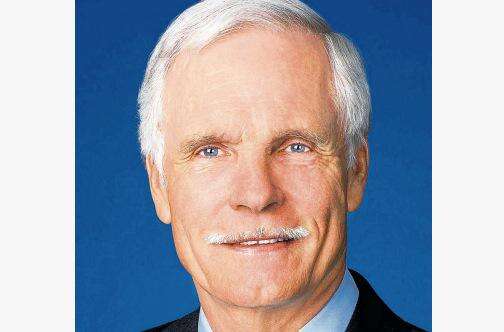
American media entrepreneur Ted Turner, the trailblazing innovator who redefined 20th-century broadcast journalism with the 1980 launch of the world’s first 24-hour cable news network CNN, has passed away at 87 years old, CNN confirmed in an official announcement Wednesday.
A mustachioed Southern native, avid competitive yachter, and prominent philanthropist who built a multi-faceted media and sports empire over his decades-long career, Turner had been living with Lewy Body Dementia, a progressive neurodegenerative disease, in his later years.
When Turner launched Cable News Network, it upended the traditional broadcast news model that had dominated American television for decades. Unlike existing outlets that restricted news coverage to fixed time slots, CNN committed to continuous, around-the-clock breaking news coverage — a radical concept at the time that would soon reshape global journalism.
The network catapulted to international fame for its unflinching live coverage of the 1990-1991 Gulf War, a milestone that cemented its reputation as a trusted global news source. Over the following decades, CNN brought live on-the-ground reporting to nearly every major global event, from the dissolution of the Soviet Union to other breaking developments across every continent. Most notably, the network’s decision to keep correspondents stationed in Baghdad through the height of U.S. bombing raids solidified its status as an indispensable source of frontline news, unmatched by competing broadcasters at the time.
In a statement released following Turner’s death, Mark Thompson, Chairman and CEO of CNN Worldwide, paid tribute to the network’s founder, calling him a towering figure whose innovation laid the groundwork for modern cable news. “Ted is the giant on whose shoulders we stand, and we will all take a moment today to recognise him and his impact on our lives and the world,” Thompson said, adding, “He was and always will be the presiding spirit of CNN.”
Born Robert Edward “Ted” Turner III in Cincinnati, Ohio in November 1938, Turner’s early life was marked by upheaval. He attended a military boarding school in Tennessee and enrolled at Brown University, but was expelled before completing his degree. When Turner was just 24 years old, his father — struggling with severe financial despair over the family’s struggling advertising company — died by suicide, leaving the young Turner to take over the failing business.
After stabilizing the company, Turner began expanding into broadcast media, first acquiring a handful of small radio stations across the Southeastern U.S. In 1970, he purchased a struggling Atlanta television station, marking his first major entry into the television industry. A decade later, that local station became the flagship of his newly formed national Turner Broadcasting System, and the steady profits from the venture allowed Turner to invest in his most ambitious project yet: the launch of CNN.
The unprecedented success of CNN sparked a global revolution in broadcast news, inspiring the launch of dozens of competing 24-hour news networks around the world, including long-time rival Rupert Murdoch’s Fox News, MSNBC, and countless other cable and satellite news outlets across every region.
Beyond CNN, Turner’s media empire grew to encompass a diverse portfolio of entertainment and niche cable networks, including TBS and TNT for sports and general entertainment, Turner Classic Movies for classic cinema, and Cartoon Network for children’s programming, turning Turner Broadcasting into one of the largest cable media groups in the world by the 1990s.