Jamaica’s flagship public medical and teaching facility, the University Hospital of the West Indies (UHWI), is in a state of systemic financial and operational crisis that could have cut its revenue losses by more than half if basic governance protocols had been consistently followed, according to a damning independent investigative report.
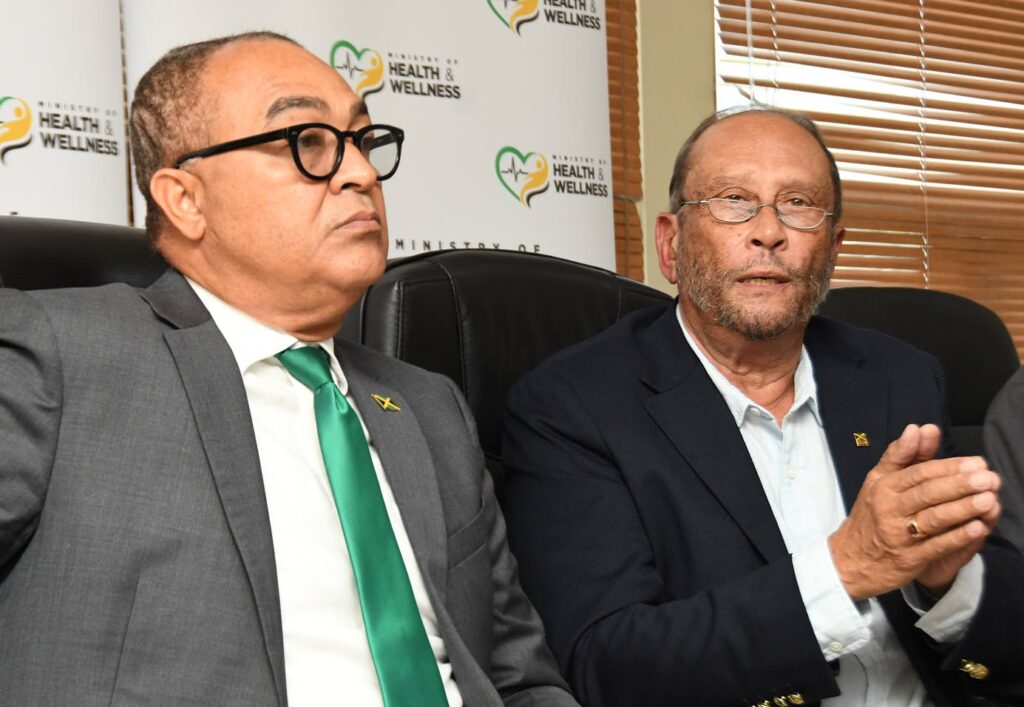
The probe, headed by veteran Jamaican attorney Howard Mitchell, was convened by Jamaica’s Minister of Health and Wellness Dr. Christopher Tufton after a 2024 auditor general report flagged widespread operational irregularities at the facility. Mitchell’s Institutional Review Committee was tasked with unpacking the root causes of the hospital’s persistent financial struggles and service gaps.
In a public press conference held Tuesday to unveil the committee’s findings, Mitchell emphasized that most of UHWI’s fiscal strain stems not from insufficient government funding, but from years of unaddressed institutional failure to enforce standard financial and operational procedures. The committee’s investigation uncovered systemic weaknesses across four core areas: lax financial controls, chaotic inventory management, broken procurement processes, and widespread governance lapses. These failures have not only gutted the hospital’s budget, but have directly eroded the quality of care available to Jamaican patients who rely on the island’s leading referral hospital.
“Based on my decades of experience working with government agencies, if staff and leadership had followed existing procurement rules, financial reporting requirements, and standard inventory management practices, more than 50% of the hospital’s annual revenue loss would have been avoided,” Mitchell said during the briefing. He added that inconsistent and incomplete financial reporting also undermines the hospital’s case for increased government allocations, creating a vicious cycle of underfunding caused by poor accountability: “How can you expect the government to continue allocating more funds when you can’t show how existing resources are being used?”
The report makes clear that these institutional breakdowns are not just abstract administrative issues – they have direct, life-altering consequences for patients. Weak inventory tracking and oversight, Mitchell explained, often leads to critical shortages of essential medical supplies, even when public funds have already been allocated to purchase those items. Without clear tracking systems for everything from prescription medications to bandages and wound care supplies, the hospital frequently ends up in situations where vital stocks go missing or are diverted, leaving treatment rooms empty when patients need care.
“If you don’t have formal tracking for your drugs, bandages and other supplies, and it’s a free-for-all with no clear record of who receives what, you’ll eventually walk into the storeroom and find nothing. Worse, you can end up with unauthorized third parties holding more of the hospital’s medical stock than the facility itself,” Mitchell said.
Procurement failures have also drained millions from the hospital’s care budget, the committee found. When basic procurement rules – such as requiring three competitive bids for major purchases – are ignored, the hospital often pays up to three times the fair market value for essential equipment and services. That unnecessary overspending pulls critical resources away from direct patient care.
“If you overpay for a piece of equipment by hundreds or thousands of dollars because you skipped competitive bidding, that’s money you can’t use to treat the patients that count on you,” Mitchell added.
Beyond operational inefficiencies, the report identifies the hospital’s staggering tax liability as an existential threat to its long-term viability. UHWI currently carries approximately JMD $40 billion in accumulated unpaid taxes, penalties, and interest, and accumulates an additional $300 million in new liabilities every month. Mitchell called the current debt trajectory completely unsustainable, noting that even if government authorities waive all accumulated penalties and interest, the hospital still faces billions in unpayable core obligations.
In stark language that underscores the severity of the crisis, Mitchell compared the hospital’s condition to that of a critical care patient: “As a consequence of years of unaddressed failure, the University Hospital of the West Indies is in critical condition. It is itself in the ICU.”
For his part, Health Minister Tufton acknowledged the management failures laid out in the report, but added context to the hospital’s fiscal challenges, noting that UHWI’s unique mandate as Jamaica’s leading public referral and teaching hospital forces it to absorb large unrecoverable costs that other facilities do not face. The gap between the hospital’s revenue and expenses is driven in part by its responsibility to treat low-income and uninsured patients who cannot pay for their care, Tufton explained.
Tufton also admitted that the government itself contributes to the hospital’s growing unpaid receivables, by regularly referring vulnerable patients for life-saving care at UHWI without securing guaranteed payment for treatment. “Every week I send people to the University Hospital, and to be totally frank, I am probably part of the cause of some of the delinquency,” Tufton said. “The people I send there for lifesaving treatment can’t pay if the ministry doesn’t pay for them. But lives are at stake, and I cannot in good conscience turn these patients away when they need specialized care that only the premier institution can provide.”
The release of the committee’s report is expected to kick off urgent government-led restructuring efforts to stabilize UHWI’s finances and restore consistent, high-quality care for patients across Jamaica.