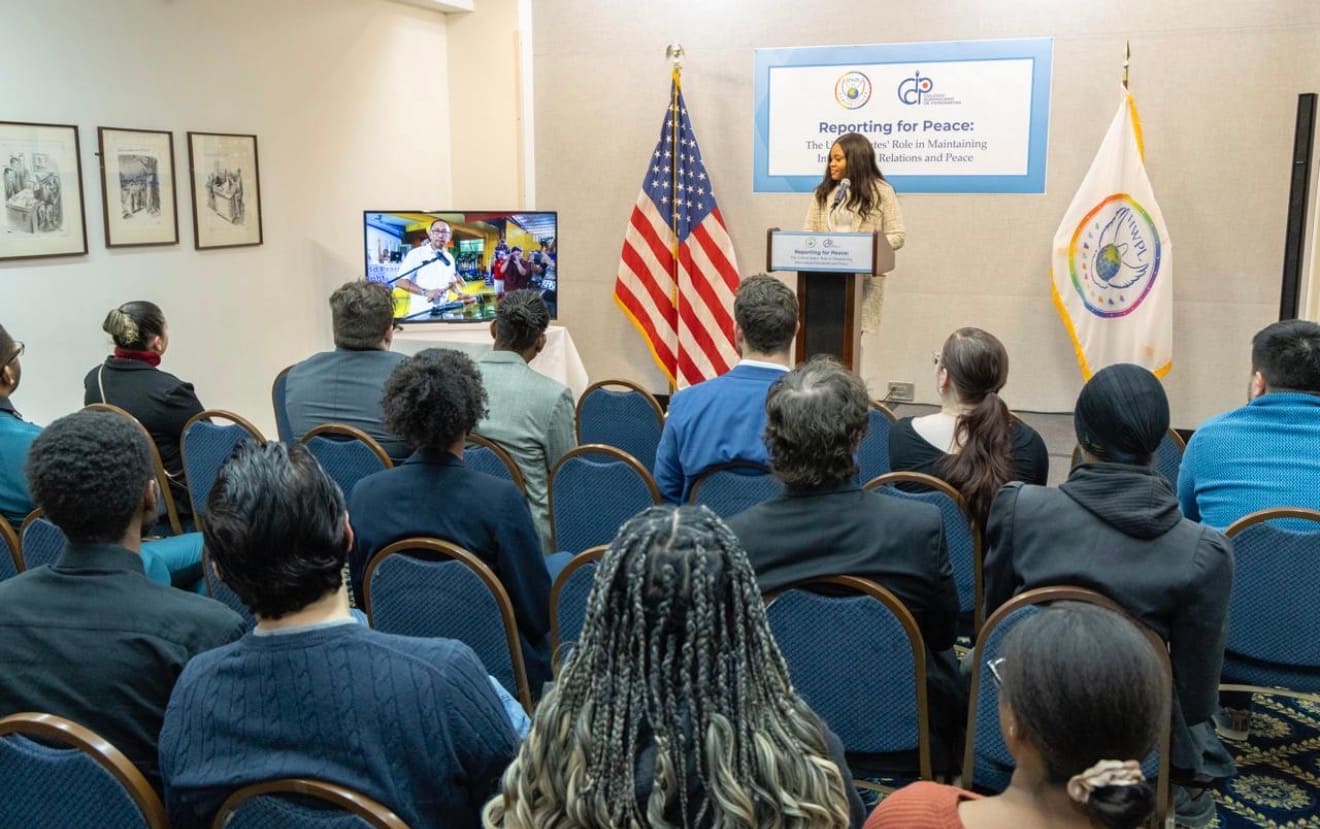
Each year on World Press Freedom Day, global stakeholders pause to celebrate the irreplaceable contribution that free, independent journalism makes to upholding human rights, advancing equitable development, and stabilizing global security. Beyond celebration, the annual observance also shines a critical spotlight on the persistent threats that confront media professionals worldwide: from state-enforced censorship and the unchecked spread of disinformation to targeted violence and harassment that put journalists’ lives at risk simply for doing their jobs.
This year’s official theme, “Shaping a Future at Peace: Promoting Press Freedom for Human Rights, Development, and Security,” reflects a growing global consensus that a free press is not a secondary privilege, but a foundational building block of peaceful, resilient societies. When journalists are able to work without interference, sharing accurate, verified information with the public, they deliver far-reaching public good: they help defuse emerging conflict before it escalates, hold powerful actors accountable for their actions, and create space for inclusive, informed public dialogue that bridges divides.
As the global media landscape undergoes rapid transformation, marked by rising disinformation campaigns and growing public disengagement from traditional news sources, a growing shift is underway in journalistic practice. More outlets and reporters are turning to solutions-oriented reporting, an approach that does not just highlight pressing global challenges, but also explores actionable pathways forward for audiences seeking to understand how to address complex issues.
At the forefront of this movement to align journalism with global peace is HWPL, the Heavently Culture World Peace Restoration of Light, a non-governmental organization that has long advanced the cause of peace journalism through programs in Washington D.C. and across the globe. This work directly reflects the core mission of HWPL Chairman Lee Man-hee, who has long argued that “To attain world peace, all journalists must frequently report on peace.” Today, a growing community of journalists is answering that call, integrating peace-focused reporting into their work to support global efforts to end conflict.
Earlier this year, HWPL brought together roughly 220 journalists from every region of the world for its International Workshop on Peace Journalism Studies, a gathering that turned the principles of peace-focused reporting into actionable practice. Attendees centered their discussions on three core priorities: rebuilding eroded public trust in media, countering the rising political polarization that distorts public discourse, and expanding access to accurate, balanced, solutions-focused reporting that serves the public good. The workshop’s core goals aligned directly with the mission of World Press Freedom Day, emphasizing the critical need to rebuild public confidence in journalism and ensure the field acts as a positive force for inclusive, peaceful societies.
“‘As we observe World Press Freedom Day, we are reminded that press freedom is inseparable from peace,” an HWPL representative shared in comments marking the annual observance. As cross-border challenges from climate change to political extremism intensify across the globe, World Press Freedom Day serves a dual purpose: it is both a celebration of the critical work journalists do every day, and an urgent call to action. The observance urges governments, civil society, and global publics to continue defending press freedom and supporting responsible journalism that advances human dignity and works toward lasting global peace.