Four years after a sustained period of global inflation began rippling through small Caribbean economies, everyday food shopping has transformed from a routine household task into a high-stakes financial balancing act for working families across Belize. From staple proteins to cooking basics, nearly every core grocery item has seen double-digit price jumps since 2022, pushing low- and middle-income households to rewrite their meal plans, cut non-essentials, and adopt new budgeting strategies just to keep their kitchens stocked.
Local outlet News Five journalist Paul Lopez recently conducted an on-the-ground investigation into the cost of living crisis, analyzing official price data from the Statistical Institute of Belize (SIB) alongside firsthand accounts from Belize City households grappling with rising bills. Lopez’s reporting lays bare the steady erosion of purchasing power: between March 2022 and May 2026, nearly every common grocery staple has registered significant price increases that far outpace wage growth for minimum wage workers.
The data shows bone-in chicken cuts have climbed from $3.21 per pound to $3.74 per pound, while whole chicken rose from $2.93 per pound to $3.26 per pound. The cost of ground beef has seen one of the sharpest surges, jumping from $5.51 per pound to $7.80 per pound – an increase of more than 41%. Red kidney beans, a core protein source for many Belizean households, have nearly doubled in price, leaping from $1.99 per pound to $3.03 per pound. Even everyday produce has not escaped the trend: SIB records show Irish potatoes have risen from $2.38 per pound to $2.71 per pound on average, with some local retailers marking the staple up to $3.25 per pound. Bananas, once an affordable bulk fruit, have jumped from 15 cents per unit to a much higher price point, while a liter of vegetable oil has increased from $4.74 to $5.35. Granulated sugar, another kitchen staple, has almost doubled in cost in three years, climbing from 72 cents per pound in 2023 to an average of $1.32 to $1.39 per pound in 2026. The price hikes extend across every aisle of the grocery store, from hot dog buns to cake mix, leaving few items untouched.
For the average minimum wage household, the impact of these increases is staggering. A single $82.66 grocery run, enough to stock a small family’s kitchen for a couple of weeks, equals roughly 16 hours of full-time work – or two full working days of wages.
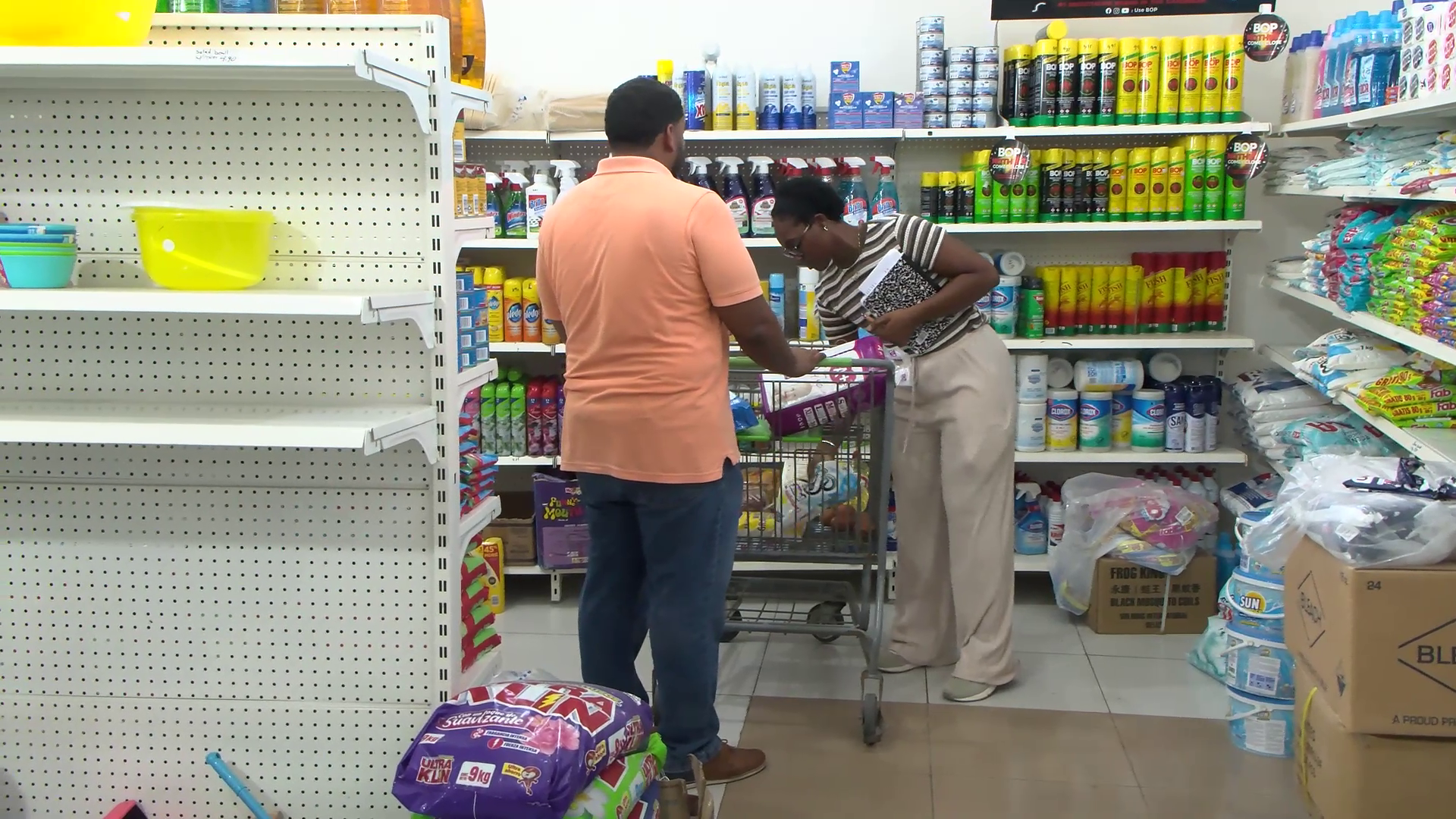
Local resident Amber Lopez, who spoke with News Five while navigating her own weekly shopping trip, described the constant mental stress of balancing a family’s needs against a fixed income. “You know what we need to add, the baby need pampers and formula, its rough out here,” she explained, adding that the sticker shock of a full grocery cart often leaves her frustrated and overwhelmed.
To cope with shrinking purchasing power, many families have adopted creative budgeting hacks to stretch every dollar. Lopez shared the strategies that have helped her household keep costs under control: prioritizing generic store brands over name-brand items, which often offer the same quality at a lower price point; sticking strictly to shopping lists to avoid impulse purchases that add to the final bill; and even rounding up spare change to use for small extra purchases that would otherwise push the budget over.
As food prices continue their steady upward climb, the cost of groceries has emerged as one of the most pressing daily challenges for Belizean working families. What was once a simple weekly errand has become a constant exercise in trade-offs, as households prioritize essential needs over wants, rework long-held meal traditions, and adjust their spending habits to keep up with an increasingly unaffordable cost of living.