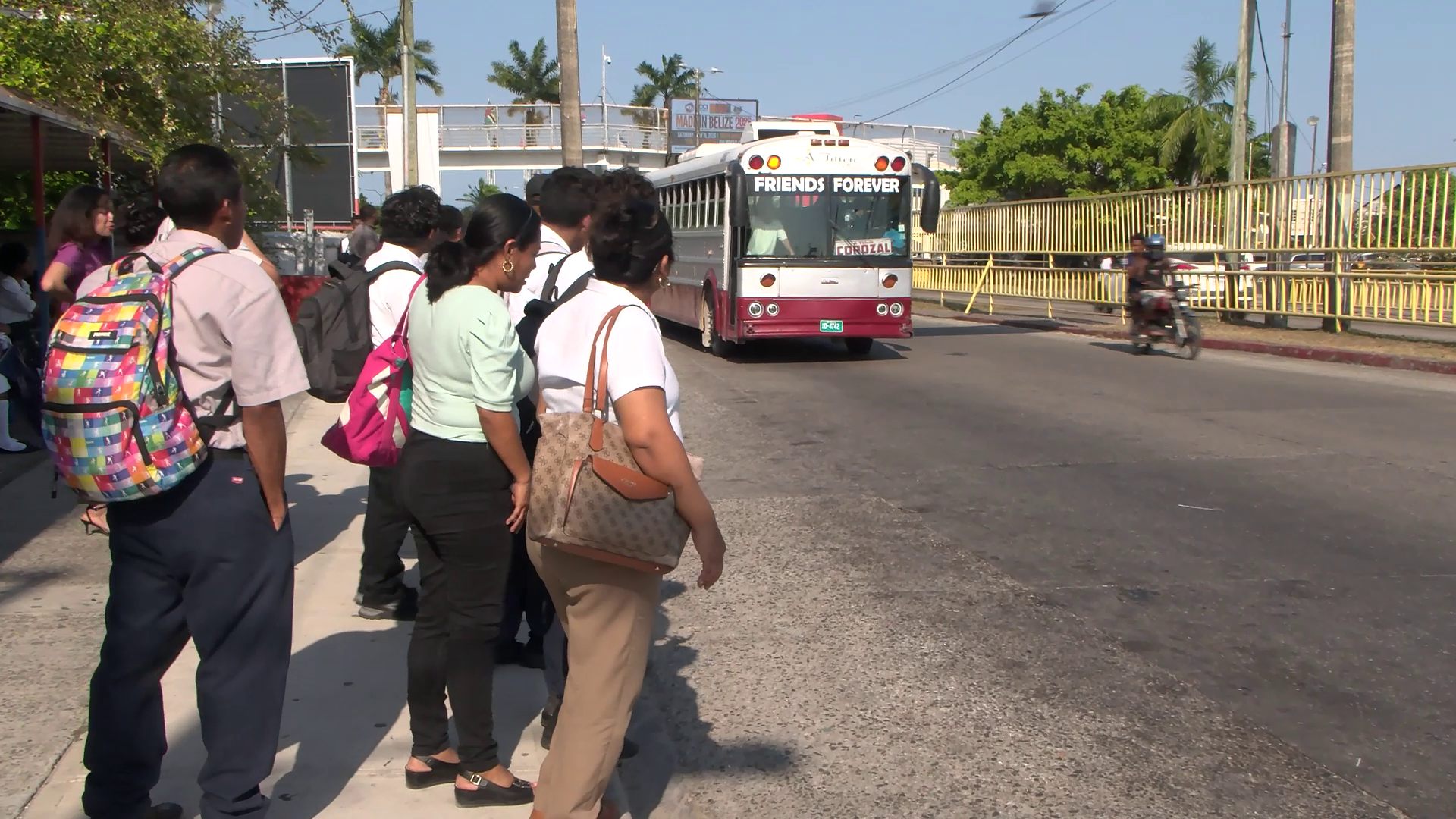
On May 4, 2026, Belizeans woke up to a new financial burden as increased public bus fares came into force across the entire country. The new pricing structure follows a week of disruptive industrial action, when independent bus operators blocked the Tower Hill Bridge in Orange Walk, bringing regional travel and commercial traffic to a complete standstill.
After emergency negotiations convened between representatives of the Belize Bus Association, independent service providers, the Ministry of Transport, and the Prime Minister’s Office, an agreement was reached to end the blockade — but the cost of that compromise is now being passed directly to everyday commuters. Under the new fare system, short-distance routes have seen fare increases as large as 50 Belize cents, while longer intercity trips have jumped by up to one Belize dollar.
To capture how this change is impacting ordinary residents, our reporting team spoke with commuters across major routes to get their firsthand perspectives. For Tyrone Budd, who commutes daily between Sand Hill and Belize City, the change is substantial: his one-way fare rose from $3 last week to $4 today, bringing his total weekly transport cost to $40 for five days of round-trip travel.
“It will be very tight for me because I was already living hand to mouth,” Budd explained. “But we can’t run from it, we have to deal with it. If I don’t catch the bus, I won’t get to work.”
Other commuters reported even steeper increases than the officially announced rates. One anonymous commuter told reporters their fare hit $16 this week, up from $12 last week — a $4 jump that exceeds the maximum $1 increase outlined in the negotiated agreement.
Lyonell Palacio, another regular commuter, saw his express bus fare rise from $6 to $8 in just seven days. Palacio noted that while he is able to absorb the extra cost on his current income, the hikes will hit low-income residents far harder.
“We get a small stipend that barely covers transport costs as it is, so this change will force me to redo my entire monthly budget,” Palacio said. “You really have to stop and ask if traveling to work is even worth it against what you earn. For people with lower incomes, an extra dollar or two every single day adds up to a huge financial burden. It’s manageable for me, but it’s still one of the worst changes we’ve had to deal with recently.”
Though the individual per-trip increases may seem modest at first glance, for the thousands of Belizeans who rely on public buses to get to work, school, and essential services, the cumulative extra cost is quickly becoming a major strain on household budgets that are already stretched thin.