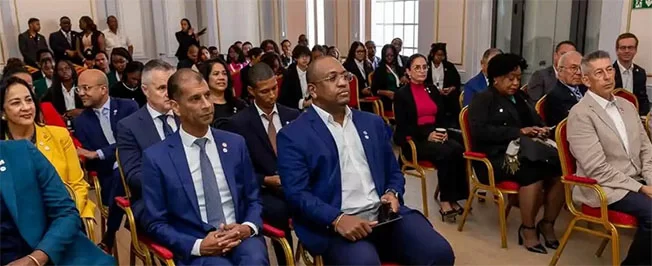
In a gathering that places youth voices front and center in global policy conversations, the 2026 Suriname Model United Nations (SUMUN) conference wrapped up its sessions focused on human rights in the age of artificial intelligence, held at the iconic National Assembly building in Paramaribo. More than 45 young delegates between the ages of 17 and 22 gathered to debate pressing international issues, putting months of preparation and specialized training on display for diplomatic leaders and foreign guests in attendance.
SUMUN is designed specifically to give emerging young leaders hands-on exposure to the fields of diplomacy, policy development, and cross-border cooperation. This year’s opening ceremony drew a lineup of high-profile guests, including Suriname’s Minister of Foreign Affairs Melvin Bouva, Minister of Oil, Gas and the Environment Patrick Brunnings, as well as senior foreign diplomats: French Ambassador Nicolas de Lacoste and Argentinian Ambassador Emiliano Gabriel Waiselfisz.
In his keynote address to delegates, Minister Bouva centered his remarks on the critical need to include youth perspectives in global conversations that will shape their futures. Drawing on the conference’s 2026 core theme of human rights in the artificial intelligence era, he emphasized that ethical guardrails for emerging technologies can only be effective when rooted in coordinated global collaboration that includes the input of the generation that will live with AI’s long-term impacts.
Anand Gajapersad, president of the Rotary Club of Paramaribo, one of the initiative’s supporting organizations, also addressed delegates, highlighting how inclusive diversity and cross-community collaboration are foundational to solving modern global challenges. Ravi Patandin, chair of the SUMUN organizing committee, expanded on this, outlining how meaningful youth engagement in public decision-making strengthens long-term social and economic development across all nations.
Weeks before the official conference got underway, all participating students completed a rigorous six-week training program focused on building core leadership, structured debate, and public communication skills. During the simulation sessions, which mirrored the working procedures of the United Nations Security Council and General Assembly, delegates presented formal position papers and negotiated resolutions on AI and human rights before an independent panel of judges. A series of awards were granted to recognize outstanding participation, including honors for the best position paper, best delegate, and best speaker.
Following the conclusion of the conference, the Rotary Club of Paramaribo reaffirmed its admiration for the dedication and critical thinking demonstrated by all participating delegates. The organization also emphasized its ongoing commitment to supporting youth development initiatives that empower young people to contribute meaningfully to public life and global problem-solving.